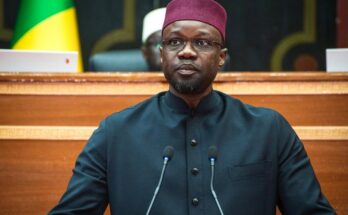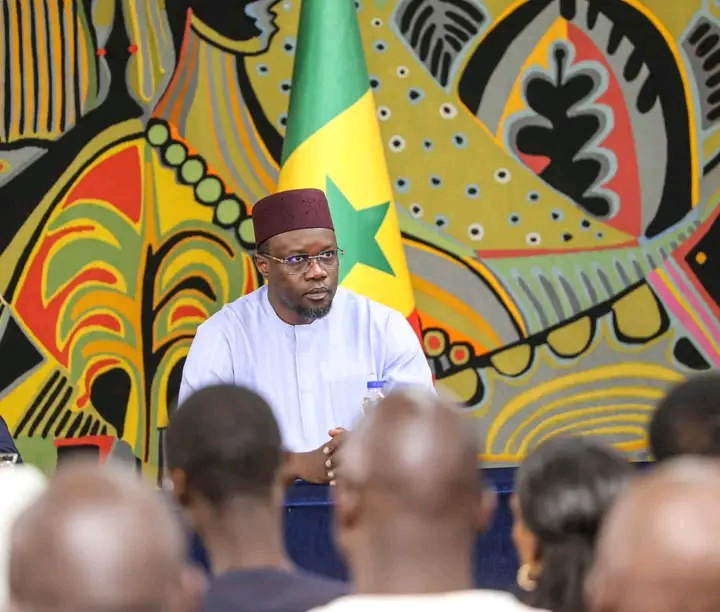
Prime Minister Ousmane Sonko has taken a bold stance on Senegal’s controversial political funds, openly contradicting President Bassirou Diomaye Faye in a rare public display of disagreement. Speaking before lawmakers, the head of government made it clear that while he shares the administration’s commitment to transparency, he firmly believes the President’s approach to these opaque financial mechanisms needs revision.
The debate centers on the so-called “fonds politiques”—unaccounted financial envelopes traditionally used for discretionary spending. Sonko argued that these funds have long been exploited as electoral tools rather than being managed responsibly for public good. «These are not personal slush funds for political maneuvering or enrichment,» he emphasized, stressing that the coalition’s pledge was never to eliminate these resources entirely, but to eradicate their misuse.
Highlighting the scale of the issue, Sonko revealed that his own office, the Prime Minister’s cabinet, operates with 1.77 billion FCFA in political funds—a figure that underscores the systemic nature of the problem. He condemned the practice of channeling these resources through unmonitored channels, calling for an end to what he described as “fictitious cash reserves where public money disappears without trace.”
To curb such financial opacity, Sonko proposed a sweeping reform grounded in parliamentary oversight and transparency, drawing inspiration from France’s model of restricted budgetary scrutiny. While acknowledging the necessity of confidentiality for certain defense-related expenditures, he advocated for the creation of a dedicated parliamentary committee tasked with verifying that allocated funds are spent as intended. «No amount should vanish into the void,» he asserted.
Demonstrating his commitment to accountability, the Prime Minister announced the abandonment of cash transactions in favor of digital transfers and checks for all government financial operations. «Principle over politics,» he declared, adding that the funds themselves would remain intact—but their management would be subject to rigorous scrutiny. His remarks were met with applause from legislators, signaling broad support for his reformist agenda.