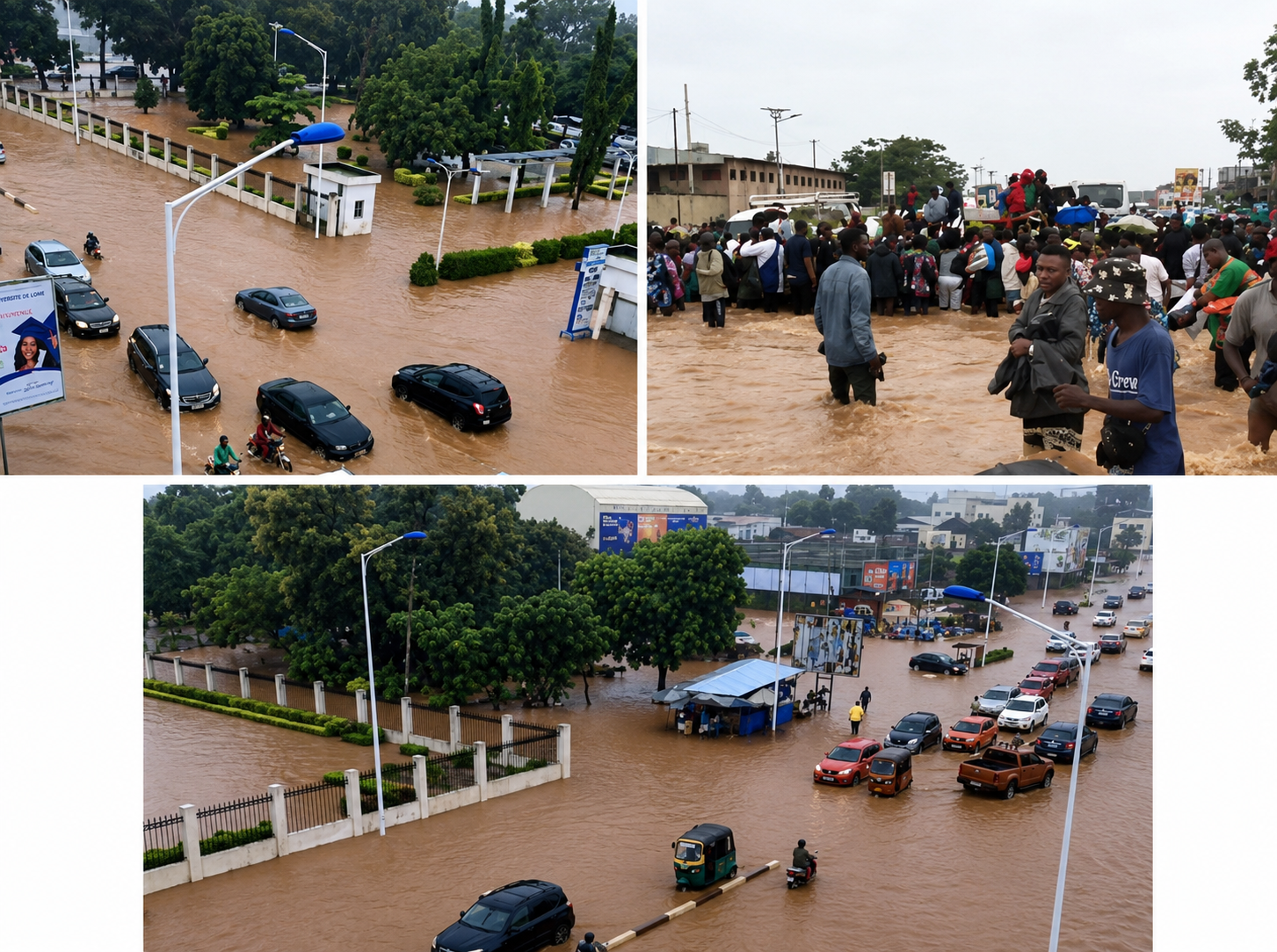
With the onset of each rainy season, a familiar and distressing pattern re-emerges across Togo. Roads become impassable, neighborhoods are submerged, homes are inundated, and families are left to contend with the extensive damages largely unaided. For many Togolese citizens, these annual calamities are no longer isolated incidents but have become an ingrained, almost routine, aspect of their lives.
Following more than six decades during which the Gnassingbé family has led the nation, a significant segment of the populace believes Togo is due for a fresh political direction. Despite numerous pledges made over the years, the daily struggles persist: high rates of unemployment, an ever-increasing cost of living, enduring poverty, and restricted future prospects, particularly for the younger generation.
The arrival of heavy rains invariably reignites criticism concerning the state of national infrastructure. In numerous urban areas, drainage systems remain woefully inadequate, roadways quickly become impassable, and the resulting floods cause substantial material losses. Many citizens express their dismay at the perceived lack of sustainable investment in public amenities that could mitigate these recurrent disasters.
Against this backdrop, voices from the political opposition and civil society organizations contend that the ruling power prioritizes the interests of an elite circle connected to the regime, while the economic hardships faced by the majority of the population continue to worsen. They argue that public resources should be more extensively allocated to improving living conditions, developing essential infrastructure, fostering job creation, and protecting the most vulnerable segments of society, rather than solely maintaining a political system that has been entrenched for decades.
For many observers, this new rainy season regrettably appears unlikely to bring the anticipated relief. On the contrary, it is poised to once again highlight the deficiencies in public policies concerning urban planning and risk prevention. Without comprehensive reforms and appropriate investments, it will continue to be the most economically disadvantaged families who bear the brunt of these consequences.
As these multifaceted challenges accumulate, an increasing segment of public opinion holds that the country requires a fundamental renewal of its leadership to more effectively address the social, economic, and environmental expectations of its citizens.