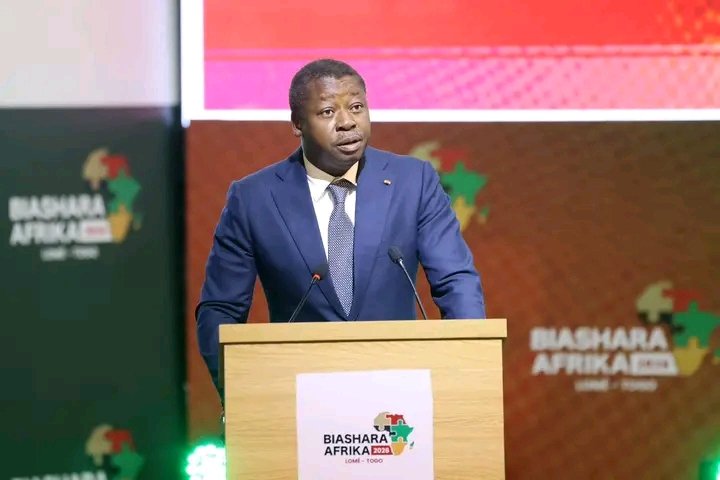
Lomé hosts landmark forum to accelerate Africa’s economic future
This week, Lomé has become the epicenter of Africa’s economic ambitions as the Biashara Africa 2026 forum kicks off, bringing together continental leaders, investors, and private sector representatives. The three-day event, dedicated to trade, investment, and economic partnerships, marks a pivotal moment in Africa’s journey toward deeper regional integration.
From vision to action: Africa’s economic leap forward
Addressing delegates at the opening session, Faure Essozimna Gnassingbé, President of the Council, delivered a powerful call for Africa to move beyond policy declarations and transform the African Continental Free Trade Area (AfCFTA) into tangible economic outcomes. “The era of vision must now give way to an era of results,” he declared, emphasizing that Africa’s future hinges on converting high-level agreements into measurable progress.
Highlighting the urgency of action, Gnassingbé underscored that the continent can no longer afford to rely solely on political rhetoric. “We must build the infrastructure, streamline logistics, and modernize payment systems that will unlock intra-African trade,” he said. His message resonated strongly with attendees, who recognize that outdated trade barriers, border inefficiencies, and exorbitant logistics costs continue to stifle the continent’s economic potential.
Honoring a champion of African unity
In a tribute to past leadership, Gnassingbé paid homage to Issoufou Mahamadou, widely regarded as a driving force behind the AfCFTA. “His relentless advocacy for continental integration has paved the way for the economic sovereignty we seek today,” the Togolese leader noted, reinforcing the importance of sustained political will in driving economic transformation.
Biashara Africa 2026: a platform for real solutions
Rejecting the notion of yet another talk shop, Gnassingbé positioned Biashara Africa 2026 as a solutions-driven platform designed to foster partnerships, accelerate the AfCFTA’s implementation, and turn Africa’s economic aspirations into reality. “This forum must not just discuss ideas—it must generate action,” he insisted, urging participants to leave with concrete commitments and collaborative frameworks.
He also framed the AfCFTA as a strategic imperative in a world reshaped by geopolitical tensions, rising protectionism, and shifting global supply chains. “Africa cannot afford to remain fragmented in a global economy that increasingly rewards unity and scale,” he warned, calling for unified action to strengthen the continent’s negotiating power on the world stage.
Building sovereign African industries
Gnassingbé went further, positioning the AfCFTA not just as a trade agreement but as a cornerstone of continental economic sovereignty. “No African nation can defend its interests alone in today’s fragmented global economy,” he argued. The goal, he stressed, is clear: Africa must boost local production, strengthen industrial capabilities, and reduce its dependence on imported finished goods—many of which are derived from its own raw materials.
Despite the continent’s vast natural and human resources, Gnassingbé lamented Africa’s persistent role as a supplier of raw materials, importing back the same resources as high-value finished products. “The AfCFTA must help us break free from this cycle by fostering regional value chains and nurturing homegrown industries capable of competing globally,” he stated.
Empowering Africa’s future builders
In a strong appeal to the continent’s youth, women entrepreneurs, and SMEs, Gnassingbé stressed that inclusive growth is non-negotiable. “Regional integration will only succeed if it uplifts every African—especially the young, women, and small businesses—that drive our economies,” he said. He cautioned against framing integration as a project reserved for elites or institutions, emphasizing instead its potential to create jobs, spur entrepreneurship, and expand market access across borders.
Togo’s role in shaping Africa’s economic destiny
In closing, Gnassingbé reaffirmed Togo’s commitment to playing a leading role in Africa’s economic integration. Leveraging its strategic location, robust logistics infrastructure, and regional connectivity, the country is positioned to serve as a vital hub in the emerging African single market. “We must seize this moment to forge new partnerships and set in motion a new economic dynamic for our continent,” he concluded, leaving delegates with a clear sense of purpose and momentum.