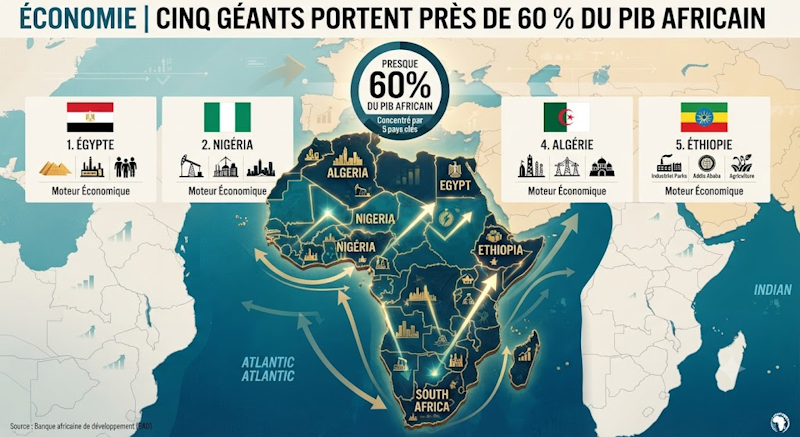
Fresh data reveals that just five African nations contribute nearly 60% of the continent’s total economic output. The powerhouse economies of Egypt, Nigeria, South Africa, Algeria and Ethiopia continue to shape Africa’s economic landscape through their diversified industries, vast natural resources and strategic investments.
The concentration of wealth in these nations highlights both their strategic importance and the economic inequalities still plaguing many African countries. While these five states drive growth through large domestic markets, robust industrial bases and major infrastructure projects, smaller economies struggle with limited industrialization, funding gaps and employment challenges.
What sets these economic giants apart?
Each of these nations leverages unique strengths to power their growth:
- Egypt and Nigeria benefit from massive populations and rapid economic diversification, transitioning from traditional sectors to technology and services.
- South Africa maintains its position as the continent’s industrial heartland and financial hub, while Algeria taps into its energy wealth and state-led investment strategies.
- Ethiopia has emerged as a manufacturing powerhouse, drawing global attention with its ambitious infrastructure developments and industrial parks.
The road ahead: balancing growth across the continent
Economic analysts warn that while these nations provide critical momentum, Africa’s future prosperity depends on more inclusive growth. Bridging the gap between these economic leaders and lagging regions will require targeted policies, cross-border partnerships and enhanced access to capital for smaller economies.
The challenge for policymakers now is to transform this uneven distribution into a collective upward trajectory—ensuring every African nation can participate in and benefit from the continent’s ongoing economic expansion.