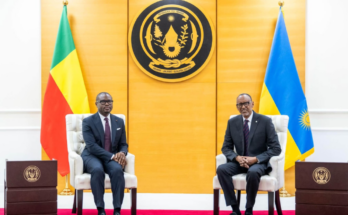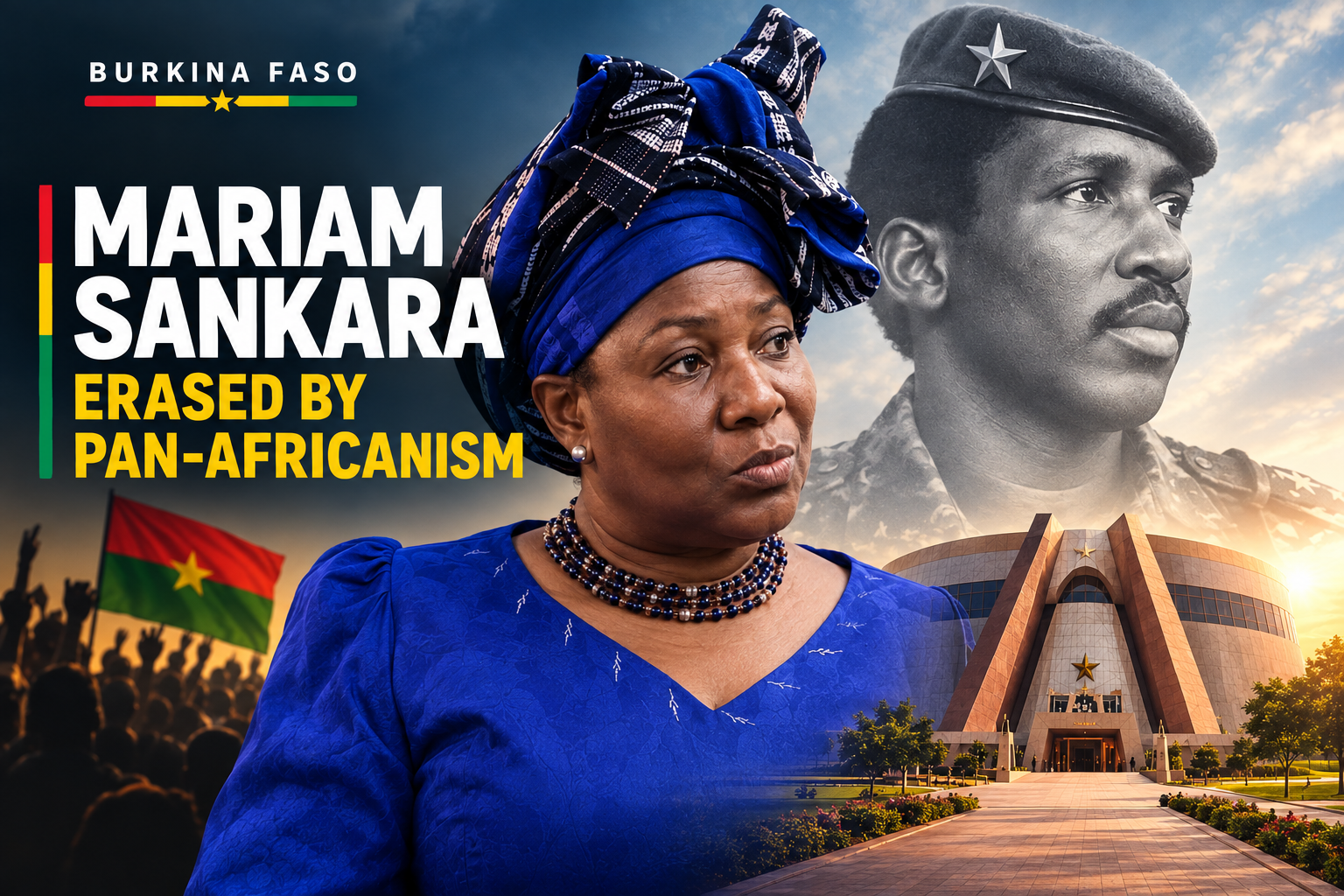
On 17 May 2025, Burkina Faso formally unveiled the Thomas Sankara Mausoleum in Ouagadougou, marking a significant moment in the nation’s efforts to institutionalize the legacy of its former revolutionary leader. The ceremony, held at the former Conseil de l’Entente site, was presided over by Prime Minister Rimtalba Jean Emmanuel Ouédraogo under the patronage of Captain Ibrahim Traoré. Dignitaries included Senegalese Prime Minister Ousmane Sonko, Chadian Prime Minister Allah-Maye Halina, representatives from the Alliance of Sahel States, and numerous pan-African figures from across the globe. Twenty-one cannon salutes echoed through the capital as speeches, revolutionary symbols, and Francis Kéré’s eye-shaped architectural design underscored the event’s global resonance.
During the proceedings, activist Nathalie Yamb was awarded the title of Knight of the Order of the Stallion—a gesture affirming her role in contemporary pan-African advocacy in Sankara’s name. Yet conspicuously absent from every speech and tribute was any mention of Mariam Sankara, the late leader’s widow. Neither she nor any family member attended the ceremony, echoing their absence at the 2023 reburial of Sankara’s remains.
The contested ownership of a national memory
This silence raises a fundamental question: who holds legitimate authority over Thomas Sankara’s legacy? Is it his family, who endured decades of exile and persecution following his 1987 assassination? Is it the Burkinabè state, now positioning him as a cornerstone of national identity? Or is it the broader pan-African movement that claims him as an ideological forefather?
Sankara’s transformation—from political martyr to national hero and now continental icon—has been accompanied by a systematic institutionalization of his memory. The newly inaugurated mausoleum is officially framed as a mechanism to “safeguard, preserve, and promote” his political heritage. Yet this formalization inevitably sidelines those who lived closest to his personal story, particularly his widow, who bore the burden of his name during years when even uttering it carried risk.
From erasure to appropriation
Under Blaise Compaoré, who seized power after Sankara’s murder on 15 October 1987, Mariam Sankara was forced into exile, spending over two decades in Montpellier, France. Her status as a former first lady was never acknowledged, and public reference to her husband was effectively suppressed. Only after Compaoré’s ouster in 2014 could she return, and only in 2021 did judicial proceedings against alleged perpetrators of the assassination commence.
Throughout this period, Mariam Sankara remained a steadfast advocate for truth and justice. Far from a passive observer, she was one of the few direct links to Sankara’s private life and familial history. Her activism formed a critical thread in the long struggle to reclaim his narrative.
A legacy reshaped across regimes
The current memorial project did not originate under Captain Ibrahim Traoré. The International Committee of the Thomas Sankara Memorial notes that planning began as early as 2 October 2016, spanning multiple administrations. Under President Roch Marc Christian Kaboré, Sankara’s rehabilitation accelerated, though often entangled with political calculations—including tentative overtures toward Compaoré’s possible return.
Under Traoré, however, Sankara’s image has evolved into state doctrine. Initially invoked to legitimize a coup-born government, his symbolism has since been subtly distanced once power stabilized. The rhetoric has shifted: from claiming kinship with Sankara to requesting comparisons cease altogether.
Today, Sankara is no longer merely remembered as a slain president or architect of the 1983 revolution. He is enshrined as an official national hero, central to Burkina Faso’s historical narrative. The mausoleum itself is presented not just as a resting place but as an instrument of political heritage management—memory not preserved, but curated, staged, and institutionalized.
Family objections and symbolic rupture
The Sankara family has consistently opposed key aspects of this commemoration. In February 2023, they publicly stated they felt “crushed by the force of public authority” and rejected burial at the assassination site, arguing it was too charged with trauma to serve as a place of peace. They proposed alternatives—Dagnoën Cemetery, the Garden of Friendship, or Yennenga Garden—and urged preservation of the murder site as historical ground, not a tomb.
Their appeals went unanswered. The reburial proceeded on 23 February 2023 at the memorial site, with Mariam Sankara notably absent—a detail widely noted in Burkinabè media and emblematic of an enduring divide: the state controls the public memory, while the family contests its execution.
The paradox of pan-African veneration
There is deep irony in how Sankara’s legacy is now wielded. A man who championed sovereignty, dignity, and resistance to domination finds his own memory subject to top-down imposition—precisely the kind of authority he opposed. As pan-African leaders invoke his name across continents, they often overlook the very family challenging the terms of his commemoration.
True pan-Africanism should not rest on symbols alone but on inclusive processes that respect the voices of those most intimately connected to the histories being honored. By elevating Sankara to mythic status, there is a danger of erasing the human beneath—the husband, the father, the man whose private grief preceded public ceremony.
Mariam Sankara, once his companion and mother of his children, stood guard over his memory when it was politically perilous to do so. Now, as monuments rise and cannons fire, her perspective is marginalized.
Sankara remains useful—so long as his utility serves state or ideological agendas. His family continues to bear the cost.
The core issue is no longer whether Burkina Faso honors Thomas Sankara, but whether it listens to those who knew him before he became a national narrative. A genuinely reconciled memory is not measured in stone or spectacle, but in a state’s willingness to engage with the living witnesses of loss. On that front, the Sankara file remains profoundly unresolved.