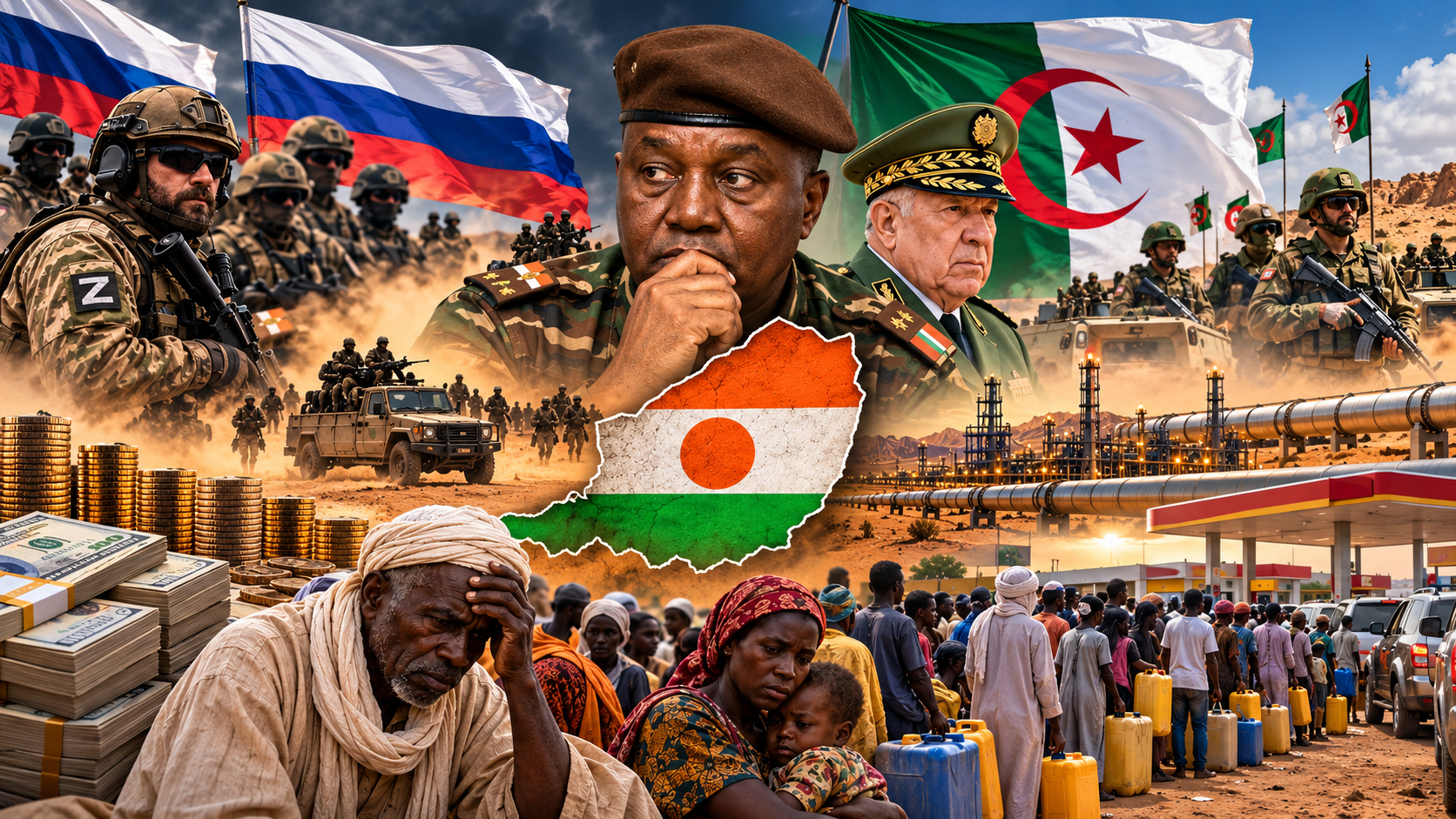
Algeria’s military intervention in Niger: a strategic shift with hidden costs
The government of Niger, under the leadership of general Abdourahamane Tiani, has moved beyond its initial reliance on Russian military contractors and is now seeking direct support from Algeria. On October 25, 2026, Algeria’s parliament approved the deployment of units from its National People’s Army (ANP) to Niger, marking a rare expansion of Algeria’s cautious foreign military engagement. While the move is presented as a strategic partnership, the financial and operational details remain unclear, leaving nigériens citizens to question the real motives and long-term implications.
The decision follows a period of intense military cooperation between Niger and Russia, where Africa Corps units were positioned as a cornerstone of Niamey’s security strategy. Yet, despite significant investment in foreign troops, the promised improvements in safety and state authority have not materialized. In fact, the persistent security challenges raise a critical question: if foreign mercenaries and allied forces failed to deliver stability, why is the government doubling down on external military partnerships instead of investing in national defense?
Russian mercenaries: high costs, limited impact
Niger’s engagement with Russian forces, especially those linked to Africa Corps, has been framed as essential to restoring order. However, the effectiveness of this arrangement remains unproven. Reports suggest that monthly costs for individual contractors could reach $10,000 a figure not yet substantiated by public contracts or verified documentation. Even if this amount were accurate, the broader question remains: are these expenditures justified by measurable improvements in security? Or are they draining already limited public funds without delivering tangible benefits to the population?
Without transparent reporting on operational results, the public has no way to assess whether the financial burden is justified. This lack of accountability is especially concerning given Niger’s pressing social and economic needs, including education, healthcare, and critical infrastructure. If foreign security cooperation continues without clear outcomes, the costs—both financial and in terms of missed development opportunities will ultimately be borne by the citizens of Niger.
Why Algeria? unraveling the motives behind the new alliance
Algeria’s involvement introduces a new dimension to Niger’s security landscape. The two countries have deepened diplomatic and military ties through high-level meetings and a recently signed military cooperation protocol. But beyond official statements, several questions persist about the underlying motivations of this partnership.
Is Algeria’s primary interest in combating armed groups, protecting its own economic interests, or both? Algeria has significant stakes in Niger’s energy sector, including oil projects and the proposed trans-Saharan gas pipeline. Securing these assets is a strategic priority for Algiers, and it may explain its willingness to intervene. However, this raises further questions: does this cooperation serve the security needs of Niger’s population, or does it primarily safeguard Algeria’s economic investments?
While Algeria’s concerns about regional instability and transnational threats are legitimate, the dual focus on security and energy security complicates the narrative. Without clear operational definitions and public oversight, there is a risk that military engagement in Niger becomes a mechanism for protecting foreign interests rather than enhancing local stability.
Transparency and accountability: the missing link in Niger’s security strategy
The core of the public’s unease lies in the opacity surrounding these military agreements. Niger’s government has framed sovereignty as a central pillar of its legitimacy, yet the reliance on multiple foreign partners each with their own agendas undermines the coherence of this position. Sovereignty, in this context, must be demonstrated through transparent decision-making, clear cost-benefit analysis, and measurable results.
For the agreement with Algeria to be credible, the government of Niger must provide answers to critical questions: what specific military tasks will the Algerian forces undertake? Who will fund the operations, and how will the costs be distributed? Will the presence of foreign troops lead to improved security for rural communities, merchants, and families in high-risk areas, or will it focus only on protecting strategic infrastructure such as oil fields and energy corridors?
Public trust hinges on these details. Without them, citizens are left to wonder whether the new military partnership is a genuine effort to secure the country or a costly deal that will primarily benefit foreign stakeholders while saddling Niger’s economy with unsustainable debt.
Economic trade-offs: security vs. development
Niger faces immense developmental challenges, from education and healthcare to road infrastructure and economic growth. Every major financial commitment in the security sector must be weighed against these priorities. If the deployment of Algerian forces leads to increased public spending without a corresponding improvement in safety, the consequences will be severe. Pressure on national finances could force cuts in social services, and long-term dependence on foreign military support could erode national autonomy.
Moreover, the financial burden of hosting foreign troops is not limited to direct military costs. Logistics, transportation, accommodation, and supplies all place additional strain on the national budget. If these expenses are not clearly outlined and shared transparently, the public will have no way to assess whether the investment is justified or whether it is simply another short-term fix with long-term liabilities.
The central issue is not whether Niger should seek international military assistance, but how such assistance is negotiated, implemented, and accounted for. A responsible government must ensure that every decision especially one involving foreign troops serves the public interest rather than the interests of external partners.
What defines a successful security partnership?
The true measure of any military cooperation is not found in treaties or diplomatic photo opportunities, but in tangible outcomes for the people of Niger. Will the presence of Algerian forces lead to a reduction in armed attacks? Will rural communities feel safer? Will trade routes and infrastructure be more secure without diverting resources from critical development projects?
The government must define clear, measurable objectives and publish regular assessments of progress. The public deserves to know whether the new alliance delivers real improvements in security or whether it is merely an extension of previous failed strategies. Citizens should not be asked to foot the bill for military experiments that lack transparency or accountability.
The way forward: sovereignty and responsibility
General Tiani’s government has repeatedly invoked sovereignty as a justification for its political legitimacy. Yet sovereignty is not merely about rejecting past alliances or embracing new ones. It is about the ability to make informed, accountable decisions that prioritize the well-being of the population. If foreign partners are necessary to address security deficits, the government must demonstrate that these alliances are strategic, cost-effective, and transparently managed.
Niger’s challenges are immense, and no single solution will resolve them overnight. But the path forward must be built on clear communication, fiscal responsibility, and a commitment to results. The people of Niger deserve nothing less than a government that protects them not just in word, but in deed.
By Jeanne Ntouba — Journalist
