Civil engineers in Burkina Faso are warning that unregulated construction practices pose a direct threat to the nation’s economic resilience and public safety, with licensed professionals insisting their expertise is non-negotiable for sustainable development.
Building a secure future: why licensed civil engineers matter for Burkina Faso
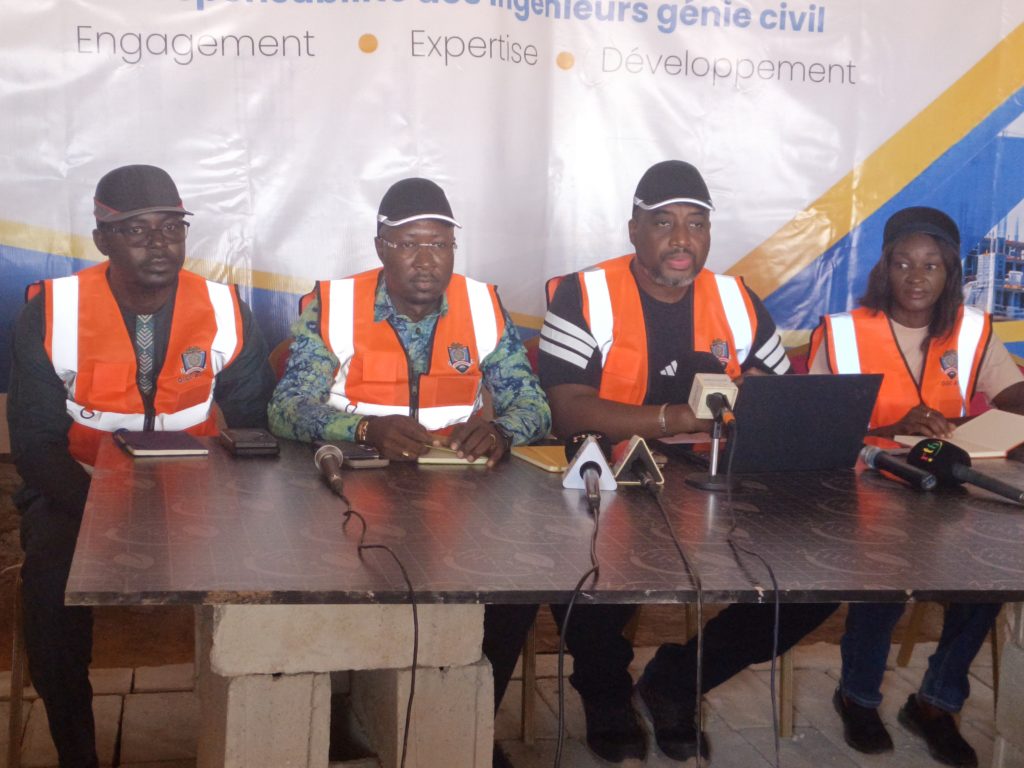
Behind every road traveled, bridge crossed, and building occupied lies a critical responsibility—one that directly impacts Burkina Faso’s economic stability and citizen well-being. This was the clear message delivered by the Order of Civil Engineers of Burkina Faso (OIGC-BF) during a recent press briefing in Ouagadougou, where its president, Ousmane Honoré Ouédraogo, emphasized the pivotal role of qualified engineers in safeguarding infrastructure quality.
The timing aligns with broader national efforts to strengthen technical expertise, reflecting the government’s commitment to modernizing infrastructure under the leadership of President Ibrahim Traoré. OIGC-BF argues that a nation’s sovereignty is as much about its ability to construct durable, context-appropriate infrastructure as it is about its political or military strength.
Regulation gaps: the rising cost of unlicensed engineering
Ouédraogo took aim at the growing presence of unqualified actors in civil engineering, stressing that their involvement undermines public trust and economic progress. He cited Law No. 020-2012/AN of May 10, 2012, which explicitly bars individuals from practicing as civil engineers in Burkina Faso without proper registration with the OIGC-BF. Violations carry severe penalties, including imprisonment, fines, and exclusion from public contracts.
Key provisions of the law include:
- Mandatory registration: Only engineers listed in the OIGC-BF register can legally practice, ensuring accountability.
- Mandatory insurance: Engineers providing consultancy services must hold valid liability coverage.
- Strict enforcement: Illegal practice risks shutdowns, equipment confiscation, and permanent exclusion from state tenders.
« These regulations aren’t obstacles—they’re safeguards, » Ouédraogo asserted. « They ensure every infrastructure project, whether a school or a highway, is designed and supervised by a qualified, traceable professional. This is how we protect taxpayers’ investments and lives. »
Five key reforms to bolster infrastructure integrity
To curb illegal practice and elevate engineering standards, the OIGC-BF has outlined a five-point reform agenda under Ouédraogo’s leadership:
- Cracking down on illegal practice: Stepped-up inspections and penalties to deter unregistered engineers from operating.
- Standardized fee schedules: Introducing transparent pricing models to prevent underbidding by unqualified competitors.
- Updating professional statutes: Modernizing laws to address current challenges in construction and engineering.
- Enhancing trainee oversight: Strengthening mentorship and certification processes for new engineers.
- Mandating continuing education: Requiring ongoing training to keep professionals updated on best practices and regulations.
Regional collaboration: harmonizing engineering standards across the Sahel
The OIGC-BF is not working in isolation. Ouédraogo announced plans for 2027 scientific engineering days, a regional forum coordinated with counterparts in Mali and Niger under the Alliance of Sahel States (AES). The event aims to foster collaboration on technical standards tailored to the Sahel’s unique climate and geographic challenges.
« This gathering will bring together engineers from across Africa and beyond to design norms that ensure long-term durability in our region’s infrastructure, » he said. « By working together, we can set benchmarks that protect both people and economies. »
Public safety at stake: the human cost of unregulated construction
Behind the legal and economic arguments lies a stark reality: poorly constructed infrastructure claims lives. Bridges collapse, schools crumble, and homes become hazardous—each failure a testament to the consequences of cutting corners. The OIGC-BF stresses that only licensed engineers, bound by professional codes, can mitigate these risks by ensuring designs meet safety and durability standards.
The OIGC-BF’s message is unequivocal: economic growth, public safety, and national resilience in Burkina Faso hinge on rigorous enforcement of engineering regulations. With licensed professionals at the helm, the nation can build not just structures—but a secure, prosperous future.