The escalating violence in the Sahel has left entire communities in Burkina Faso, Mali, and Niger struggling to survive. As security forces battle insurgent groups, families face displacement, farmers abandon their land, and young people see no future. Traditional leaders, with their deep roots in local communities, are stepping into the breach—not to replace government efforts, but to complement them with grassroots mediation, conflict prevention, and economic recovery initiatives that no military strategy can achieve alone.
How traditional leadership is reshaping the Sahel’s fragile peace
The Sahel’s crisis is more than just a security emergency. Since 2015, Burkina Faso has seen its people displaced by violence, its economy disrupted by disrupted trade, and its social fabric frayed by mistrust. The traditional leadership in the Liptako-Gourma region—represented by figures like the Emir of Liptako—has become a vital force in restoring stability, not just through words, but through action. Their involvement ranges from resolving land disputes between farmers and herders to reintegrating former combatants into their communities.
Beyond security: the hidden costs of violence
The impact of the crisis extends far beyond military operations. Families torn apart by displacement struggle to access food and healthcare. Farmers in the Liptako-Gourma region, once productive agricultural zones, now watch their crops fail as insecurity spreads. Young people, disillusioned by a lack of opportunities, are often lured into armed groups or forced to migrate. These challenges demand solutions that security alone cannot provide.
The traditional leadership serves as a bridge between communities and state institutions, filling gaps where government reach is limited. They mediate disputes over water and land—resources that have sparked deadly conflicts—while fostering dialogue between ethnic groups divided by mistrust. By reinforcing social cohesion, they are helping to prevent further violence before it erupts.
The Emir of Liptako’s vision for lasting stability
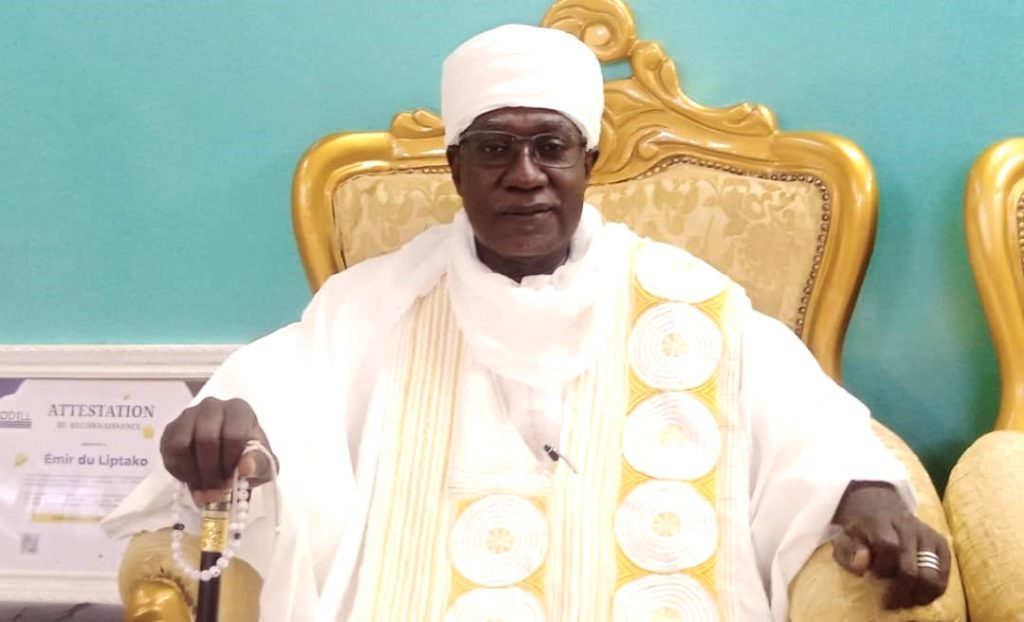
In a recent address, the Emir of Liptako emphasized that the Sahel’s future hinges not just on military victories, but on justice, economic revival, and trust between people and their leaders. “The violence we see today is not just an issue for soldiers to resolve,” he stated. “It is a crisis of broken trust, lost livelihoods, and shattered dreams—and traditional leaders are uniquely positioned to address it.”
Preventing conflict before it begins
Traditional authorities in Burkina Faso, Mali, and Niger are leveraging their deep knowledge of local dynamics to head off disputes before they escalate. They listen to grievances, mediate disputes over grazing rights, and ensure that no single act of violence is allowed to poison relations between entire communities. Their approach is rooted in impartiality—balancing the needs of farmers, herders, and families while upholding the law.
This role is especially critical in border regions like Liptako-Gourma, where tensions often spill across national lines. The Emir of Liptako has called for stronger ties between Burkina Faso, Mali, and Niger, arguing that regional cooperation—not isolation—is the path to peace. By facilitating dialogue between villages and communities, traditional leaders are helping to reduce cross-border tensions that fuel insurgencies.
The power of a new legal framework
January 2026 marked a turning point for traditional leadership in Burkina Faso, with the adoption of Law No. 002-2026/ALT, which grants legal recognition to customary authorities. This landmark legislation formalizes their role in the nation’s social and political fabric, ensuring they have the tools to contribute meaningfully to peacebuilding.
The law, comprising 43 articles across six chapters, provides a clear roadmap for the selection, protection, and responsibilities of traditional leaders. It prevents conflicts over succession, ensures chiefs are officially recognized, and safeguards the spaces where customs and traditions are preserved. Most importantly, it enables traditional leaders to work alongside government institutions without being absorbed by them.
A framework for responsibility and collaboration
The new law does not grant unchecked authority to chiefs. Instead, it establishes a partnership between traditional leadership and the state, where each plays a distinct role. Traditional leaders are called upon to:
- Serve as impartial mediators in disputes, especially over land, water, and resources.
- Promote social cohesion by fostering dialogue among generations and bridging divides between communities.
- Support reconciliation after violent incidents, ensuring that entire communities are not unfairly blamed for the acts of individuals.
- Collaborate with local authorities on peacebuilding initiatives, environmental protection, and economic development.
This legal recognition is not just symbolic—it empowers traditional leaders to act decisively within a structured framework, where their authority is respected, but their actions are accountable to the communities they serve.
A roadmap to rebuild the Liptako-Gourma
The Emir of Liptako envisions a future for the Liptako-Gourma where trade flows freely, families feel safe, and young people have opportunities to thrive. Achieving this vision requires a multi-pronged strategy:
1. Prioritizing dialogue over deterrence
Security measures must be paired with robust mediation efforts. Traditional leaders are uniquely positioned to facilitate dialogue between conflicting groups, ensuring that grievances are addressed before they escalate into violence. This includes restoring trust between communities and state institutions through regular engagement and transparent communication.
2. Strengthening regional cooperation
Insurgencies do not recognize borders. Burkina Faso, Mali, and Niger must collaborate to manage shared resources like water and grazing lands, prevent cross-border tensions, and develop joint strategies for conflict prevention. Traditional leaders can play a key role in these efforts by maintaining communication between villages and facilitating joint initiatives.
3. Revitalizing local economies
Stability cannot be achieved without economic opportunity. The youth of Liptako-Gourma, many of whom have been displaced or left without education, need viable pathways to employment and income. Investing in agriculture, vocational training, and small business development can provide alternatives to recruitment by armed groups or migration. Traditional leaders can advocate for policies that support these efforts and ensure communities are directly involved in designing solutions.
4. Restoring trust in governance
Trust is the cornerstone of any lasting peace. For many in the Sahel, the state’s inability to provide security has eroded faith in institutions. Traditional leaders can help rebuild this trust by ensuring that security operations are accompanied by the restoration of essential services, including healthcare, education, and justice. They can also serve as intermediaries between communities and authorities, ensuring that local voices are heard in national policy decisions.
The Emir of Liptako’s call to action
The path to peace in the Sahel is not a straight line. It demands collaboration between traditional leaders, governments, and citizens, with each playing a distinct but complementary role. The Emir of Liptako’s message is clear: traditional leadership is not a relic of the past, but a critical partner in shaping the region’s future. Their deep connections to communities, their unwavering commitment to justice, and their unique ability to mediate disputes make them indispensable in the fight for stability.
As Burkina Faso, Mali, and Niger grapple with the dual challenges of insurgency and economic hardship, the role of traditional leaders offers a glimmer of hope. By bridging divides, restoring trust, and fostering economic revival, they are not just responding to the crisis—they are building the foundations for a more resilient Sahel.