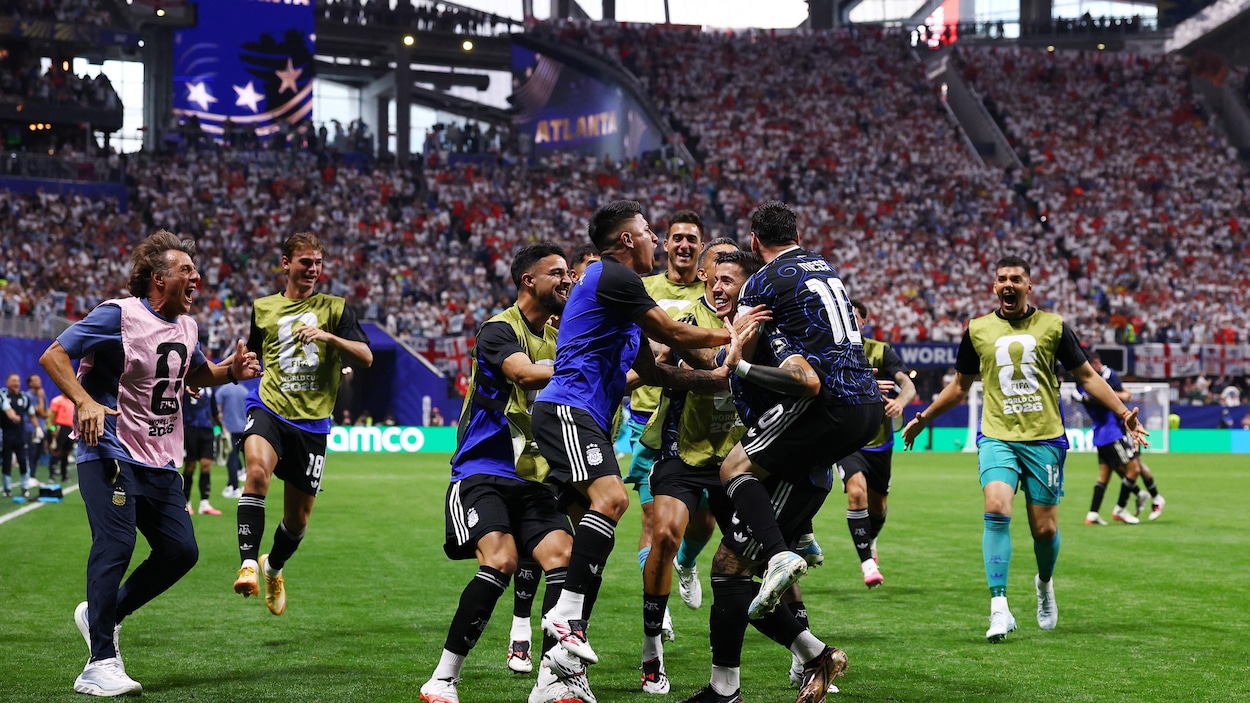
The Argentine national team secured their place in the FIFA World Cup final with a breathtaking 2-1 victory over England in a high-stakes semifinal clash at Atlanta Stadium. The match, decided in the dying moments of play, saw the reigning champions showcase their resilience and determination in a nail-biting encounter.
The English side struck first through Anthony Gordon in the 55th minute, following a brilliant assist from Morgan Rogers. The Three Lions controlled much of the game, but their inability to maintain their lead in the closing stages proved costly. Two crucial goals in stoppage time—first by Enzo Fernandez in the 85th minute and then by Lautaro Martinez with the last kick of the game—turned the tide dramatically in Argentina’s favor.
Messi shines as Argentina rallies
Lionel Messi, the Argentine captain, played a pivotal role in the victory, contributing two decisive assists that set up the late goals. His leadership and composure under pressure were evident as he orchestrated attacks deep into the English half during the final stages of the match.
“Today, we fought for every inch of this victory,” Messi reflected. “This wasn’t just another win—it was a moment the entire nation, and we as a team, desperately needed.” His comments underscored the emotional weight of the triumph, particularly in the context of Argentina’s historic rivalry with England.
Argentina’s head coach, Lionel Scaloni, echoed these sentiments, praising the team’s unyielding spirit. “What this group has shown is nothing short of extraordinary,” he said. “The passion from our fans lifted us to a historic win today. We are truly unique, and this victory belongs to the people who supported us.”
England’s heartbreak and missed opportunities
England’s captain, Harry Kane, admitted his disappointment after the match. “I’m devastated for the players, the staff, and the fans,” he said. “We controlled the game for long stretches, but when we had the lead, we didn’t manage it well enough at this level.”
The Three Lions’ failure to reach the final marks another setback in their quest for a first World Cup title since 1966. Their campaign now ends in disappointment, as they fall just short of their ultimate goal.
Controversial gesture overshadows the win
Following the final whistle, Argentine players displayed a banner reading “Las Malvinas son argentinas”—a reference to the long-standing territorial dispute over the Falkland Islands. The gesture, though symbolic for many supporters, contravenes FIFA’s rules prohibiting political statements during matches.
The incident drew a measured response from Argentine President Javier Milei, who emphasized the need to separate sports from geopolitical issues. “We must not mix soccer with the Falklands dispute,” he stated. “The islands will be recovered through diplomacy, not cheap displays of patriotism. This is just a soccer match, and today’s victory is a glorious step for our team.”
The Falkland Islands, known as Las Malvinas in Argentina, have been a point of contention since 1833, culminating in a brief but bloody war in 1982. The conflict claimed the lives of 649 Argentine and 258 British servicemen. Argentina’s national anthem for the 2026 World Cup, “La Cuarta Estrella,” includes a tribute to the islands, linking the team’s success to the nation’s historical struggles.
Path to the final
Argentina’s journey to the final has been defined by their never-say-die attitude. Despite struggling in early rounds against teams like Cape Verde and Egypt, the team’s cohesion and fighting spirit have propelled them forward. Their semifinal win sets up an eagerly anticipated final against Spain, who earlier defeated France 2-0 in the other semifinal.
The stage is now set for a showdown that promises drama, skill, and high stakes as Argentina and Spain vie for the ultimate prize in world soccer.