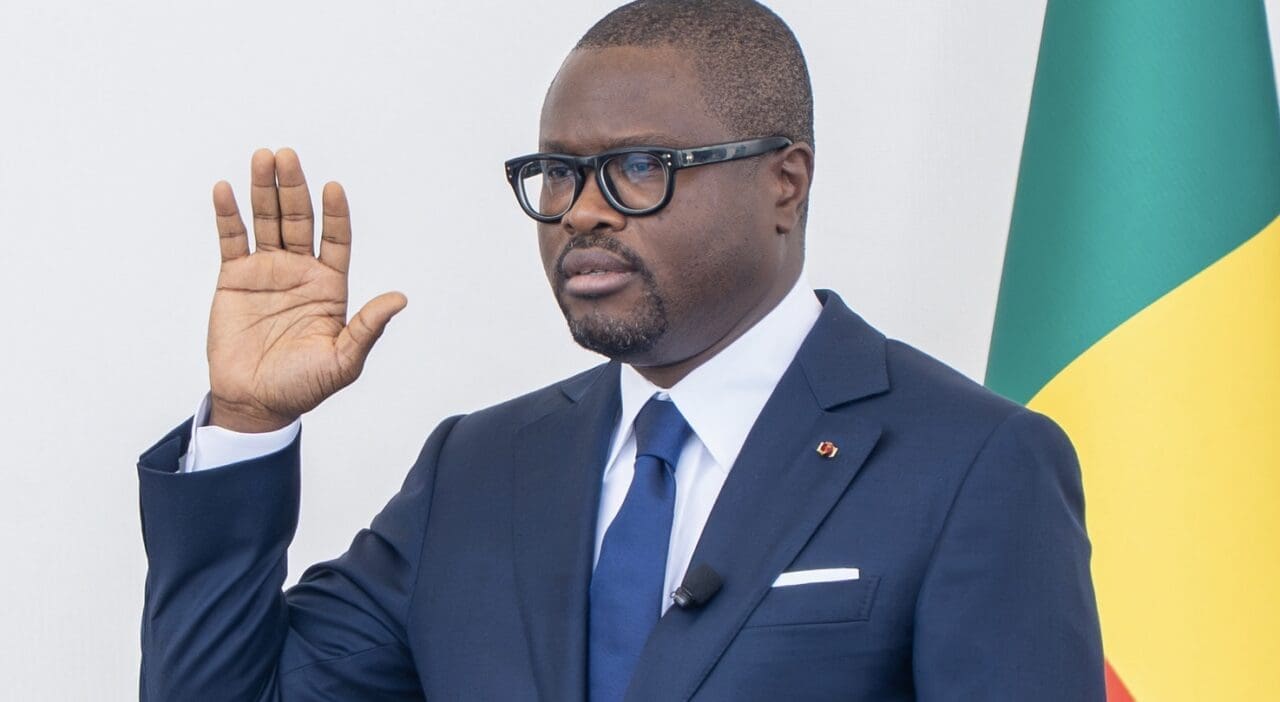
On Sunday, May 24, Cotonou’s Palais des Congrès esplanade became the epicenter of West African diplomacy. The investiture of Romuald Wadagni drew a star-studded guest list that included Aliko Dangote, Hassanein Hiridjee, Nigeria’s Vice President, and Niger’s Prime Minister. Their presence underscored the international credibility Wadagni cultivated during his tenure as Benin’s Finance Minister.
Regional unity takes center stage
The ceremony highlighted a rare moment of regional unity, with delegations from over 16 countries. While protocol traditionally excludes sitting heads of state, the attendance of high-ranking officials—including Nigeria’s and Côte d’Ivoire’s Vice Presidents—sent a strong message about Benin’s strategic alliances in West Africa.
A spontaneous outburst of applause erupted when Niger’s Prime Minister Ali Mahamane Lamine Zeine and the Foreign Ministers of Burkina Faso and Mali were announced. This reaction reflected deep national pride in Wadagni’s vision of regional cooperation, particularly in combating terrorism. As he stated in his address, “The countries of this subregion are now bound by destiny to work together.”
Niger’s envoy echoed this sentiment, calling the occasion “a new path forward” and praising Wadagni’s pre-investiture gestures of solidarity as a turning point for regional relations.
Economic momentum draws global investors
The event doubled as an exclusive business summit, with Africa’s top entrepreneurs and investors converging on Cotonou. Dangote, Africa’s richest man, stood alongside Hiridjee, CEO of Axian Group, and Adama Bictogo, head of Côte d’Ivoire’s Snedai Group. Their presence was complemented by Makhtar Diop, CEO of the International Finance Corporation (IFC), signaling confidence in Benin’s economic trajectory.
Wadagni’s financial stewardship—marked by a projected 6.5% growth for 2026 and domestic revenue exceeding 1 trillion FCFA—has positioned Benin as one of Africa’s fastest-growing economies. His policies kept public debt under 55% of GDP, reassuring international partners and unlocking funding for flagship projects like the Glo-Djigbé Industrial Zone (GDIZ).
Developed in partnership with Arise IIP, GDIZ has already created over 25,000 jobs and begun exporting garments to Europe and the U.S. This industrial hub exemplifies Benin’s shift toward local value addition and serves as a model for the country’s broader economic transformation.
The turnout in Cotonou was no coincidence. It reflected the high expectations placed on Wadagni, whose leadership as Finance Minister laid the groundwork for a presidency that could reshape Benin’s future.