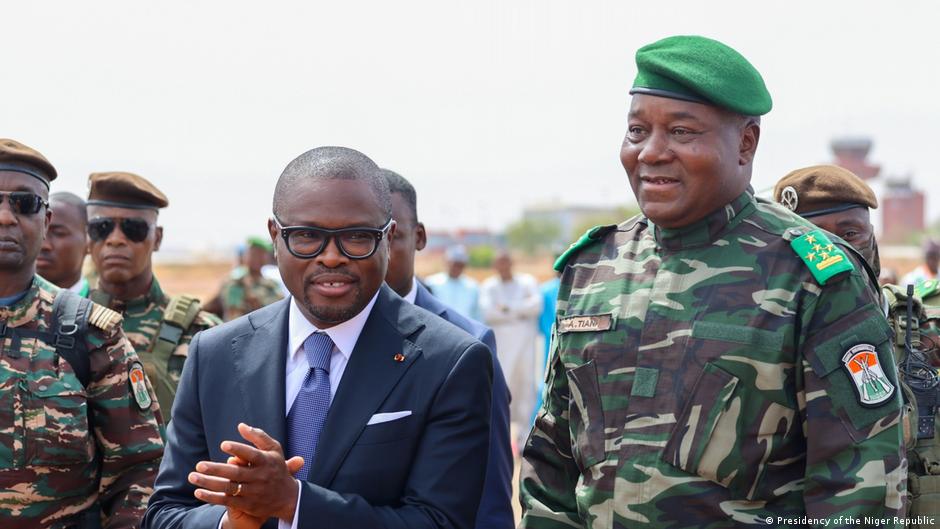
A joint expert committee has breathed new life into stalled negotiations between Bénin and Niger, raising hopes of a long-awaited border reopening. The panel’s findings address critical issues of security, transit protocols, and legal-economic frameworks, though Niamey’s insistence on three ‘non-negotiable’ conditions may still delay final political ratification.
Three pillars of trust
Niger’s authorities have set strict prerequisites for reopening the Bénin–Niger border, closed since 2023. First, they demand a formal mutual defense pact to enshrine non-aggression and prevent either nation from serving as a staging ground for destabilizing actions against the other. Regis Hounkpe, executive director of InterGlobe Conseils, calls this a foundational step: ‘Mutual pledges of non-aggression are standard, yet the three-year standoff makes them appear extraordinary. The real test will be implementation—ensuring both sides uphold these commitments without imposing rigid constraints.’
The second condition mandates an intelligence-sharing mechanism, including a joint cell for real-time data exchange on terrorism and cross-border trafficking. Hounkpe applauds this move as reciprocal reassurance: ‘A shared platform ensures neither country harbors destabilizing movements.’
The third demand targets transparency regarding foreign military deployments near the border, particularly any partnerships involving Western or other external actors. Hounkpe frames this as a sovereignty safeguard: ‘Bénin is free to pursue alliances with France, China, Russia, or others—but only if they’re not weaponized against Niger. Pragmatism dictates no nation benefits from exporting instability.’
Economic lifelines at stake
The closed frontier has crippled Niger, a landlocked nation where 70% of imports—including fuel, construction materials, and food staples—once flowed through Bénin. Detours via Togo or Nigeria have inflated logistics costs by 30–50%, straining budgets already strained by the suspension of oil exports via the 2,000-kilometer Niger–Bénin pipeline. Analysts estimate blocked shipments cost Niger millions daily in lost revenue.
Bénin isn’t spared. The port of Cotonou, once a regional hub, now faces congestion as diverted cargo clogs logistics networks. Revenue losses in customs, transport, and wholesale sectors have hit 60% in some areas, while diverted trade has eroded Bénin’s competitive edge against rivals like Togo and Nigeria.
Human toll of isolation
Beyond commerce, communities on both sides suffer. Markets in Malannville (Bénin) and Gaya (Niger) report up to 50% fewer customers, forcing shop closures and layoffs. Essential goods have vanished from shelves, prices have surged, and families separated by the border face rising travel costs and safety risks. Dangerous pirogue crossings and extortion networks have proliferated, deepening vulnerabilities.
Diplomacy driven by necessity
The impetus for dialogue came from Romuald Wadagni, Bénin’s newly elected president, who visited Niamey in early June 2026 to revive cooperation. Hounkpe argues that geopolitical tensions must yield to economic survival: ‘Leaders are bound by geography. They must prioritize logistics, security, and anti-terrorism over ideological divides.’
While a full reopening remains contingent on Niamey’s conditions, a phased restart—prioritizing essential goods with heightened controls—seems likely. Hounkpe sees potential for ripple effects across the African Union and ECOWAS, citing similar economic-driven rapprochements, such as the recent thaw between Mali and Côte d’Ivoire.