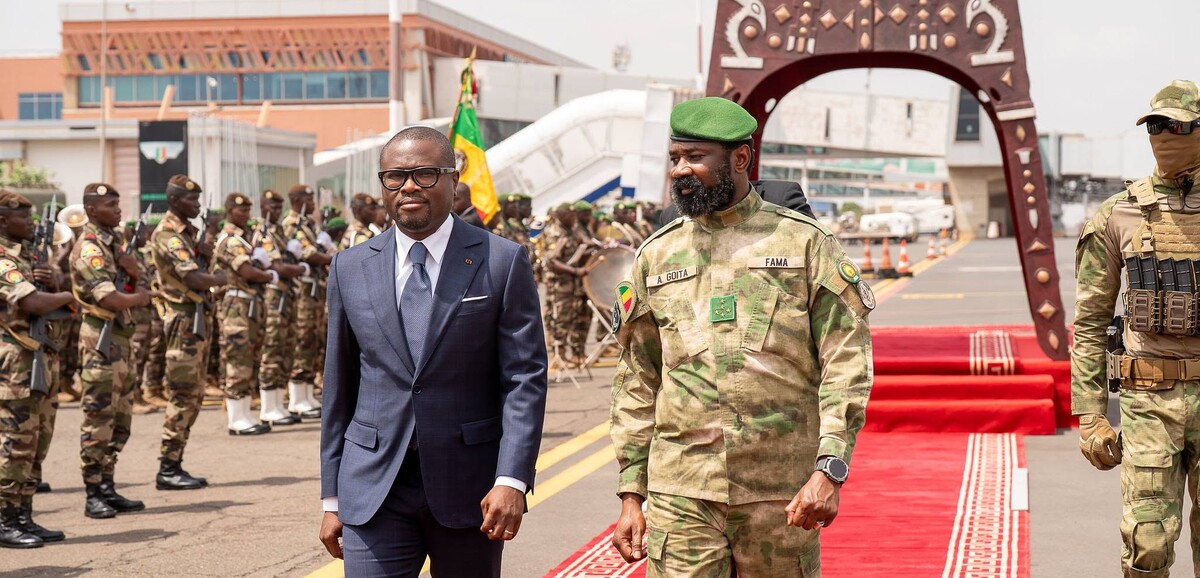
President Romuald Wadagni of Bénin has continued his diplomatic mission across West Africa. Following engagements in Niger and Burkina Faso, his latest stop brought him to Mali, signaling a clear intention to strengthen ties with the nations comprising the Alliance des États du Sahel (AES).
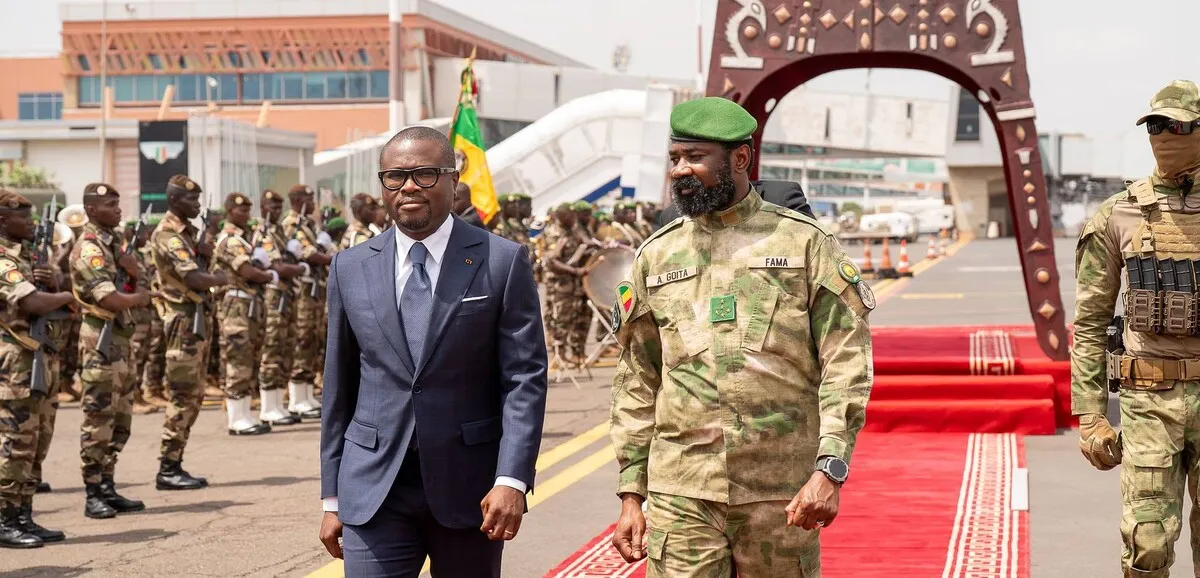
A notable rapprochement is unfolding between Cotonou and the member states of the Alliance des États du Sahel (AES). During his visit to Bamako on Tuesday, June 9, Béninese President Romuald Wadagni held discussions with Malian Head of State Assimi Goïta. This meeting forms a crucial part of a wider regional tour initiated just weeks after President Wadagni’s inauguration.
Following earlier engagements in Niger and Burkina Faso, this stop in Mali underscores the new Béninese leader’s commitment to re-establishing open communication channels with the military-led governments across the Sahelian zone. This proactive diplomacy aims to address current regional dynamics and foster stability.
Renewed momentum for Bénin-Mali relations
The two heads of state concluded their meeting by issuing a joint declaration, expressing their shared ambition to infuse a “new dynamic” into the relationship between Mali and Bénin. Key discussions centered on bolstering economic, commercial, and cultural cooperation between their respective nations.
In a further gesture of diplomatic goodwill, Romuald Wadagni extended an official invitation to Assimi Goïta for a state visit to Bénin, signaling a clear easing of tensions and a desire for closer ties between the two capitals.
A shifting diplomatic landscape in the region
Relations between Bénin and the AES countries had previously faced significant strain in recent years, particularly with neighboring Niger following the 2023 coup d’état. Since assuming office on May 24, President Wadagni has actively pursued diplomatic initiatives aimed at restoring constructive dialogue with the authorities in Bamako, Ouagadougou, and Niamey, seeking to mend regional rifts. This development is significant for West Africa Burkina and broader regional stability.
Strategic implications for West Africa
This pivotal tour unfolds amidst a deeply divided regional landscape, characterized by significant divergence between the Economic Community of West African States (ECOWAS) and the AES member nations. Mali, Burkina Faso, and Niger have notably withdrawn from the regional organization to form their own confederation, citing concerns that ECOWAS no longer adequately addresses their aspirations for sovereignty and security.
President Wadagni’s diplomatic outreach represents one of the inaugural major foreign policy moves of his presidency. It holds the potential to significantly de-escalate tensions and foster greater cohesion within the broader West African sphere, impacting the future of West Africa Burkina and its neighbors.