The imminent arrival of Ramadan has cast a shadow over Burkina Faso’s livestock sector, as the government’s strict export ban on cattle threatens to cripple the livelihoods of pastoralists and traders. While authorities cite price stabilization as the justification for this policy, the economic and humanitarian fallout is becoming increasingly severe as the holy month approaches.
An ill-timed policy with far-reaching consequences
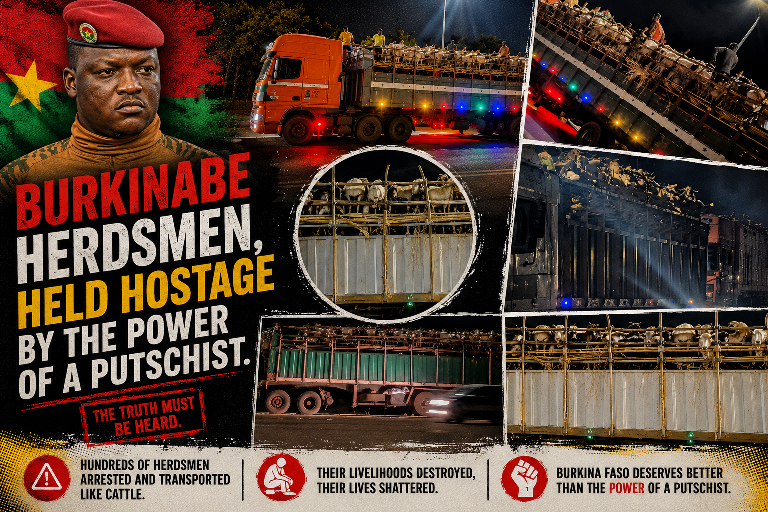
Since the introduction of the blanket ban on cattle exports, the Mobile Brigade for Economic Control and Fraud Prevention (BMCRF) has intensified inspections, seizing multiple livestock trailers in the early hours of May 14. However, these measures, though presented as necessary for market regulation, have exposed a deeper crisis for Burkina Faso’s cattle farmers.
Cattle are not mere commodities—they require constant care, including water, feed, and veterinary attention. With costs skyrocketing during the dry season, the export ban has cut off a vital revenue stream for herders who rely on cross-border trade to sustain their operations. The timing could not be worse, as regional demand typically surges during Ramadan, offering higher prices and better opportunities for farmers.
A contradiction between faith and policy
The current measures take on an even more complex dimension given the religious context. The head of state, Captain Ibrahim Traoré, is himself a Muslim, raising questions about the alignment between policy and Islamic values of solidarity and economic justice. The Ramadan period is one of heightened financial need for millions of families, many of whom depend on cattle sales to fund celebrations and religious obligations. By enforcing an absolute ban, the government risks undermining the very communities it claims to protect.
The irony is stark: while the state enforces rigid controls, it has yet to introduce supportive measures to ease the financial burden on farmers during this critical period. Without alternative income sources or temporary exemptions, the policy risks pushing herders toward informal and high-risk trade routes to avoid total economic collapse.
From regulation to crisis: the hidden costs of isolation
The crackdown on illegal exports, though framed as a crackdown on fraud, reflects a broader failure to anticipate the human cost of the ban. Many farmers now face an impossible choice: sell their livestock at a loss in a saturated domestic market or attempt dangerous border crossings to reach more lucrative markets. The absence of dialogue or adaptive measures suggests a widening disconnect between policymakers in Ouagadougou and the rural communities they govern.
Can a nation achieve food sovereignty by strangling its primary producers? The question looms large as the Ramadan deadline approaches, with the potential to deepen distrust between the state and those who feed the country.