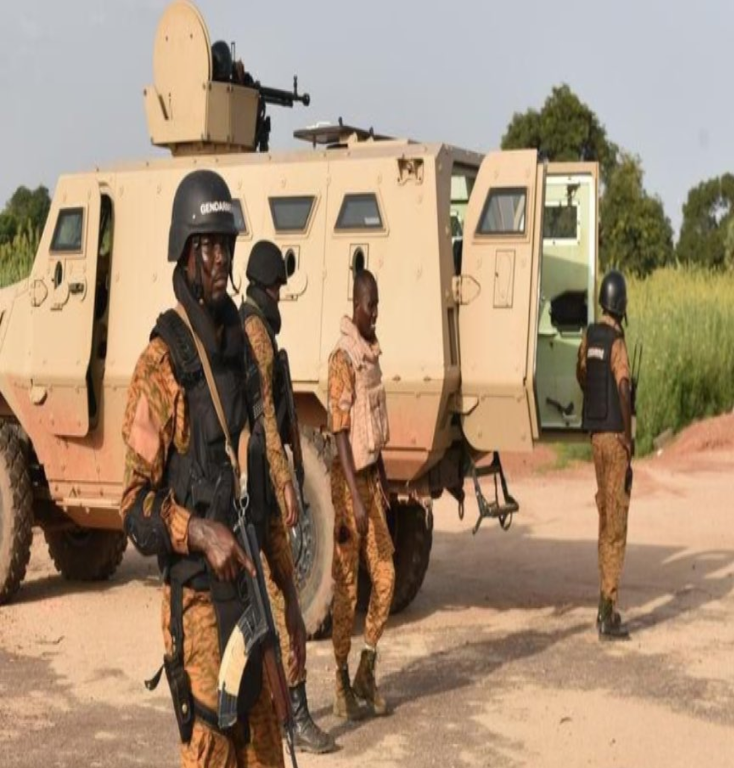
The al-Qaeda-affiliated Group for the Support of Islam and Muslims (JNIM) has claimed responsibility for a deadly assault on Burkinabè security forces, including the destruction of an armored vehicle near Fada N’Gourma and the killing of three Volunteers for the Defense of the Homeland (VDP) in Bam Province. The militant group also alleges seizing automatic rifles during the operations, intensifying concerns over the country’s worsening security crisis.
Blindée hit near Fada N’Gourma in suspected IED attack
According to the JNIM’s statement, an improvised explosive device (IED) detonated against a Burkinabè army armored vehicle in the Eastern region, near the strategic crossroads of Fada N’Gourma. While the militant group describes the outcome as a complete destruction of the vehicle, no independent verification of the claim has yet been provided. The attack highlights the persistent threat posed by roadside bombs and ambushes, which have become a hallmark of insurgent operations across the Sahel.
These tactics not only inflict material losses but also disrupt supply routes, making military movements and civilian travel increasingly perilous in high-risk zones. The incident underscores the evolving nature of the conflict, where stealth and surprise often dictate the balance of power between armed groups and security forces.
Bam Province witnesses deadly confrontation as VDP targets fall
The JNIM’s second claimed operation targeted local defense forces in Bam Province, resulting in the deaths of three VDP members and the alleged confiscation of automatic weapons. The Volunteers for the Defense of the Homeland (VDP), a civilian auxiliary force, play a critical role in supporting national troops but operate with high exposure to militant attacks. Their involvement bolsters security efforts while also placing them directly in the crosshairs of jihadist groups.
Although the group’s claims have not been confirmed, the loss of firearms—if validated—could further destabilize the region by arming militant factions and escalating local violence. Authorities have yet to disclose details on the exact location, circumstances, or specific weaponry involved in the incident, leaving key questions unanswered.
Burkina Faso’s deepening insecurity drives humanitarian crisis
The latest attacks are part of a broader pattern of violence gripping Burkina Faso, where jihadist insurgencies have ravaged multiple provinces. The Eastern, Northern, Central-Northern regions and beyond continue to face relentless threats, forcing communities into isolation and severing access to essential services. Schools shutter, healthcare systems falter, and agricultural activities grind to a halt as families confront displacement, food shortages, and a lack of clean water.
The humanitarian toll has been staggering, with thousands displaced and struggling to secure shelter, medical care, and stable livelihoods. The insecurity has also eroded public trust in state institutions, leaving civilians caught between militant violence and the limitations of government protection. Efforts to restore stability require more than military action; they demand intelligence-sharing, robust civilian protection, and the restoration of public services in embattled areas.
Security forces under mounting pressure as militant claims echo
The JNIM’s recent assertions serve as a stark reminder of the challenges facing Burkinabè security forces. The dual assaults near Fada N’Gourma and in Bam Province reflect the militants’ ability to strike at both military and civilian targets, forcing authorities to rethink defensive strategies. Key priorities include securing critical infrastructure, such as road networks and remote outposts, while mitigating the risks posed by IEDs and asymmetric warfare.
The government’s response hinges on balancing immediate security needs with long-term stability goals. For civilians, the path to normalcy remains contingent on restoring safety, rebuilding shattered communities, and reviving economic activities crippled by years of unrest. Until a durable solution is found, the country’s future remains at the mercy of ongoing violence and its devastating aftermath.