West African gold mining policies are under scrutiny as Burkina Faso’s recent enforcement actions reveal stark contradictions in its stance toward neighboring Guinea. While Ouagadougou condemns Conakry’s mining governance, its own regulatory moves mirror the very methods it criticizes, raising questions about double standards in regional mineral sovereignty.
From Accusations To Actions: Burkina’s Enforcement Programme
In early July 2024, Burkina Faso’s government launched a decisive crackdown on illegal gold mining operations across the Hauts-Bassins and Cascades regions. Authorities ordered an immediate halt to activities deemed non-compliant, resulting in the expulsion of clandestine miners and the confiscation of over 60 hydraulic excavators. Officials framed the operation as a necessary assertion of national sovereignty over mineral resources.
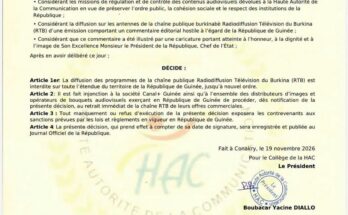
Yet this aggressive enforcement strategy echoes tactics recently employed in Guinea, where similar measures were met with condemnation from Burkinabè media outlets. The irony deepens when comparing the two approaches: Ouagadougou justifies its own forceful interventions as legitimate governance, while portraying Guinea’s comparable actions as exploitative or foreign-influenced.
Foreign Investment: Praised At Home, Problematic Abroad
The inconsistencies extend beyond enforcement methods into the realm of international mining corporations. Burkina Faso’s official rhetoric often condemns foreign mining giants for extracting African wealth, yet the nation’s gold sector remains heavily dependent on multinational operators. Official 2024 data from the Extractive Industries Transparency Initiative (EITI) shows that industrial mining—dominated by foreign firms—accounted for 87% of Burkina Faso’s 60.77 tonnes of gold production, with only 7.13 tonnes coming from small-scale operations.
Among these foreign players, Russian mining giant Nordgold stands out, controlling three major industrial mines (Bissa Gold, Nordgold Yimiougou, and Nordgold Niou) that represent 20% of the country’s industrial mining sector. While international investment brings capital, technology, and employment, the selective outrage toward Guinea’s reliance on similar operators raises critical questions about selective sovereignty advocacy.
Sovereignty Without Consistency: The Sahel’s Shifting Principles
The episode underscores a broader challenge in Sahelian mineral policy: the erosion of credibility when sovereignty claims fluctuate based on geopolitical convenience rather than consistent principle. A genuine commitment to African resource justice demands universal standards—transparent mining contracts, equitable revenue sharing, environmental protection, and community rights—applied uniformly across borders.
Without such consistency, panafricanist rhetoric risks being reduced to political maneuvering rather than a meaningful framework for regional development. Burkina Faso’s dual approach—condemning Guinea’s mining governance while replicating similar tactics domestically—highlights the need for more coherent, principle-driven policies in West Africa’s gold sector.