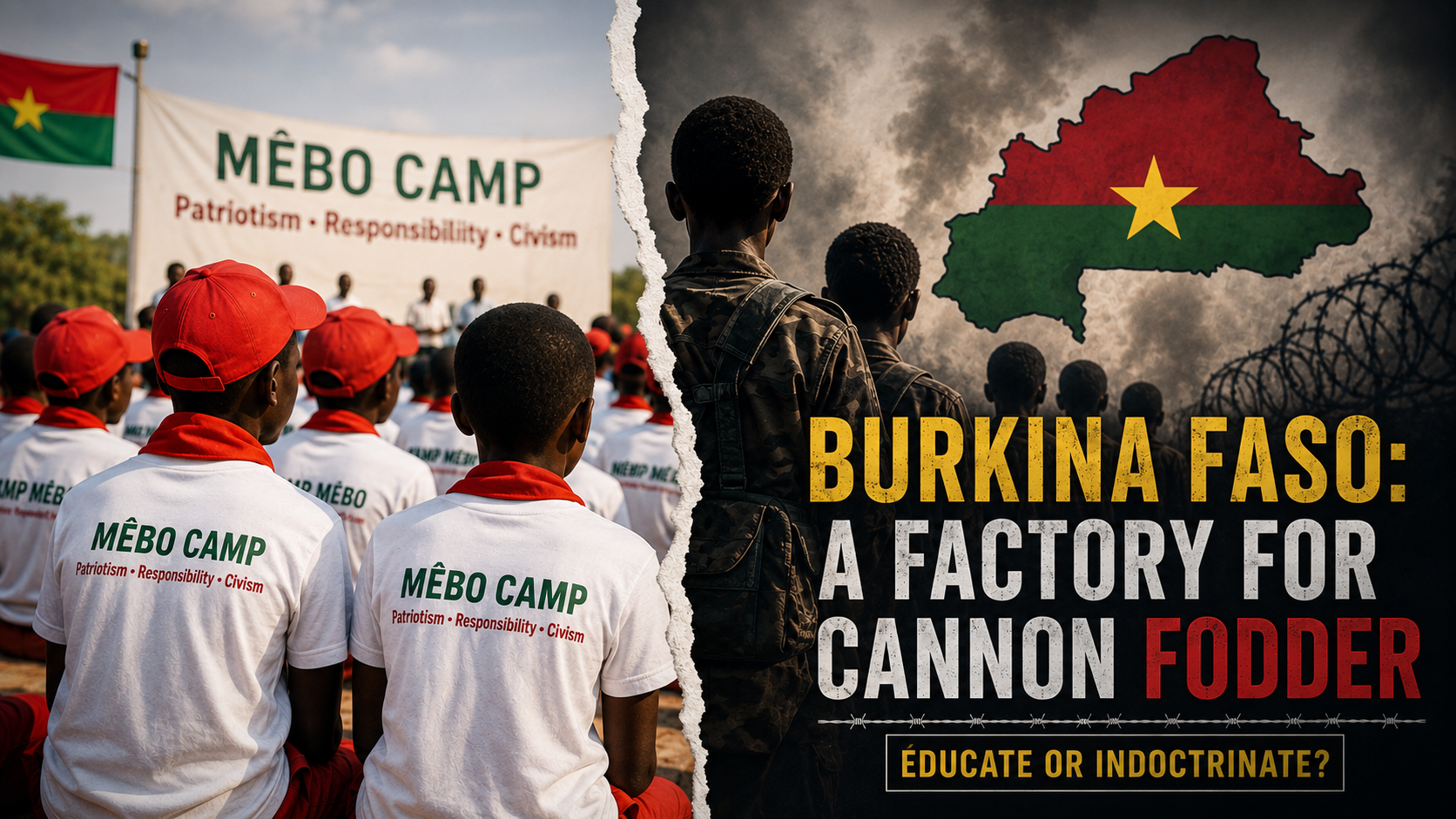
At first glance, initiatives like Burkina Faso’s Mêbo holiday camp appear to be standard civic programs designed to foster community bonds among young citizens. Through cultural, athletic, and collective activities, the government purportedly aims to instill values of patriotism, accountability, and civic responsibility from an early age. Yet, as discussions surrounding these programs intensify in public forums and Burkina Faso news today, a critical question emerges: could these large-scale gatherings inadvertently mark the beginning of a gradual militarization of the nation’s youth?
Patriotism for civic development or political leverage?
The pursuit of civic education itself is inherently commendable. Teaching young individuals the principles of responsibility, institutional respect, solidarity, and collective welfare forms the bedrock of a functional society. However, the transition from civic awareness to potential political manipulation occurs when patriotism is weaponized, when dissent is discouraged in favor of blind allegiance, and when national defense is framed as an incessant duty.
This pattern is not without precedent on the African continent. Historical precedents across regions such as Sierra Leone, Liberia, and the northern Democratic Republic of Congo illustrate how initiatives ostensibly designed to instill patriotic values can morph into mechanisms for ideological recruitment, particularly in conflict zones. The distinction between fostering national consciousness and mobilizing youth for military purposes often blurs when state authorities exploit nationalist sentiments among impressionable, developing minds.
Rhetoric and its implications for youth perception
The language employed in these civic programs warrants close examination. When terminology such as homeland, sacrifice, adversary, national defense, and commitment is repeatedly invoked in addresses aimed at young participants, it risks normalizing the idea that military service is an inevitable and virtuous destiny for Burkinabé youth. Yet, the formative years of a child or adolescent should prioritize critical thinking, debate, creativity, and constructive contribution over the expectation of ultimate sacrifice for political or military ends.
Security imperatives versus ethical dilemmas
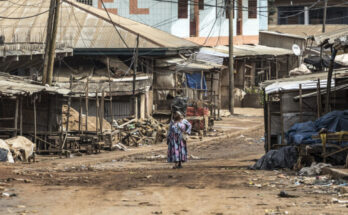
Within the precarious security climate of the Sahel, the policies pursued by Burkina Faso’s transitional administration under Ibrahim Traoré demand heightened scrutiny. The nation contends with a conflict that has torn through its social fabric, displaced millions, and elevated national defense to an urgent national priority. In such a context, patriotic mobilization can easily assume a more militarized character, prompting essential questions regarding Burkina Faso’s security trajectory. The crux of the issue lies in boundaries: to what extent is it justified to cultivate a defensive mindset among young citizens?
By fostering a youth that aligns closely with official narratives, does the government, intentionally or otherwise, risk eroding the capacity for dissent and independent thought? A vibrant citizenry should not merely echo the stance of those in power; it must possess the ability to defend the nation while critically assessing its leadership, to honor the state without conflating it with the ruling regime, and to contribute to society without being reduced to a political tool.
The dangers of early normalization of sacrifice
There exists a peril in framing self-sacrifice as the highest expression of patriotism from an early age. When the notion of death in combat is repeatedly presented as the ultimate act of devotion, a hazardous interpretation of national duty can take root among younger generations. True patriotism, however, should not be measured by a child’s willingness to embrace violence; rather, it should be reflected in their aspiration to advance education, healthcare, agriculture, innovation, social cohesion, and sustainable development in Burkina Faso.
Uniforms, symbols, and the slippery slope of militarization
While uniforms, military insignia, and martial language, when viewed in isolation, do not conclusively indicate militarization, their repeated use within the framework of ongoing conflict and sustained national mobilization warrants cautious evaluation. It is in these gray areas that the distinctions between civic education, state propaganda, and psychological conditioning for warfare can progressively dissolve.
The critical role of age and institutional responsibility
The age of participants is a pivotal consideration. Adults possess the maturity and discernment to weigh the implications of political and military participation. Children, however, remain vulnerable due to their limited capacity for critical analysis. Institutions bear a fundamental responsibility to protect young individuals from instrumentalization, ensuring that their education empowers rather than indoctrinates them into a confrontational ideology.
In the face of pressing security challenges, the temptation to indoctrinate youth in the name of defense is understandable. Yet, addressing military threats through ideological conditioning risks perpetuating a destructive cycle. The more a society habituates its young to perceive adversaries and perpetual sacrifice as natural responses to conflict, the greater the likelihood that violence becomes normalized as a resolution to political and social divisions.
A call for balanced patriotism
Authentic patriotism should serve as a catalyst for progress, not a precursor to perpetual confrontation. To uphold Burkina Faso is not synonymous with an unconditional readiness for martyrdom; it encompasses the desire to create an environment where children can thrive gaining access to education, pursuing careers, and shaping their futures without the specter of constant conflict. It also entails recognizing that citizens can defend their nation while simultaneously holding its leaders accountable a vital balance for Burkina Faso’s future in West Africa.
Before endorsing initiatives that champion patriotism and youth mobilization, several essential questions must be addressed: What are the core educational objectives of these camps? How much emphasis is placed on fostering independent thought? Are children encouraged to express dissent? Do the activities exhibit military or paramilitary influences? And most importantly, where do we draw the line between nurturing responsible citizens and conditioning a generation to accept warfare as an inevitable reality?
Burkina Faso requires a youth that is engaged, informed, and autonomous in judgment. Yet, it must also protect the integrity of their development. Preparing young citizens to construct a prosperous future is an honorable goal; transforming them into expendable tools of perpetual conflict would represent a fundamentally different and perilous endeavor.
Thus, the overarching inquiry remains: Are these young individuals being empowered to build the Burkina Faso of tomorrow, or are they being groomed for an uncertain role in future conflicts?