Unrelenting armed clashes reveal the limits of military authority
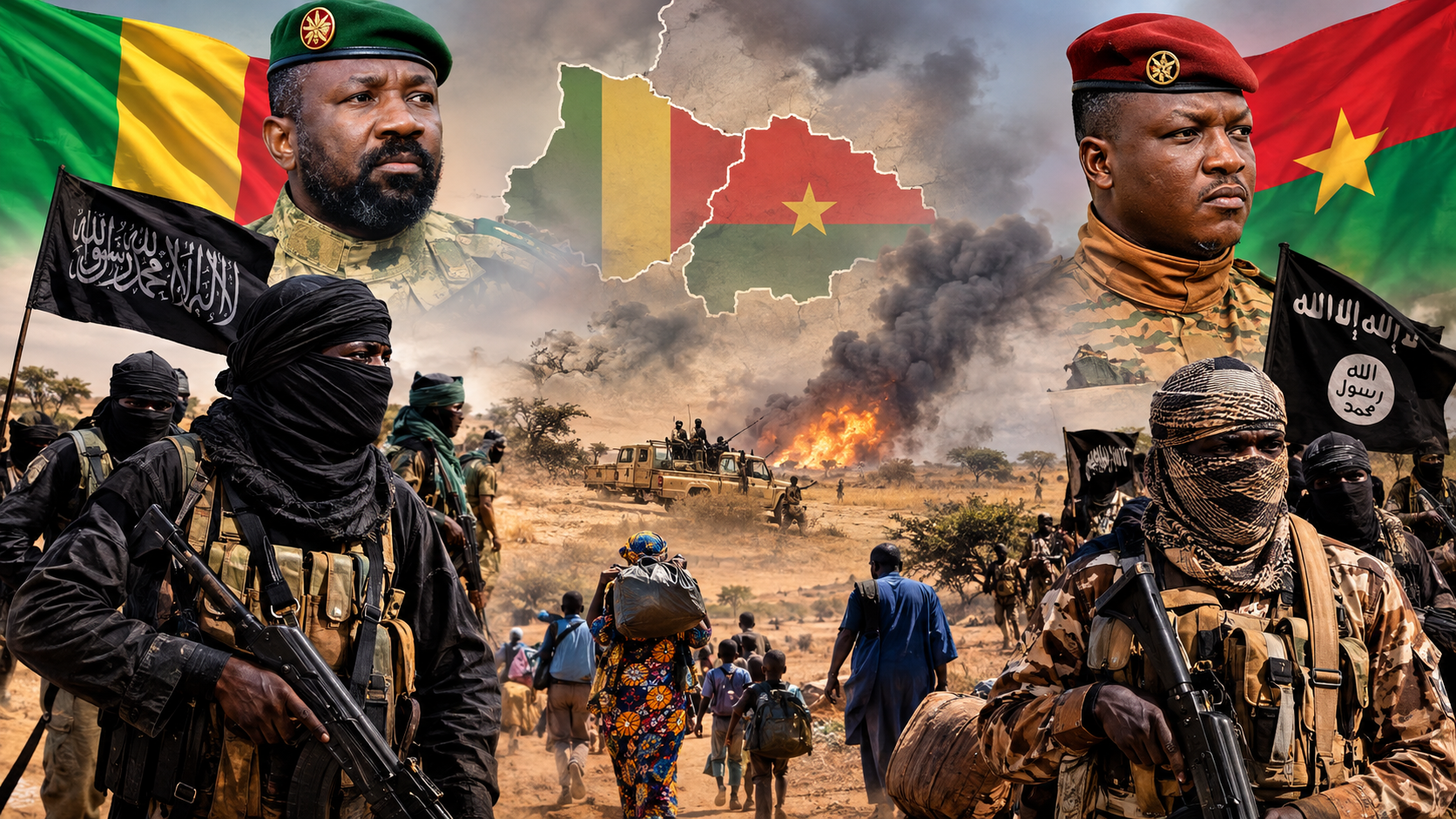
The Mali-Burkina Faso border has become one of the most volatile conflict zones in the Sahel, where sustained clashes between the Group for the Support of Islam and Muslims (JNIM), affiliated with Al-Qaeda, and the Islamic State in the Sahel (EIS) underscore the region’s deteriorating security landscape. These confrontations are not isolated incidents but part of a broader pattern of jihadist expansion, where armed groups vie for territorial dominance over key transit routes and civilian populations.
In this contested terrain, state authority has repeatedly proven insufficient to counter the growing influence of militant factions. Despite multiple military juntas in Mali and Burkina Faso asserting sovereignty as their primary objective, their inability to assert lasting control has left vast areas susceptible to jihadist influence and internal strife.
Failed security promises and lingering threats
The military-led transitions in both Mali and Burkina Faso were positioned as solutions to the jihadist insurgency, promising to restore stability and reclaim lost territories. Yet, years after their ascent to power, the threat posed by armed groups remains entrenched. Civilians residing near the border continue to face displacement, violence, and economic disruption as militants exploit ungoverned spaces.
The hostilities between JNIM and EIS add another layer of complexity. Rather than unifying against a common enemy, these factions are engaged in a localized power struggle, each seeking to expand its operational footprint. For local communities, this internal jihadist rivalry translates into heightened insecurity, disrupting daily life and undermining any hope of recovery.
Strategic missteps and the erosion of state legitimacy
The persistence of these conflicts raises critical questions about the effectiveness of military strategies employed by the juntas. Assertions of sovereignty, military parades, and public declarations of progress have done little to address the operational realities on the ground. The inability to secure borders and protect civilians has eroded public trust in transitional governments, which now face mounting pressure to deliver tangible results.
In Mali, under the leadership of Colonel Assimi Goïta, and in Burkina Faso, under Captain Ibrahim Traoré, officials have repeatedly emphasized their commitment to combating terrorism. However, the continued violence suggests that rhetoric alone cannot substitute for sustained counterinsurgency efforts supported by intelligence, governance, and local engagement.
A multifaceted crisis demanding a holistic response
Addressing the jihadist threat requires more than military force; it demands a comprehensive strategy that integrates security operations with administrative presence, civilian protection, and regional cooperation tailored to border realities. The enduring clashes between JNIM and EIS highlight the limitations of a purely coercive approach, where armed responses fail to address the underlying drivers of extremism and factionalism.
For civilians caught in the crossfire, the consequences are immediate and devastating. Displacement remains rampant, livelihoods are destroyed, and the prospect of lasting peace appears increasingly distant. For the juntas, the challenge is clear: bridging the gap between political promises and actionable security measures is no longer optional it is a prerequisite for restoring stability.
Conclusion: The urgent need for actionable change
The Mali-Burkina Faso border is a microcosm of the broader Sahel crisis a region where militant factions thrive in the absence of effective state control. The ongoing clashes between JNIM and EIS serve as a stark reminder that military juntas must move beyond symbolic gestures and implement robust, adaptive strategies to reclaim their authority. Until then, civilians will continue to bear the brunt of unchecked violence, and the promise of sovereignty will remain unfulfilled.
By Jeanne Ntouba — Journalist