Thousands of young people from Burkina Faso are being forced out of their homeland by spiralling violence and political repression—only to find that the promise of survival in Guinea’s unregulated gold mines is just another dead end.
Why young Burkinabè were pushed to desperate choices
The collapse of security and governance in Burkina Faso has left its youth trapped between militant threats at home and collapsing economies abroad. With militant groups seizing control of rural areas and military juntas tightening their grip in the capital, opportunities for safe work have vanished. Caught in a spiral of displacement, many young Burkinabè saw mining work in Guinea as a last chance to support themselves and their families—regardless of the risks.
Siguiri, a key gold hub in north-eastern Guinea, became a focal point for this new wave of migration. But what began as a desperate bid for survival has turned into a cycle of exploitation and eviction, leaving young miners with nothing but shattered hopes.
Siguiri’s gold rush turns hostile: military crackdown exposes the myth of opportunity
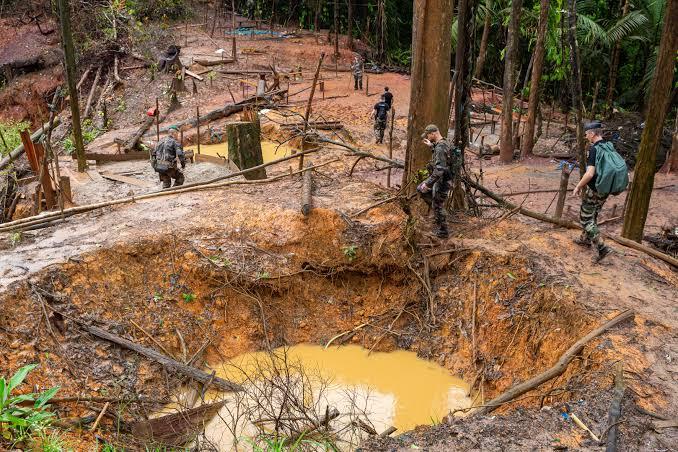
Last week, Guinean security forces launched a sweeping operation across informal mining sites in Siguiri, including locations such as Kouremalé, Djatéla, and Bouré-Kourda. Using bulldozers and fire, authorities destroyed makeshift shelters, mining pits, and processing equipment. The message was clear: no mercy will be shown to illegal miners, including foreign nationals.
For hundreds of Burkinabè miners who had staked everything on this journey, the crackdown was a devastating blow. Many had sold their last belongings to pay for transport and bribes just to reach the mining zones. Now, with their campments reduced to ashes and their tools confiscated, they face a brutal return to square one—homeless, penniless, and branded as criminals.
The hidden cost of survival in Guinea’s shadow economy
Before the crackdown, these young miners endured extreme conditions. Working in hazardous open pits with no protective gear, they faced cave-ins, toxic fumes, and punishing workloads under the watch of armed groups and unscrupulous middlemen. Wages were often withheld or paid in food rations, pushing many into debt bondage. Without legal status or documentation, they had no recourse to justice.
Now, stripped of both their means of earning a living and the fragile shelter they had built, their future is more uncertain than ever. Many are stranded in border towns, desperate for transport back to Burkina Faso—where, ironically, they may still face violence, arbitrary arrests, or forced conscription.
What this crisis reveals about governance and youth abandonment
The plight of these Burkinabè miners underscores a harsh truth: Africa’s young people are being abandoned by systems that claim to protect them. Governments in Ouagadougou and Conakry have failed to provide security, economic alternatives, or legal pathways for their citizens. Instead, they have created a revolving door of displacement and exploitation.
The military juntas in both countries, while portraying themselves as defenders of sovereignty, have only deepened the suffering of their people. By allowing armed groups to thrive and by criminalising survival strategies like artisanal mining, they have converted desperate youth into economic refugees and pariahs.
A way forward? No end in sight
Until there is real accountability for corruption, real investment in local economies, and real protection for civilians, young people in the Sahel will continue to flee one crisis only to be trapped in another. The recent devastation in Siguiri is not an isolated event—it is a warning of what happens when political failure meets economic desperation.
With no support from either government, no channels for legal migration, and no alternative livelihoods, the fate of these Burkinabè miners remains precarious. Their story is not just one of individual tragedy—it is a reflection of the broken social contract across West Africa.
