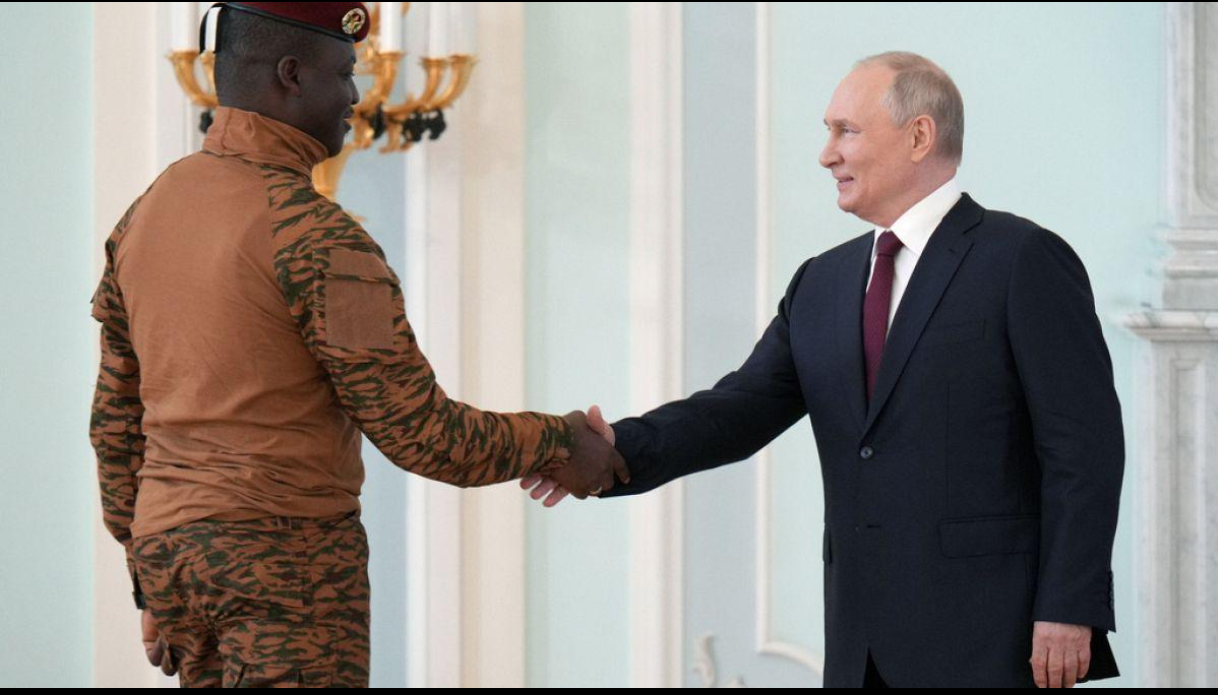
In Burkina Faso, gold is more than a precious metal—it is a pillar of power. Since Captain Ibrahim Traoré took control in September 2022, Ouagadougou’s deepening ties with Moscow have reshaped the country’s security and economic landscape. But a crucial question lingers: how do Burkina Faso’s vast gold reserves factor into this controversial alliance?
The Bissa gold mine, operated by the Russian-owned Nordgold, has become a flashpoint in this geopolitical shift. What began as a commercial dispute over security contracts has uncovered deeper layers of influence—where resource control, regime protection, and foreign interests intersect. At its core, this saga reveals how gold, security, and power are being weaponized in Burkina Faso’s evolving relationship with Russia.
Russia’s growing footprint in Burkina Faso’s gold sector
The Bissa mine isn’t the only site where Russian interests run deep. Nordgold, linked to Russian billionaire Alexeí Mordachov, also holds stakes in Bouly, another key gold operation. These ventures give Moscow a direct stake in the stability of Burkina Faso’s mining sector—and in the continuity of its lucrative gold output.
In February 2023, Burkina Faso’s government seized 300 kilograms of gold from Bissa Gold, citing a state of emergency. While officials pledged compensation, the move underscored a harsh reality: Burkina Faso’s gold reserves are increasingly treated as a national resource, one that can be mobilized for urgent state needs. For Russian mining firms, this means not just financial stakes, but a strategic imperative to safeguard their operations—and their influence—within the country.
Security pacts: more than just protection?
Russia’s security presence in Burkina Faso extends far beyond fighting armed groups. Reports indicate Russian paramilitary units have been deployed in Ouagadougou, some directly linked to the presidency and intelligence agencies. Their mandate? Protecting Ibrahim Traoré’s regime and consolidating its power.
This raises a critical question: is there an unspoken trade-off? In other African nations, Moscow’s support has often come with economic quid pro quos—access to oil, minerals, or trade contracts. While Burkina Faso has not publicly disclosed such an arrangement, the convergence of interests is undeniable: Russia gains political leverage, while Traoré secures a powerful ally in a volatile region.
The Nordgold security dispute: a window into Moscow’s strategy
The Bissa mine has become ground zero for a bitter competition between Russian security firms. Nordgold’s contract with one company sparked a dispute after another firm, RSB-Group—formerly involved in security—was removed. In an apparent bid to regain influence, RSB-Group allegedly pointed to security failures, including attacks on Fulani villages, to undermine its rival’s credibility.
While these allegations require independent verification, they expose a troubling pattern: security contracts in Burkina Faso are not just about protecting mines—they’re about securing political favor. The mine’s security isn’t just a business deal; it’s a tool in a high-stakes power struggle where local communities often pay the price.
Power, profit, and the future of Burkina Faso’s gold
Analysts warn that the lines between security, governance, and economic control are blurring. The Combating Terrorism Center at West Point suggests that protecting Russian mining interests may have been Moscow’s original motivation for engagement in Burkina Faso—but its primary role now appears to be shoring up Traoré’s fragile regime.
For local communities, the stakes couldn’t be higher. Mines like Bissa sit in already tense regions, where armed violence and communal grievances simmer. When security firms—whether local or foreign—operate with impunity, it’s often civilians who suffer, caught between economic exploitation and failed protection.
At its heart, the Bissa dispute is a microcosm of Burkina Faso’s broader dilemma: Can gold mining serve both national development and regime survival? Or will it become just another instrument in a dangerous game where foreign powers and domestic elites call the shots?
What’s next for Ouagadougou and Moscow?
No formal deal has been confirmed linking Traoré’s security to Russian access to gold. But the pattern is clear: as Moscow deepens its political and military ties with Burkina Faso, Russian firms are tightening their grip on the country’s lucrative mining sector. Whether this serves the interests of the Burkinabe people—or just those in power—remains to be seen.