A question of guardianship: after Atangana, who steers Cameroon’s electoral justice?
With the death of Clément Atangana, Cameroon’s constitutional council enters a defining moment. The man who led the institution since its creation in 2018 passed away on 4 October 2026 in Paris after an illness. Born on 20 December 1941 in Ekoumeyeck, near Ngomedzap in the Nyong and So’o division, he leaves behind a court that must now face a critical question: who will take over the helm of the body that arbitrates the country’s most consequential electoral disputes? The vacancy is immediate, and the stakes could hardly be higher.
The word that defined a tenure
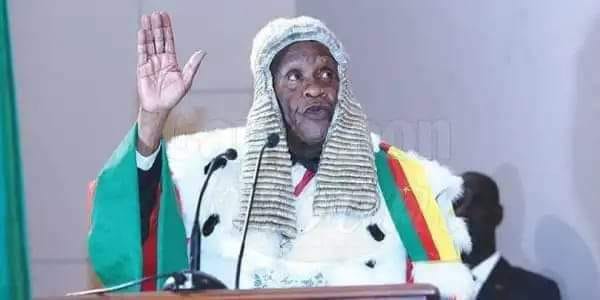
Atangana’s deep voice repeatedly delivered the word ‘inadmissible’ to seal the fate of petitions filed by political parties and figures during major electoral processes. That term became his trademark, etched into the memory of Cameroonians. It echoed the gavel of the first president of the constitutional council, appointed on 7 February 2018 — just months before the presidential election of 7 October that same year. Today, his own case is closed. The decision is irrevocable.
Eight years at the summit of electoral arbitration
After eight years at the head of this politically charged jurisdiction, Atangana leaves the constitutional council for good. The pillar fell in France, where he had been evacuated for medical treatment. Under his leadership, the institution ruled on disputes tied to two presidential elections: the 2018 race and the 2025 ballot. In both cases, the official results were challenged — by candidate Maurice Kamto of the MRC and his supporters in 2018, and by candidate Issa Tchiroma Bakary and his backers in 2025.
Following the proclamation of the October 2025 results, a video circulated on social media in which Atangana said: ‘I am glad that you are rejoicing both for your candidate’s victory and for the work done by your father.’ Often accused — rightly or wrongly — of being an institution under the thumb of the regime, the council has not upheld a single petition from the opposition since it began operating in 2018.
From the lower courts to the highest body
That year marked the apex of Atangana’s career in Cameroon’s judiciary. He served with distinction across numerous jurisdictions. A magistrate outside the hierarchy, he joined the bench on 20 December 1968 after training at ENAM and the International Institute of Public Administration in Paris. His rise included roles as investigating judge in Nkongsamba, president of tribunals in Eséka, Bafia, Sangmélima and Mora; attorney general in Maroua; president of the Centre Court of Appeal; adviser to the Supreme Court; and president of the administrative chamber of the Supreme Court. He retired from that court in 2014, only to be called back four years later to lead the constitutional council.
What the vacancy means for the 2027 ballot
His death opens a vacancy at the presidency of the constitutional council, Cameroon’s highest court for electoral matters. The president of the Republic is responsible for designating and appointing the new head of the council by decree. The question now hangs over the political landscape: who will take the gavel, and how will that choice shape the handling of electoral disputes in the run-up to the next presidential election? For voters, parties and the opposition alike, the answer will determine the credibility of the arbitration process at a time when trust in the institution is already under scrutiny.