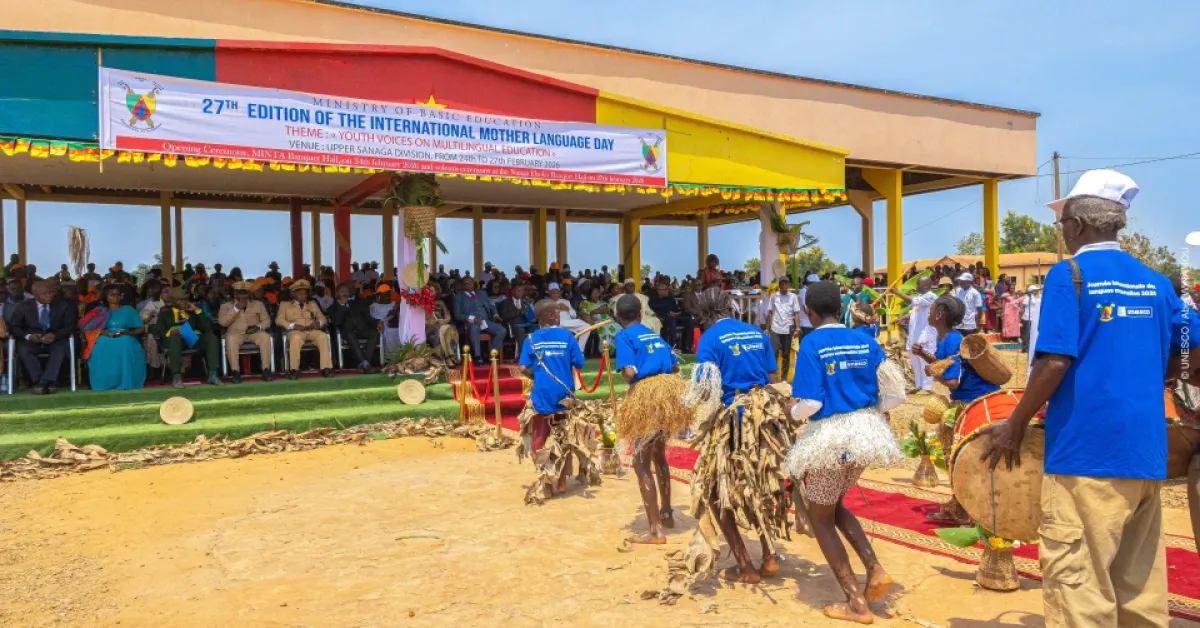
The United Nations Educational, Scientific and Cultural Organization (UNESCO) joined forces with Cameroon to highlight the importance of mother tongue education during the closing ceremony of the International Mother Language Day celebrations on February 27, 2026, in Nanga Eboko. The event marked the culmination of a week-long national campaign advocating for multilingual education and linguistic diversity.
The 27th edition, themed ‘youth voices on multilingual education’, shone a spotlight on the pivotal role young learners play in preserving and promoting indigenous languages. These languages serve as powerful tools for cultural transmission, heritage conservation, and inclusive learning.
a week dedicated to linguistic heritage
Organized under the patronage of Cameroon’s Minister of Basic Education, Professor Laurent Serge Etoundi Ngoa, the event brought together key stakeholders, including Mr. Hilaire Mputu, Regional Director of UNESCO for Central Africa. Mr. Mputu reaffirmed the organization’s unwavering commitment to multilingual education, emphasizing its critical role in enhancing learning outcomes, particularly in early childhood education.
UNESCO’s advocacy for mother tongue-based instruction stems from its belief that linguistic diversity is fundamental to sustainable development, cultural dialogue, and social cohesion. The International Mother Language Day, observed annually on February 21, provides a global platform to raise awareness about the value of mother tongues in education, knowledge transmission, and community unity.
cultural performances showcase linguistic richness
The closing ceremony featured vibrant performances by primary school students, showcasing the diverse languages and cultures across Cameroon’s regions. These presentations underscored the nation’s rich linguistic tapestry and the importance of nurturing indigenous languages as vehicles for identity and knowledge.
By participating in this initiative, UNESCO reinforced its dedication to assisting member states in advancing multilingual education and safeguarding linguistic diversity. The organization continues to promote the use of mother tongues in classrooms as a means to improve educational quality, preserve cultural heritage, and foster inclusive growth.