The arrest of imam Mohamed Ishaq Kindo and the suspension of Burkina Faso’s largest student union have sent shockwaves through the nation, signaling a sharp tightening of civic freedoms under military rule. This week’s developments underscore growing tensions as authorities escalate repression, raising urgent questions about the future of public liberties in the country.
The detention of the prominent religious leader occurred just days before Eid al-Adha, when witnesses reported seeing masked security forces forcibly remove him from his home. Imam Kindo was far from an obscure figure; his critical stance on government policies—particularly a controversial bill regulating religious practices—had made him a vocal voice in Burkina Faso’s Muslim community.
a voice silenced under the guise of stability
The imam’s criticism of the proposed religious law, which sought to restrict public prayers, appears to have drawn the ire of authorities. His stance contrasted with that of other religious leaders, such as Mali’s imam Mahmoud Dicko, as noted by Newton Ahmed Barry, a Burkinabè journalist in exile:
Imam Kindo was never aligned with the confrontational approach of figures like Dicko. Instead, he operated within the framework of the Federation of Islamic Associations of Burkina Faso (FAIB), monitoring religious doctrine while maintaining a civic vigilance over public policies. His arrest sends a chilling message: dissent, even on matters of faith, will not be tolerated.
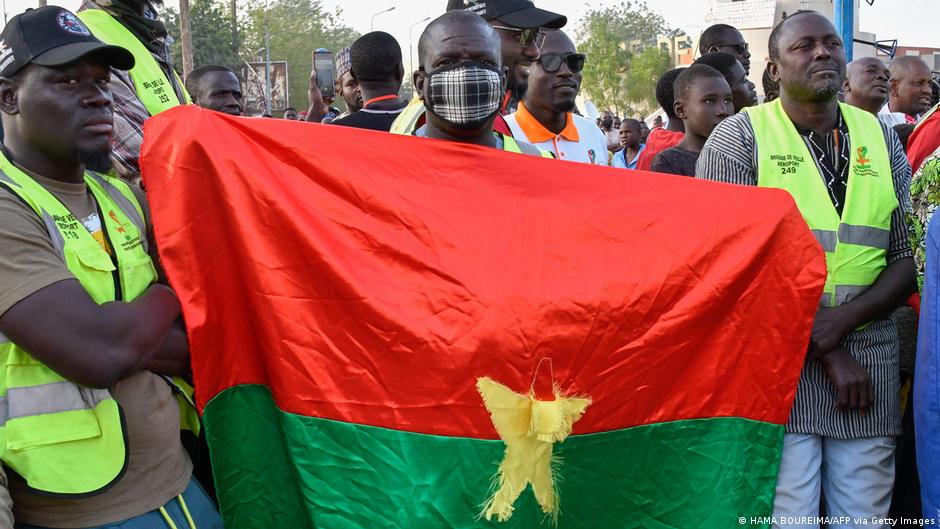
The imam’s disappearance sparked immediate backlash. Protests erupted across several cities, leading to clashes with security forces, multiple injuries, and scores of arrests. The FAIB repeatedly urged calm, but the situation quickly spiraled into a battle of narratives. False reports claiming the imam’s death circulated widely before being debunked by the prosecutor general. Some videos, allegedly showing abuses, were flagged for inconsistencies, with experts suggesting possible AI-generated content.
Arrested protesters were reportedly transferred to a military camp in Kaya, in the Centre-Nord region, raising concerns about their treatment. Newton Ahmed Barry framed these events as part of a deliberate strategy: “The junta’s tactic is clear: instill fear to maintain control. By silencing dissenters, they hope to consolidate power without challenge.”
students targeted as civic space collapses
The crackdown extended beyond religious circles. Burkina Faso’s oldest student union, the General Union of Burkinabè Students (UGEB), founded in 1960, was suspended for three months—a punishment that could be extended. Its president, Bazo Wilfried, and several members were detained on charges of “terrorism glorification” and “undermining the morale of security forces.”
The union had dared to criticize the government’s handling of the security crisis, describing the situation as a “civil war” and accusing authorities of “manifest incompetence.” Mahamadou Idder Alghabid, deputy secretary-general of the Alliance of Sahel Democrats (ADS), condemned the accusations as baseless:
It’s laughable to brand unarmed students as terrorists. But this is the new normal across the Sahel. Authoritarian regimes in Burkina Faso, Mali, and Niger now routinely label critics as terror sympathizers. It’s a tactic to silence any opposition, no matter how peaceful.
a regional pattern of repression
The crisis in Burkina Faso mirrors troubling trends in neighboring Mali and Niger, where military juntas have systematically restricted civic freedoms. Human rights advocates warn of a coordinated erosion of democratic norms, including the dissolution of organizations, judicial harassment, and the stifling of free expression. The ADS points to a dangerous blurring of lines between legitimate dissent and criminal offenses.
Despite the crackdown, pockets of resistance persist. Exiled activists and civil society groups continue to challenge the status quo, though their efforts are increasingly met with repression. Alghabid remains defiant:
We know the fight ahead is daunting—facing three juntas is no small task. But every day, we gain ground while they lose it. Their promises of sovereignty and anti-imperialism were always hollow. The Sahelian people are waking up to the reality: these regimes offer no solutions, only empty rhetoric and repression.
Newton Ahmed Barry echoed this sentiment, predicting that the regime’s excesses may ultimately fuel its downfall: “Authoritarianism breeds its own undoing. The more they oppress, the more resistance grows. And Burkina Faso’s society will respond.”
a call to uphold fundamental freedoms
International human rights organizations are sounding the alarm. Ilaria Allegrozzi, Sahel researcher at Human Rights Watch, emphasized the need for sustained pressure: “Supporting civic spaces and peaceful democratic resilience is critical. Silence and ambiguity only embolden authoritarianism. Partners of Burkina Faso must move beyond cautious diplomacy—inaction legitimizes repression.”
The broader question lingers: can military rule ever be justified? Human Rights Watch argues that the normalization of coups and rights violations sets a dangerous precedent: “It’s time to call out these abuses for what they are. The seizure of power by putschists cannot be accepted as the new normal, nor can the flagrant violations of human rights that follow.”