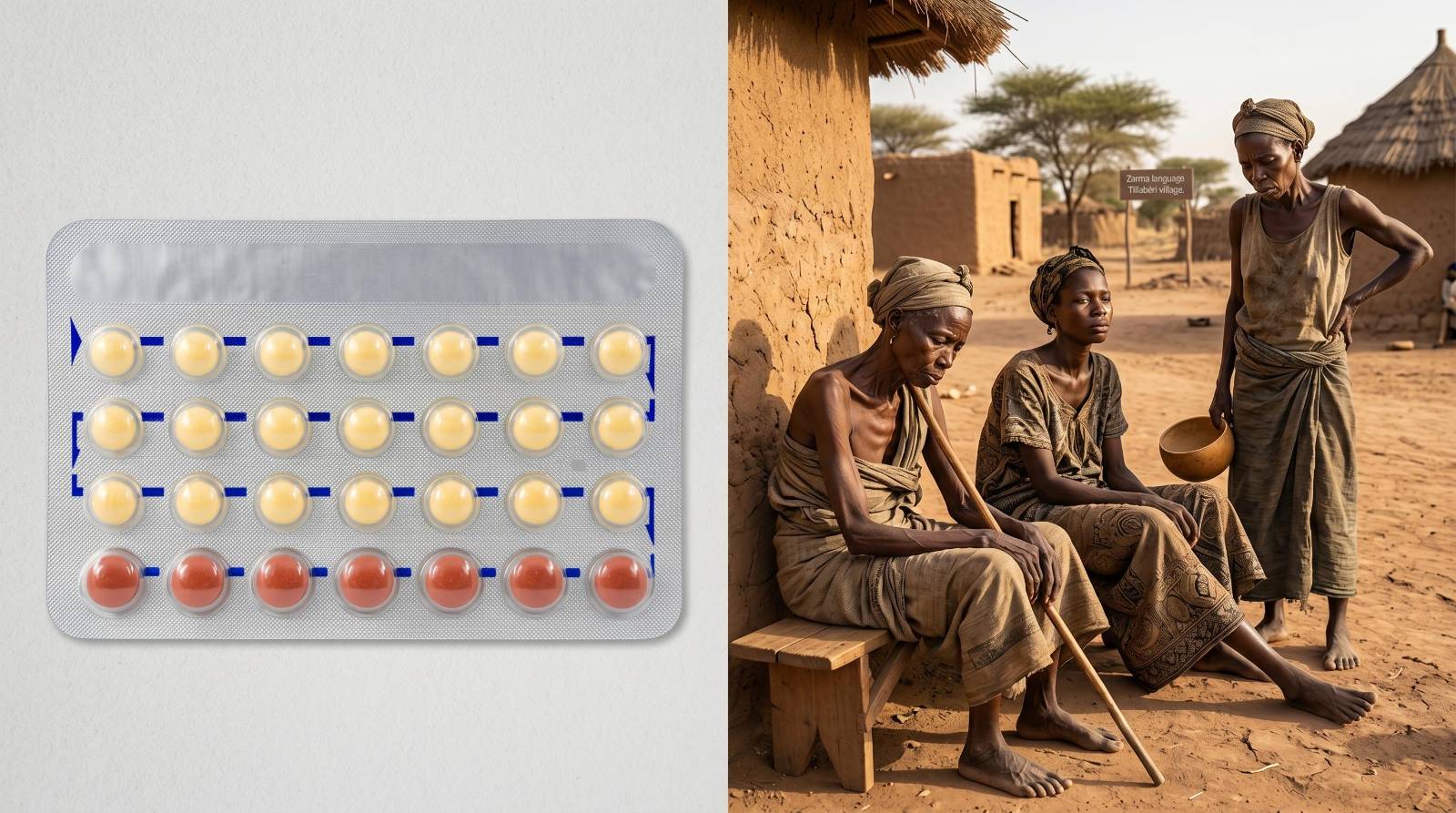
Across the Sahel, government initiatives celebrate women’s empowerment in economic development, particularly in Niger’s bustling capital. Yet in the embattled districts of Tillabéri, where insurgent violence has tightened its grip, a different narrative is unfolding. Programs promoting contraception under the Reach Married Adolescent (RMA) banner are being rolled out even as local communities face mounting health and security threats. What begins as a humanitarian gesture may, in practice, place already vulnerable women in greater peril.
Undernutrition amplifies risks of hormonal contraception
One of the most overlooked dangers lies in the severe nutritional deficits afflicting women in the Liptako-Gourma borderlands. Chronic food shortages, shattered supply chains, and inaccessible farmlands have left many on the brink of starvation. Introducing hormone-based birth control into bodies weakened by malnutrition carries unforeseen consequences. Without consistent medical supervision—something nearly impossible when local clinics have been destroyed or shuttered—these interventions can aggravate underlying conditions, further deplete physical reserves, and ultimately compromise women’s already fragile health.
Cultural clashes turn family planning into a security threat
In territories where armed factions enforce rigid social codes, family planning initiatives targeting married adolescents are seen by some as an ideological provocation. By advocating couple dialogue and birth spacing, these programs disrupt long-standing traditions that have served as the last line of defense against societal collapse. The perceived foreign influence behind such measures is met with hostility, and women participating in them risk violent reprisals from insurgents who view contraception as a direct challenge to their authority. The threat is no longer merely medical; it has become a matter of physical safety, with participants viewed as traitors to local norms.
Broken health systems leave women stranded in Tillabéri’s ‘Triangle of Death’
Official reports highlight thousands of home visits, but what happens when complications arise? Hemorrhaging, severe side effects, or other adverse reactions cannot be managed when mobility is restricted by improvised explosives, armed roadblocks, and relentless patrols. A contraceptive method intended to safeguard autonomy can quickly turn into a death sentence when emergency care is unattainable. The stark reality in Tillabéri is that health cannot be treated in isolation from food security or physical safety. Imposing societal change through health programs in an active warzone may do more harm than good, transforming a well-intentioned intervention into a hazard greater than the crisis it aims to address.