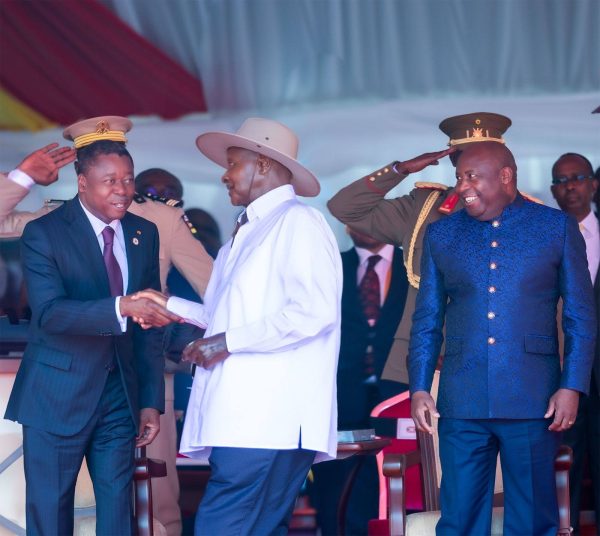
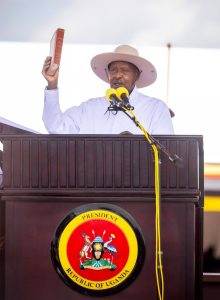
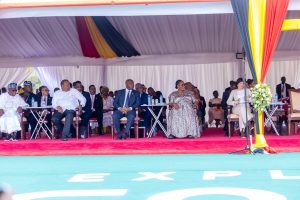
The sun beat down on Kampala as official smiles and firm handshakes masked the weighty matters of African diplomacy. On May 12, 2026, the President of the Council arrived in Uganda as a guest of honor for President Yoweri Museveni’s swearing-in ceremony. Though his presence celebrated a long-standing alliance, Faure Gnassingbé’s visit carried a deeper purpose: advancing a humanitarian mission critical to millions across Africa—the restoration of peace in the Great Lakes region.
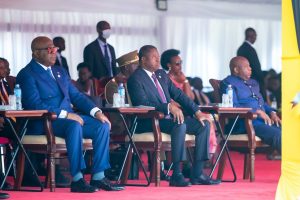
Kampala buzzed with patriotic fervor on that Tuesday, the air thick with traditional songs and military parades. Under the official theme ‘Safeguarding progress and advancing toward upper-middle-income status’, the inauguration drew leaders from across Africa, Europe, Asia, and the Americas. Yet beneath the pageantry, a bond of mutual trust between Faure Gnassingbé and Yoweri Museveni was on full display. By extending his congratulations to Museveni for securing a new term, the Togolese leader reinforced a partnership built on shared vision and economic synergy—a relationship Ugandan officials praised as a cornerstone of stability between Lomé and Kampala.
Diplomacy at work: the Great Lakes crisis
The grandeur of the ceremony could not overshadow the pressing security challenges facing the continent. Faure Gnassingbé’s visit was no mere courtesy—it was a mission with life-saving stakes. As the African Union’s special envoy for the crisis in eastern Democratic Republic of the Congo (DRC), he understands that every diplomatic breakthrough saves lives. In Kampala, he reaffirmed his unwavering commitment to engaging all regional stakeholders to de-escalate tensions in the Great Lakes.
The Ugandan president, a seasoned observer of regional politics, commended Faure Gnassingbé’s ‘constructive diplomacy’—a Togolese approach rooted in quiet dialogue, mutual respect, and a refusal to resort to confrontation. Uganda’s strategic position makes it a pivotal player in this effort, and Museveni’s endorsement of Togolese mediation underscored the effectiveness of this hands-on, solution-driven strategy.
A history of collaboration
Within the halls of Uganda’s State House, officials recalled the deep rapport between the two leaders. Their most recent one-on-one meeting took place just months earlier, on February 3, 2026, in Entebbe. This consistency in engagement highlights Togo’s growing role as a key facilitator in African peace efforts and a trusted partner in regional governance.
As the festivities in Kampala drew to a close, the real work remained. Returning to Lomé, Faure Gnassingbé carried the conviction that his mission had further solidified a vital bridge between West and East Africa—one dedicated to the shared goals of stability and continental development. This diplomatic journey reaffirmed Togo’s commitment to active participation in Africa’s peacebuilding and governance initiatives, proving once again that quiet persistence can yield transformative results.