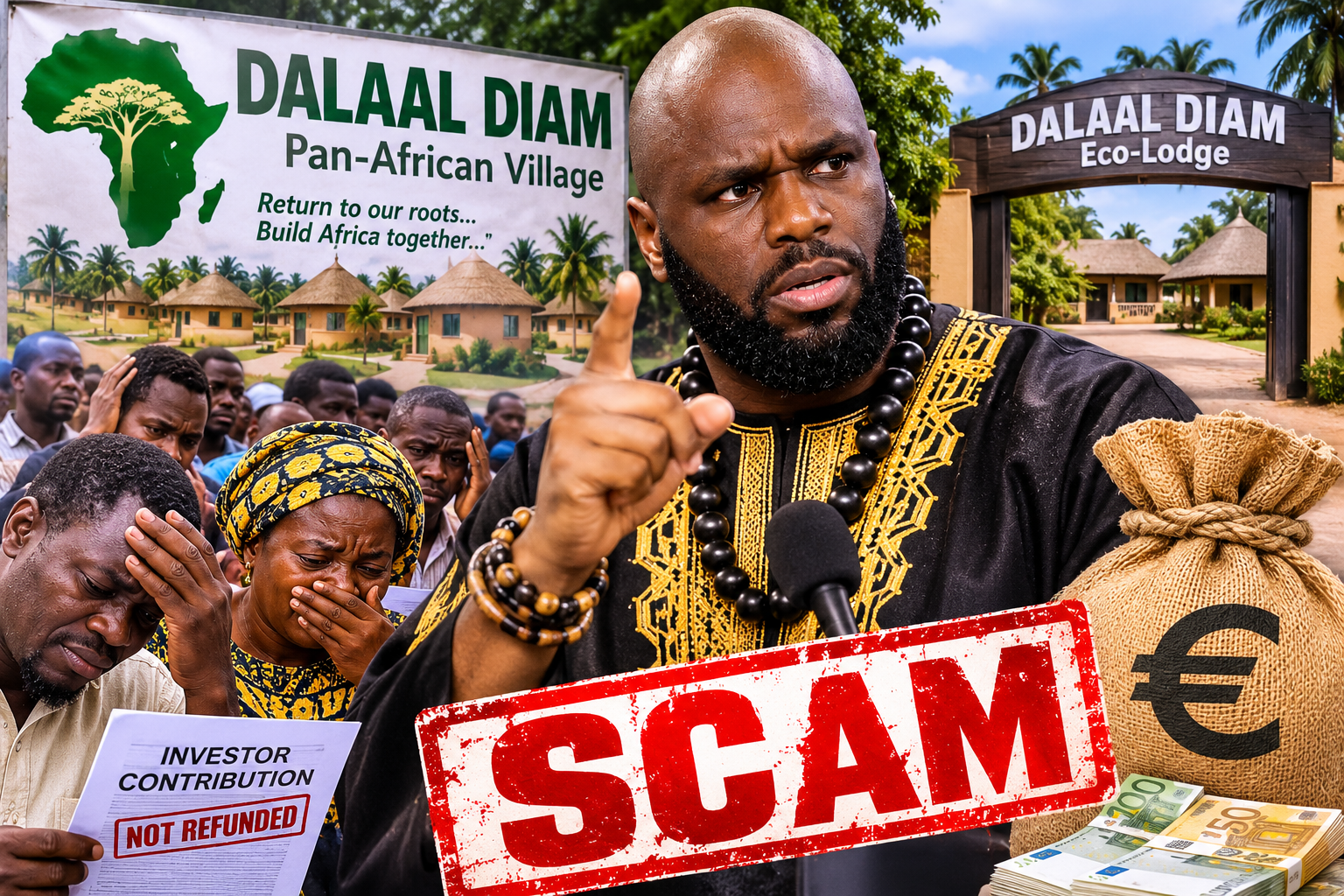
In 2011, Kémi Séba born Stellio Capo Chichi championed a bold initiative under the banner of panafricanism: Dalaal Diam, a village project launched in Senegal by the company Afrikan Mosaïque. Séba positioned himself as the project’s primary representative and spokesperson in the country.
The initiative promised to foster a return to African roots, encourage the repatriation of Afro-descendants, and establish a hub for unity, autonomy, and economic development inspired by Marcus Garvey’s vision. To materialize this vision, promoters touted eight hectares of land and a projected budget of €360,000 as key assets of the project.
Marketed as a tangible manifestation of panafrican ambition, Dalaal Diam was framed as an endeavor that could translate words into action for the African diaspora’s return to the continent.
Yet the reality that unfolded following initial subscriptions proved far from the promised success.
Promises unfulfilled: A project diverted from its original vision
The timeline provided by project leaders reveals a stark contrast between ambition and execution. After multiple setbacks in 2012 and 2013, the original objectives were abandoned. The initiative pivoted to an eco-lodge model, with an anticipated opening slated for January 2014 a significant deviation from the initial panafrican village concept.
Unpaid investors: The unresolved financial fallout
For many early backers, the most alarming aspect lies in the fate of their financial contributions. Despite the abandonment of core project goals, investors claim they have yet to receive refunds for their early support. Individuals who entrusted their savings to what was presented as a symbol of African renaissance remain in limbo, awaiting financial restitution.
Controversy over the project’s name
Adding to the unease is the continued use of the name Dalaal Diam which translates from Wolof as “May peace be with you.” Today, the phrase has been co-opted by Kémi Séba as a standard greeting in his public addresses. This appropriation of a project associated with unmet financial obligations raises serious questions about integrity and accountability.
The use of a name tied to a venture that failed to deliver its core promises and left investors uncompensated paints a troubling picture of how panafrican symbolism was leveraged. It underscores the disconnect between rhetoric and responsibility.
Outstanding questions demand transparency
Investors and observers alike are seeking answers to critical questions:
What was Kémi Séba’s exact role in mobilizing financial support?
Who managed and received the collected funds?
How were these funds allocated and utilized?
Why have early contributors not received refunds despite repeated assurances?
The absence of clear answers has fueled skepticism about the project’s financial governance and the ethics of those behind it.
Beyond rhetoric: The imperative of accountability in panafrican movements
Dalaal Diam was intended to be more than a symbolic gesture it was presented as a living example of panafrican ideals in action. Yet, when financial mismanagement and unfulfilled commitments overshadow the vision, it undermines the very values the project claimed to uphold.
Panafricanism is not merely a platform for advocating the return of the diaspora or calling for investment on the continent. It must also embody honesty, transparency, and accountability toward those who place their trust and their money in its leaders. Without these principles, even the most well-intentioned projects risk becoming hollow narratives, leaving broken promises and unanswered questions in their wake.
For the investors of Dalaal Diam, the dream remains deferred and so does their right to restitution.
By Nicolas Biyong — Journalist