The diplomatic corps of Burkina Faso stationed in Paris has recently taken a significant step that has sent shockwaves through the transitional authorities in Ouagadougou. Members of the Burkinabè embassy staff have formally requested political asylum from French authorities, a decision that underscores not only their personal circumstances but also a growing unease within the nation’s administrative apparatus.
This development follows a series of administrative reshuffles within Burkina Faso’s diplomatic network. Authorities in Ouagadougou recently recalled several overseas staff, an action framed as part of a broader reorganization of the diplomatic corps. However, for many of the affected officials, this forced repatriation represents far more than a mere administrative transfer.
A widely circulated statement from the embassy staff provides insight into their motivations. The message is unequivocal, reflecting deep uncertainty about their future:
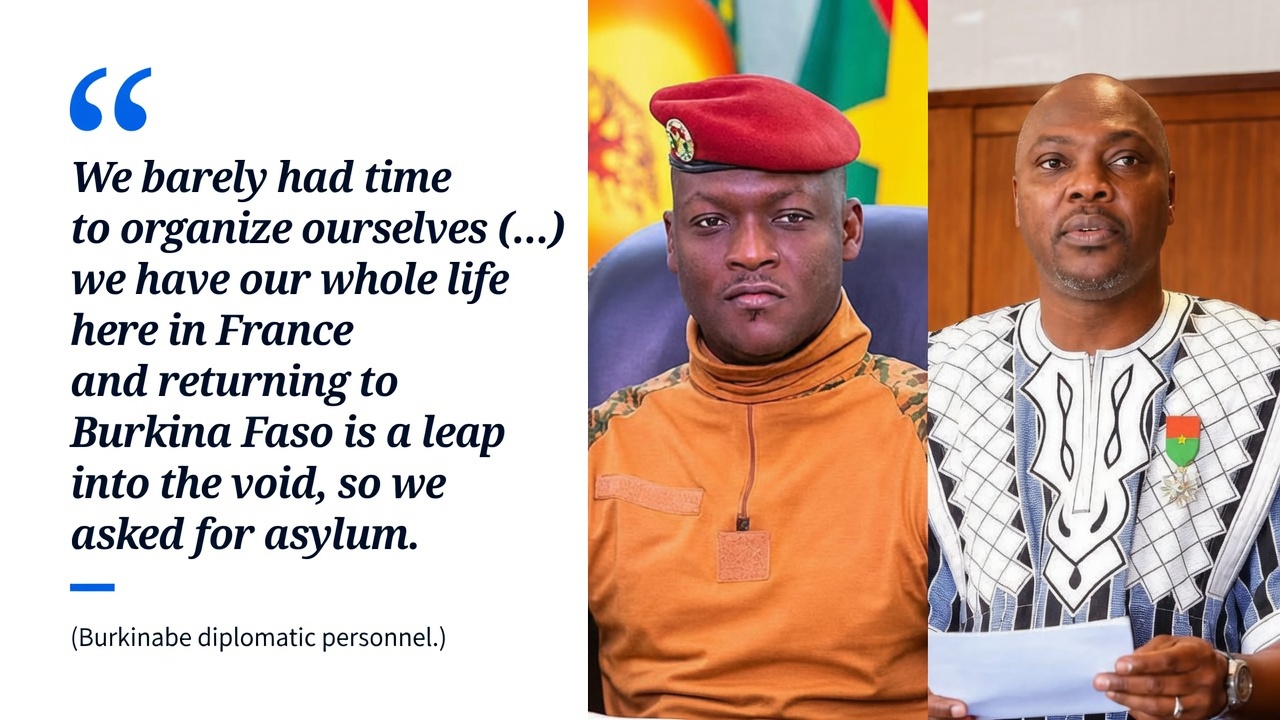
« We barely had time to prepare. We have built our lives here in France—our families, our children’s education, our careers. Returning to Burkina Faso feels like stepping into the unknown. That’s why we sought asylum. »
The concerns voiced by the diplomats extend beyond logistical challenges. Many have spent years in France, where they established roots, yet the prospect of returning to a politically volatile Burkina Faso fills them with apprehension. The transitional government’s recent decisions have heightened these fears, particularly regarding security conditions across the country.
Burkina Faso continues to grapple with a persistent security crisis, and the recall of diplomats coincides with growing public unease over the government’s mobilization measures against armed groups. Reports from human rights organizations and individual testimonies have highlighted concerns about the deployment of civilians to conflict zones with insufficient preparation. While these claims are disputed by authorities, they contribute to the broader sense of insecurity among those recalled from abroad.
Observers suggest that this case reflects a highly centralized governance approach, with critics arguing that decisions—such as the recall of long-serving diplomats—are made without adequate consideration for the human consequences. The abrupt nature of these transfers, coupled with a lack of transitional support, has left many agents and their families in a precarious position.
The symbolic weight of this situation cannot be overstated. When diplomats, tasked with representing their nation abroad, choose to seek asylum rather than return home, it signals a profound crisis of confidence in the institutions they serve. Such requests are rare in international relations and often indicate a political or security climate so dire that even state representatives feel compelled to seek protection elsewhere.
For the transitional government, this episode poses a significant reputational challenge. Since assuming power, the regime has pledged to restore national sovereignty and rebuild public trust in state institutions. Yet the sight of its own diplomats requesting asylum abroad inevitably raises questions about the internal climate and the guarantees extended to civil servants.
Beyond political discourse, this affair underscores the human toll of administrative decisions. The embassy staff’s testimony reveals a reality often absent from official statements: behind the recall orders are families, careers, and uncertainties that lead some to view exile as a safer alternative to repatriation. It serves as a reminder that decisions made at the highest levels of government can have far-reaching, often unintended, consequences for those tasked with representing the nation overseas.