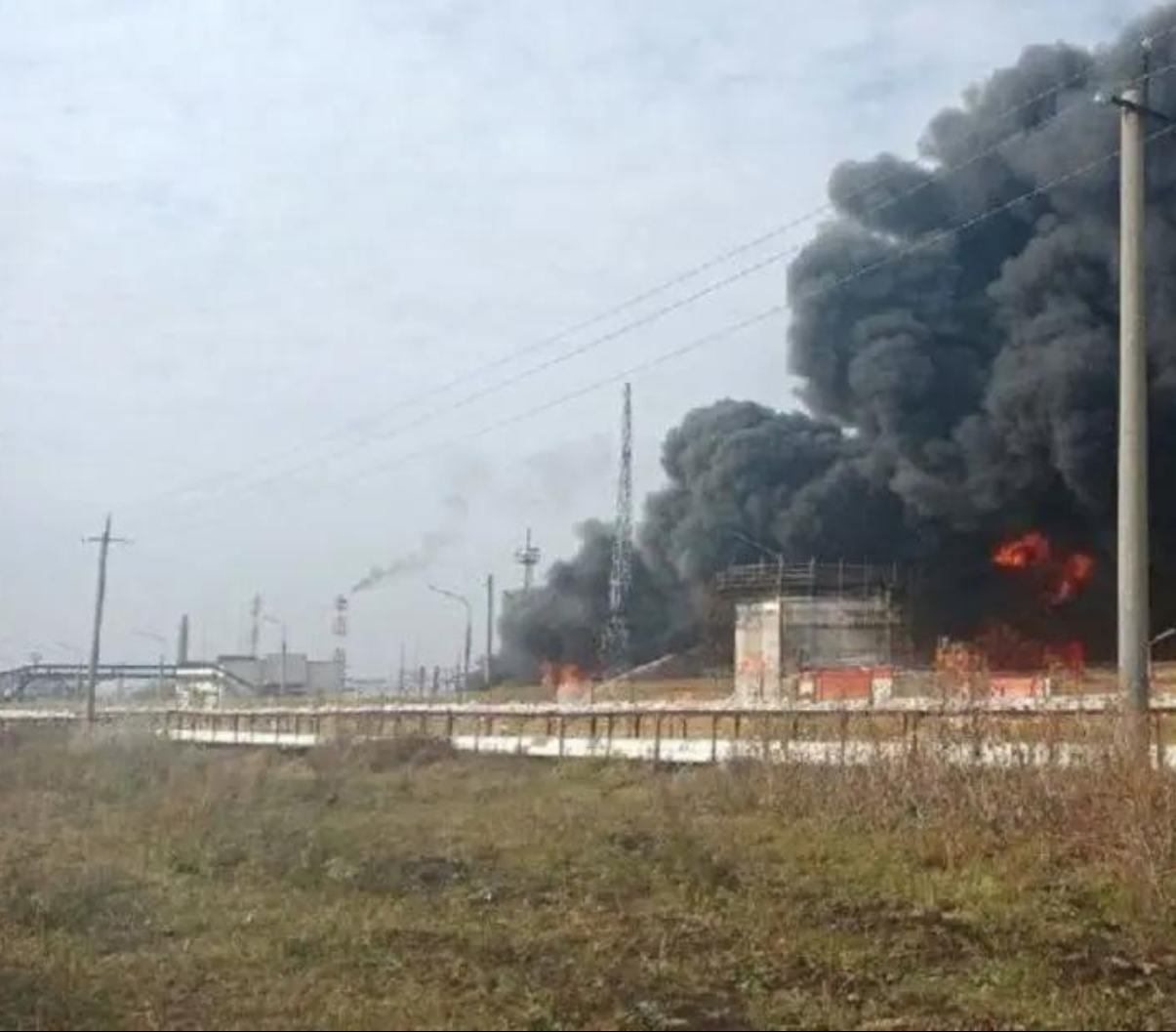
Fourteen people lost their lives when a Russian drone hit a railway station in Dnipro, while Ukrainian unmanned aerial vehicles simultaneously triggered a massive blaze at the Novokuibyshevsk oil refinery in the Samara region during the night of October 29 to 30. These simultaneous infrastructure drone strikes highlight the relentless targeting of critical networks and civilian zones as the conflict between Moscow and Kyiv grinds on without a clear resolution.
Novokuibyshevsk facility engulfed in flames
Deep inside Russian territory, hundreds of kilometers from the active combat zone, the Novokuibyshevsk industrial complex became the focal point of a major aerial assault. The overnight operation resulted in a massive fire and multiple explosions, sending thick plumes of black smoke into the sky. The targeted site, operated by the state-owned energy giant Rosneft, processes millions of tons of crude oil annually and is a crucial supplier of aviation fuel. Regional governor Vyacheslav Fedorishchev confirmed the deployment of mobile firing groups and air defense systems to counter the incursion, though the exact scale of the structural damage remains unverified. Visual evidence points to a severe blaze, but the total destruction of the plant is yet to be independently confirmed.
Deadly bombardment at a Ukrainian transit hub
Hours before the Samara region incident, a tragic strike unfolded in central-eastern Ukraine. A Russian drone slammed into a passenger platform at the Dnipro railway station, where a suburban commuter train and a long-distance passenger train were docked. The blast shattered windows, mangled train cars, and left rescue workers digging through the wreckage. The attack claimed at least 14 lives, including an 11-year-old child, and left numerous others in critical condition.
Civilian casualties and international condemnation
The devastating loss of life prompted immediate outrage from top officials. President Volodymyr Zelensky condemned the brutal assault on non-combatants and urged international partners to tighten their grip on Moscow. European leaders echoed this sentiment, with European Council President António Costa strongly denouncing the latest wave of lethal violence directed at ordinary citizens.
Targeting the logistical and economic backbone
These dual incidents underscore a defining feature of the current battlefield: the systematic dismantling of vital infrastructure. Since the full-scale invasion began, Ukraine’s railway network has served as the lifeline for military logistics, humanitarian aid, and civilian evacuation. Disrupting these transit routes severely impacts the daily survival of millions. Conversely, Kyiv has systematically targeted Russian energy assets to cripple fuel supplies and drain the financial resources that fund the war machine. The Novokuibyshevsk plant, having faced previous assaults, remains a high-priority objective due to its immense industrial output. Meanwhile, Moscow continues its campaign against the Ukrainian power grid, routinely plunging cities into darkness.
No diplomatic breakthrough in sight
The sheer scale of these reciprocal attacks illustrates the deep entrenchment of both sides. Despite reported diplomatic friction, including alleged pressure from Washington to temporarily halt deep strikes on Russian fuel plants, the assault on the Samara facility proves that Kyiv’s long-range campaign remains fully active. More than four years after the onset of the full-scale invasion, the distance from the front line no longer guarantees safety. As industrial sites are transformed into military objectives, civilian transit hubs and public spaces remain highly vulnerable, leaving the population trapped in a cycle of relentless retaliation with no immediate path to peace.