Election outcome leaves Netanyahu 8 seats short of majority
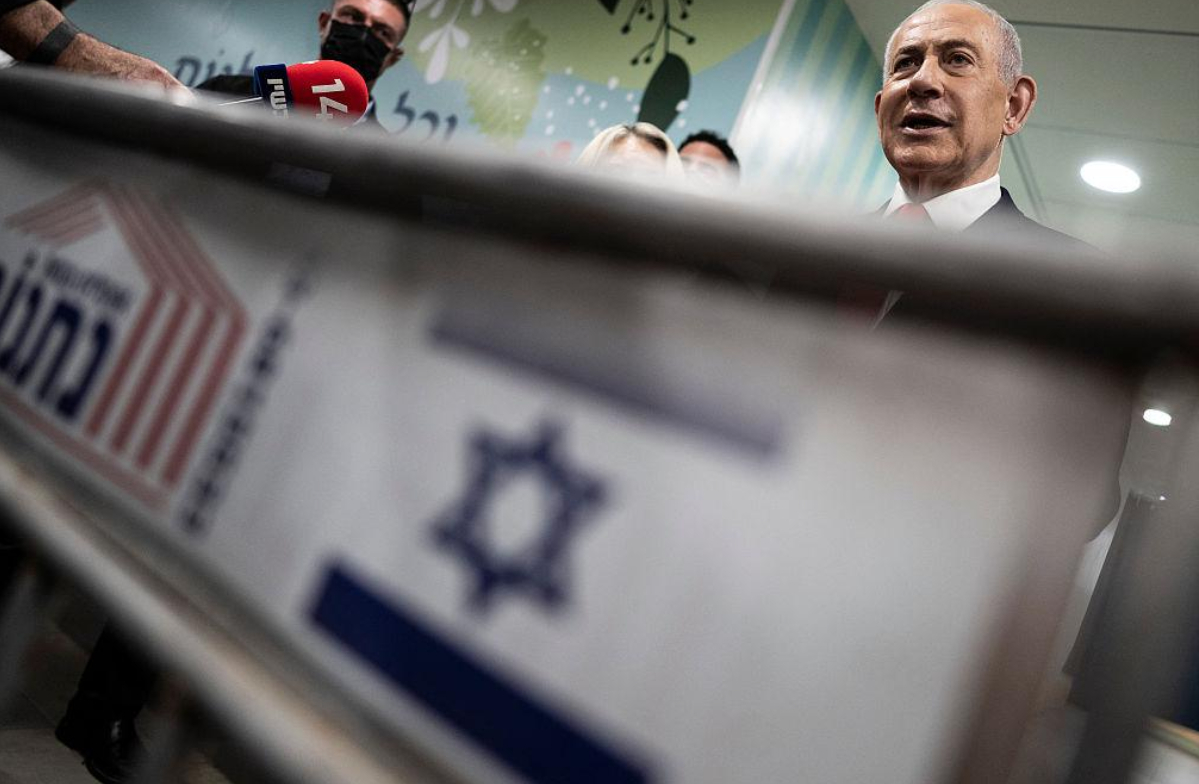
Benjamin Netanyahu’s Likud party emerged as the largest faction in Israel’s October 27, 2026 elections, yet his bloc secured just 53 Knesset seats — eight short of the 61 needed to form a government. This outcome creates a deeply fragmented parliament where opposition forces hold 48 seats while Arab-majority parties, including the Joint List and Ra’am, now command 19 seats — a historic high. The result immediately triggers a high-stakes political negotiation phase with implications stretching from Gaza to Tehran.
No clear path to government formation after razor-thin election
The vote produced the most divided Knesset in recent history. Netanyahu’s Likud dropped from 27 to 23 seats, while opposition leader Gadi Eisenkot’s bloc gained ground with 48 seats. Arab political parties doubled their influence compared to the previous parliament, where they held just nine seats. This shift reflects growing public dissatisfaction with years of political gridlock, military conflicts, and governance challenges under Netanyahu’s leadership.
Under Israel’s constitutional rules, forming a coalition requires at least 61 seats. With neither Netanyahu’s bloc nor the opposition reaching that threshold, the political deadlock creates three plausible scenarios: a fragile coalition with shifting alliances, an opposition-led minority government, or a return to the polls if negotiations collapse.
Arab parties hold decisive but conditional leverage
The 19 Arab Knesset members now sit at the center of coalition arithmetic. Their support could theoretically give the opposition a governing majority, but deep ideological divides — particularly among right-wing and religious parties — make such cooperation highly unlikely. Netanyahu may attempt to woo smaller centrist factions, though their demands could force painful concessions on domestic policy and settlements. Without fresh alliances, the risk of prolonged instability grows.
Gaza reconstruction and security dominate Israel’s post-election agenda
The humanitarian crisis in Gaza remains Israel’s most pressing immediate challenge. Reconstruction, demilitarization, and long-term governance will require both national consensus and international cooperation. Netanyahu’s traditional partners — including nationalist and religious factions — insist on continued military pressure against Hamas and oppose Palestinian statehood. An opposition-led government might pursue gradual confidence-building measures, though fundamental policy shifts seem unlikely given broad public support for security-first approaches.
Regional tensions escalate as Iran and Hezbollah loom large
Israel’s fragile political environment coincides with mounting regional threats. Iran’s expanding nuclear program, ballistic missile capabilities, and proxy networks across Lebanon, Syria, and Yemen remain top strategic priorities. A government weakened by internal disputes may struggle to craft a coherent deterrence strategy, even though security policy tends to enjoy bipartisan support in times of crisis.
Lebanon’s Hezbollah poses another immediate flashpoint. Cross-border incidents and military escalation could trigger devastating humanitarian and economic consequences, threatening fragile stability across southern Lebanon and northern Israel. Meanwhile, Syria continues to serve as a volatile theater where shifting power dynamics — including Iranian and Russian influence — demand constant Israeli vigilance.
Global powers and Arab neighbors await Israel’s next move
The United States views the election outcome with cautious concern. While Washington and Jerusalem maintain close military and intelligence ties, recent policy disagreements over Gaza operations and regional de-escalation efforts could strain relations. A prolonged coalition crisis may delay joint strategic projects or arms deliveries.
Arab states such as Saudi Arabia, Egypt, Jordan, and the UAE are also reassessing their approach. Riyadh had prioritized normalization with Israel through the Abraham Accords framework, but progress now hinges on Palestinian statehood talks and regional security improvements. Jerusalem’s inability to form a stable government could slow diplomatic momentum across the Middle East.
No quick fixes ahead for deeply divided Israel
Beyond the political maneuvering, Israel faces deep social divisions over national identity, religion, and security policy. Protest movements, economic inequality, and war fatigue have reshaped public sentiment. Arab political participation at record levels signals shifting demographics and demands for inclusion, yet integration into governing coalitions remains politically toxic for most right-wing parties.
With three potential outcomes — Netanyahu’s survival through compromised alliances, a surprise opposition coalition, or another election — the coming months will determine whether Israel can emerge from its worst political crisis in decades. One thing is certain: Jerusalem’s decisions over the next six months will resonate far beyond its borders, shaping Gaza’s future, Iran’s regional calculus, and the fragile prospects for Arab-Israeli normalization.