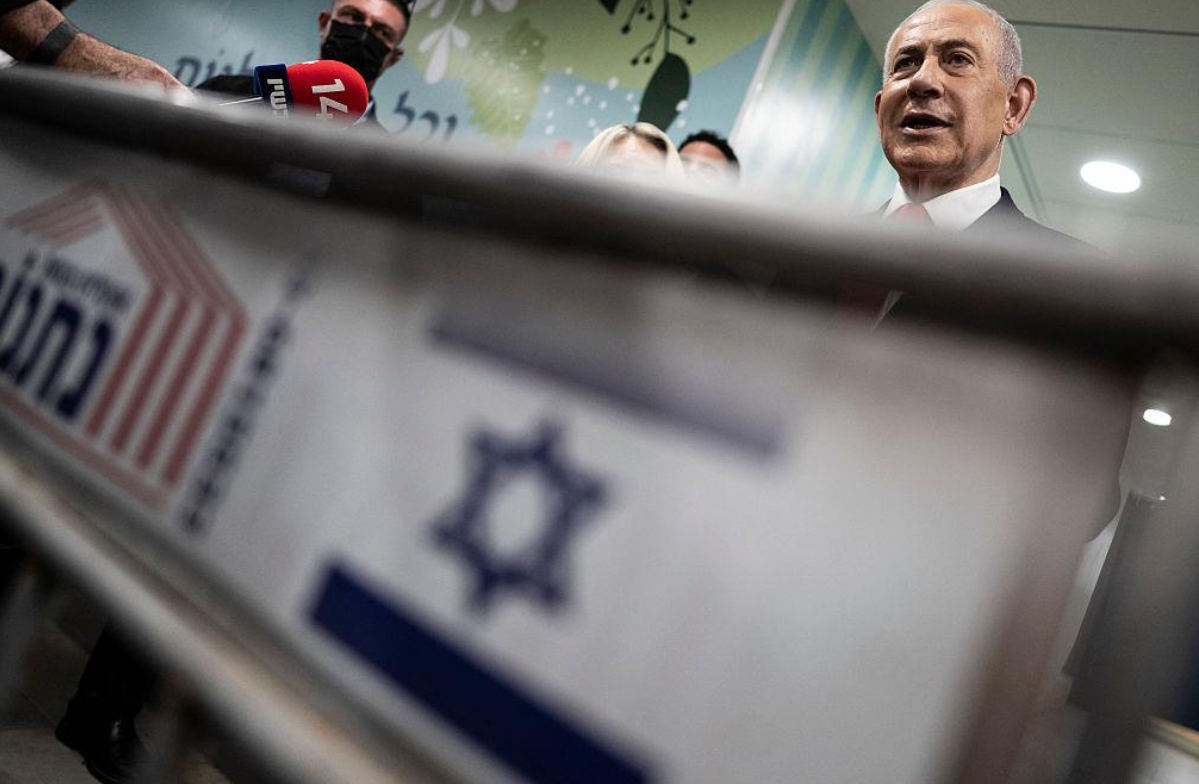
Israel’s legislative elections held on October 27, 2026, delivered a surprising outcome: Prime Minister Benjamin Netanyahu’s coalition secured the most seats but fell short of the 61-seat majority required to govern. With 53 seats in the 120-member Knesset, Netanyahu’s bloc now faces an opposition led by Gadi Eisenkot’s 48 seats and a historic high of 19 seats held by Arab parties, including the Joint List and Ra’am. This fragmented result signals an era of political uncertainty, with consequences that could ripple across the Middle East.
Netanyahu’s victory lacks the numbers to govern
While Netanyahu’s Likud party remains the largest single faction with 27 seats, its performance marks a decline from the 68 seats it held in the previous Knesset. The election outcome underscores a shifting political landscape shaped by years of internal strife, war, and public dissent over government policies. Crucially, no bloc reached the 61-seat threshold needed for a majority, leaving Israel in uncharted territory.
The Arab parties’ historic performance adds a new dimension to the parliament. Their 19 seats give them significant leverage, potentially tipping the scales for the opposition. However, deep-seated reluctance among Zionist parties to collaborate with Arab factions complicates coalition-building efforts. Alternative scenarios now include a national unity government, a minority coalition, or even another round of elections if negotiations collapse.
Gaza’s future hangs in the balance
The post-election period brings Gaza to the forefront once again. The territory’s reconstruction, Israel’s security concerns, and the governance of the Palestinian Authority will be central to the next government’s agenda. While Netanyahu’s traditional allies may favor a hardline stance on security and territorial issues, an opposition-led coalition could pursue a different diplomatic approach. Yet, radical shifts in policy remain unlikely due to entrenched divisions even within opposition ranks.
For Palestinians, the election results offer no immediate relief. Instead, they highlight that the future of Gaza and the West Bank will depend heavily on the alliances forged in Jerusalem. The absence of a clear majority means Israel’s next government will need to navigate a delicate balance between security demands and political realities.
Regional tensions with Iran and Lebanon demand attention
The election’s outcome also carries weighty implications for Israel’s strategic priorities. The Islamic Republic of Iran remains a persistent concern, with its nuclear program, ballistic missile capabilities, and support for regional militant groups continuing to destabilize the Middle East. A weakened government in Tel Aviv could struggle to maintain a coherent strategy on these fronts, though national security issues typically enjoy broad political consensus in Israel.
Lebanon’s Hezbollah poses another critical challenge. Any military escalation in the region could trigger severe humanitarian and economic consequences, further complicating an already fragile security environment. In Syria, Israel will keep a close watch on developments that might alter the balance of power along its borders. Though these elections are domestic, their repercussions could influence multiple regional flashpoints.
Global reactions hinge on Israel’s next moves
The United States and Arab capitals are closely monitoring the political transition in Jerusalem. Washington’s relationship with Israel, rooted in military, strategic, and diplomatic ties, may face strains over differences in approach to Gaza, military operations, and regional de-escalation efforts. Meanwhile, Arab states such as Egypt, Jordan, Saudi Arabia, and the UAE will weigh their next steps carefully. For Riyad, normalization with Israel remains a strategic priority, but its progress is inextricably linked to the Palestinian question and regional stability.
A government unable to assert a clear direction could slow diplomatic progress, while a coalition open to negotiations might open new avenues for dialogue. However, a breakthrough toward a regional agreement is far from guaranteed. The path forward will require careful navigation of competing interests and priorities.
Israel’s elections reveal a deeply divided society
The October 27 vote lays bare Israel’s deep societal divides over security, governance, religion, and national identity. The gains of Arab parties, the decline of Netanyahu’s bloc, and the absence of a clear majority signal a period of uncertainty. Three potential paths now emerge: Netanyahu’s retention of power through new alliances, the formation of an alternative government, or another election cycle if negotiations fail.
For the Middle East, the stakes are high. The composition of Israel’s next government will shape the trajectory of Gaza, Palestinian relations, Iran’s confrontation, and prospects for Arab-Israeli rapprochement. Netanyahu may have won the election, but the Knesset’s fragmented results have denied him the mandate to govern alone. In a region where Jerusalem’s decisions resonate globally, this narrow victory could herald a new phase of geopolitical uncertainty.
What’s next for Israel?
The coming months will test Israel’s political resilience. Key questions include:
- Can Netanyahu secure enough support to form a viable coalition?
- Will opposition parties bridge their differences to challenge his leadership?
- How will Arab parties’ influence shape the political agenda?
- What regional shifts might emerge from Israel’s political limbo?
One thing is certain: Israel enters uncharted waters, where every decision could have far-reaching consequences for its citizens and neighbors alike.