donald trump’s strategic pivot targets Cameroon’s vital resources
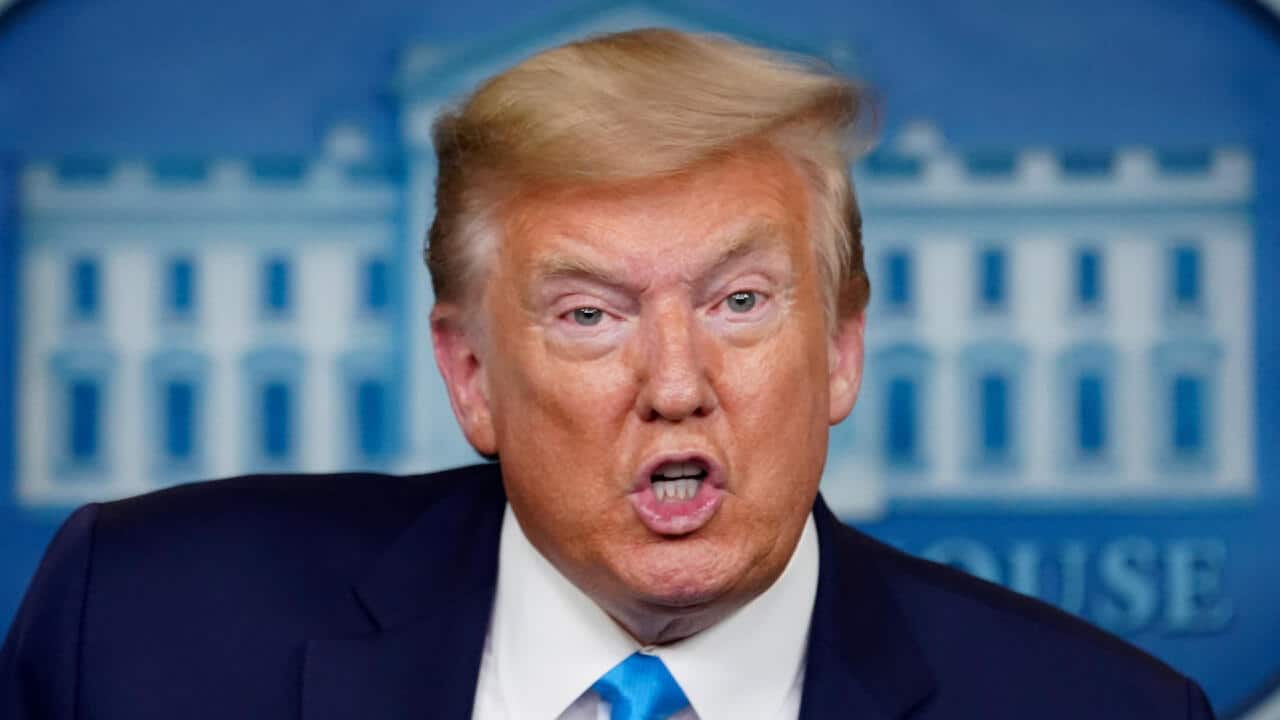
From his initial term, Donald Trump fundamentally reshaped United States foreign policy, primarily to confront China, which he identifies as the foremost challenger to American global dominance.
During his first administration, Donald Trump strategically reoriented United States policy to counteract China, which he views as the primary rival to American global dominance.
Reducing reliance on China for rare earth minerals became an absolute strategic imperative for the Trump administration. At the forefront of this initiative is GreenMet.
Drew Horn, GreenMet’s CEO and a former senior advisor to the Director of National Intelligence under Trump, recently visited Yaoundé for a meeting that largely escaped public attention. Horn represents a significant American agenda, with his associates including other trusted former Trump collaborators such as Georges Sorial, previously Donald Trump’s legal counsel, and Keith Schiller, former Director of Security for the Trump Organization.
A high-level American delegation, spearheaded by Drew Horn and GreenMet, traveled to Cameroon to finalize Memorandums of Understanding (MoUs). While the American group has not publicly detailed the contents of these agreements, it is known that American Renaissance Minerals (ARM), a firm directly linked to GreenMet, has secured a leading position in Cameroon’s Nkamouna nickel and cobalt project. Furthermore, Washington’s strategic interests extend to Cameroon’s rare earth deposits.
Donald Trump’s commitment to his vision for Cameroon is so strong that he navigated around US Congressional restrictions that had excluded Cameroon from the African Growth and Opportunity Act (AGOA). The former American president is now leveraging the American Chamber of Commerce in Cameroon (AmCham) to facilitate commercial agreements.
In contrast to China’s extensive involvement in strategic mineral extraction in the Democratic Republic of Congo, the United States, which aims to invest in mineral processing to reduce its domestic carbon footprint, has made its support to the Cameroonian government conditional on transparency in both the extractive and legal sectors.
American intelligence services reportedly intervened following revelations by the Extractive Industries Transparency Initiative (ITIE) concerning illicit gold trafficking. Washington is actively collaborating with Yaoundé to identify and expose those responsible for this illicit trade.
The United States’ engagement does not stop there. American diplomacy has significantly reduced the number of African nations eligible to issue US visas, with Cameroon being one of only 20 countries selected out of 50 across the continent. On the security front, President Paul Biya hosted General Dagvin Anderson, then AFRICOM commander, in September 2025, followed by Lieutenant General John William Brennan Jr., AFRICOM deputy commander, in May 2026, all within an eight-month span.
Improving the business climate remains a key priority for Washington. Christopher Lamora, following a private discussion with President Paul Biya earlier this year, expressed, “I sincerely hope to see more American businesses invest in Cameroon, cultivate trade relationships, and forge partnerships, including joint ventures between American and Cameroonian companies. This benefits both nations: it generates employment in the United States, bolsters American industry – a priority for President Trump – and simultaneously stimulates the Cameroonian economy.”
Washington is determined to address the challenge posed by China, which has invested over $700 billion across 49 African countries.
Some analysts observing Trump’s foreign policy interpret his strategy as an ambition to transform target nations such as Cameroon, Nigeria, and Kenya, mirroring the economic growth seen in the “Asian Dragons” (South Korea, Taiwan, Hong Kong, and Singapore) in their respective eras.
Related Posts