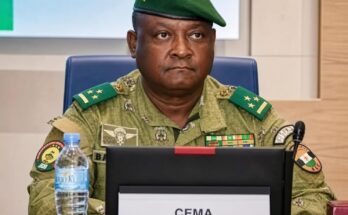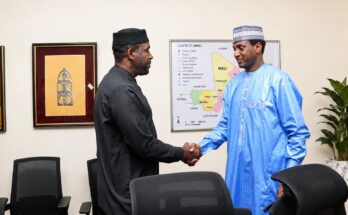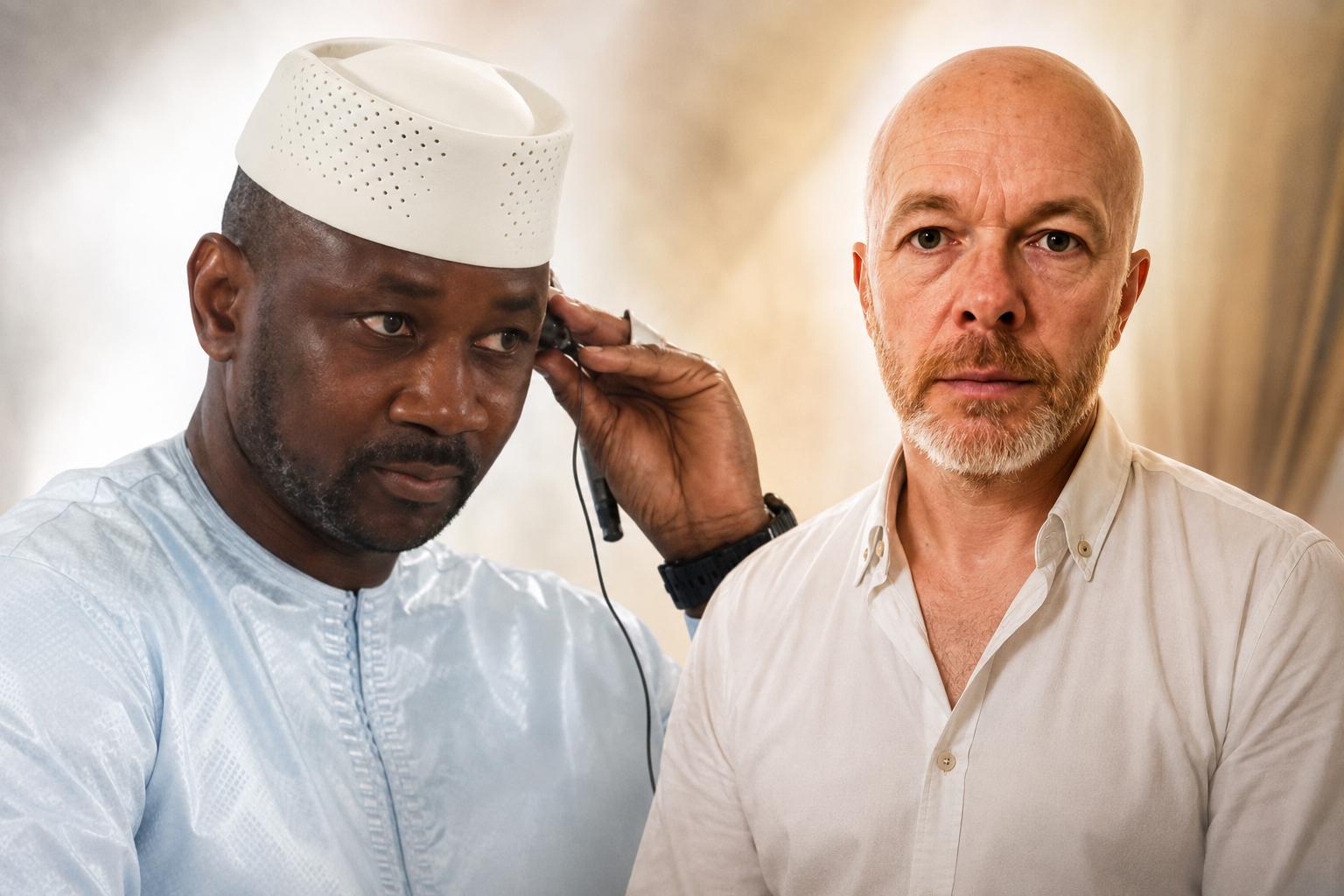
In Bamako, the announcement carried the weight of a sovereign act: President Assimi Goïta had granted a « presidential pardon » to Yann Vézilier, the French intelligence officer detained in Mali a year earlier. Following his June 5th conviction to a staggering twenty-year prison sentence for « attempted destabilization, » the diplomat was set to return home. Yet, while Malian officials framed this outcome as a gesture of magnanimity and state clemency, the truth behind the scenes tells a far more complex story.
Diplomatic theater: the final act of a staged trial
The use of a pardon was never an act of spontaneous clemency or routine justice. Instead, it marked the calculated conclusion of a meticulously orchestrated legal spectacle. From the outset, this trial was designed not as a judicial proceeding, but as a propaganda tool—a means to project strength and reinforce political legitimacy in the face of internal and external pressures.
Behind the official narrative: back-channel deals and financial exchanges
While Bamako’s leadership insists on its control over national security, the facts reveal a different reality. Despite public assurances of military prowess, Malian forces have not engaged directly with insurgent groups such as the Cadre Stratégique Permanent (CSP-DPA / FLA) and the Group for the Support of Islam and Muslims (JNIM). Moreover, Russian instructors and mercenaries from Africa Corps—often cited in official communications—remained conspicuously absent from frontline operations during these critical moments.
To secure the release of Malian soldiers captured in previous clashes, the transitional government pursued a strategy far removed from its public posture of uncompromising resolve. Secret negotiations were conducted with leaders of the FLA and JNIM, involving direct financial payments in exchange for the soldiers’ freedom. This pragmatic approach—contrary to the rhetoric of strength—exposes a fragile security landscape where cash and compromise take precedence over confrontation.
The trial as a political weapon
From the moment of Yann Vézilier’s arrest in August 2025, his detention was never a matter of routine law enforcement. As a credentialed representative of a foreign power, his presence was known and monitored by Mali’s security apparatus. Yet, the abrupt decision to revoke his status and rebrand him as a « conspirator » served a clear strategic purpose: the creation of an external enemy to rally public support behind the ruling military regime.
The June conviction to twenty years’ imprisonment was not merely punitive—it was a calculated move. It served the dual purpose of projecting an image of judicial firmness against former colonial powers and of establishing a high-value bargaining chip in future diplomatic negotiations.
How justice became a propaganda tool
Legal experts and diplomats have noted with concern the speed and opacity of the proceedings. The absence of publicly disclosed evidence and the arbitrary labeling of the case as an attack on state security reveal a premeditated strategy: using justice as a narrative weapon. One analyst summarized the approach succinctly: « A harsh sentence builds the story of aggression. A pardon later allows the regime to play the role of magnanimous victor. This is the essence of hostage diplomacy. »
The pardon as political cover
To frame Yann Vézilier’s release as a presidential act of grace is to ignore the mechanics of realpolitik. The liberation of intelligence officers is never an act of constitutional mercy—it is the result of covert negotiations, indirect concessions, and security arrangements made outside the courtroom.
By invoking the pardon, Bamako secures a symbolic victory: the regime maintains final authority, reaffirms the supremacy of its leader, and preserves the political capital gained from the initial trial. This case will not be remembered as an example of judicial clemency, but as a stark illustration of how justice can be bent—from sentencing to pardon—as an instrument of strategic communication.