Gabon’s president reshapes strategic ties with France during landmark state visit
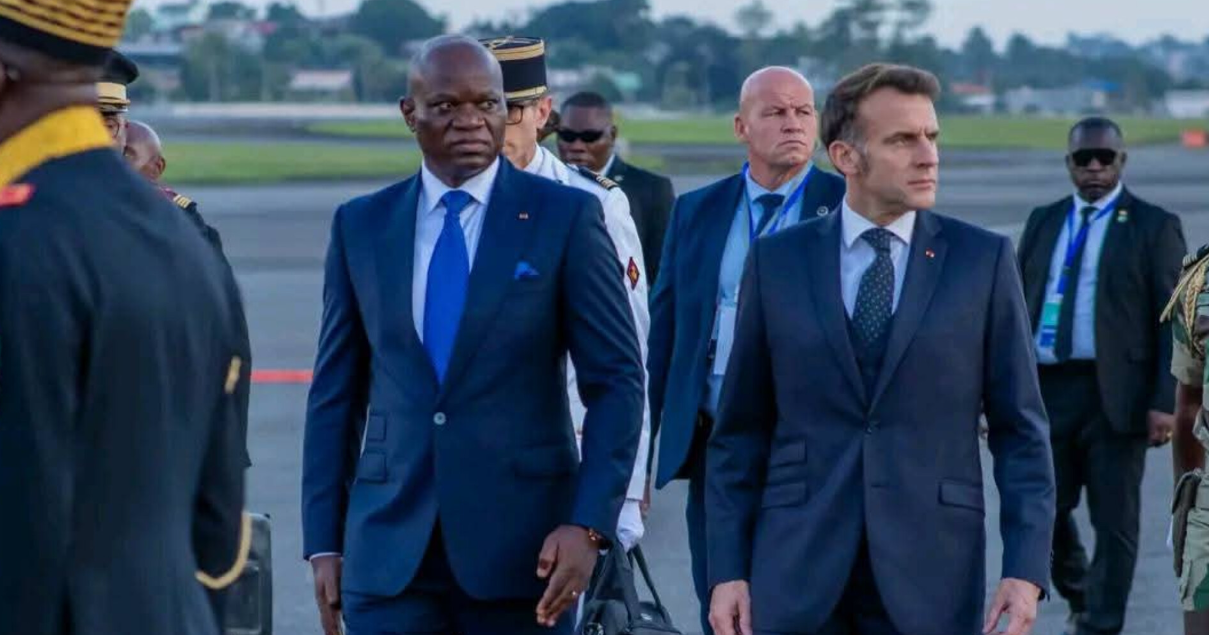
For three days, Gabon’s head of state, General Brice Clotaire Oligui Nguema, led a high-stakes state visit to France, redefining the future of bilateral cooperation. The talks with President Emmanuel Macron centered on two critical pillars: the future of the Camp de Gaulle military base and a bold shift toward local processing of manganese, Gabon’s most strategic mineral. The Gabonese leader is steering his country toward a new partnership model—one that rejects abrupt ruptures while asserting national sovereignty with measured determination.
Transforming Camp de Gaulle: sovereignty without confrontation
The Camp de Gaulle, long a symbol of French military presence in Gabon, is no longer sustainable under the old framework. As France restructures its African defense footprint, Gabonese authorities are pushing for a pragmatic transformation: reducing the French military footprint while converting the base into a co-managed training hub or a minimal technical cooperation site focused on Gulf of Guinea security. This approach signals a clear message: Libreville wants restored national sovereignty, but not at the cost of strategic security partnerships. Paris, for its part, appears ready to adapt its military posture without alienating a key regional ally—a lesson drawn from recent setbacks elsewhere in West and Central Africa.
From raw export to local value: Gabon’s manganese gamble
Economic transformation took center stage alongside defense talks. Gabon, the world’s second-largest manganese producer, is determined to break free from its colonial-era role as a supplier of unprocessed ore. During meetings in Paris, President Oligui Nguema made his position unmistakable to French industrial leaders and executives from Eramet subsidiary Comilog: the future lies in local processing. The Gabonese government now demands fairer revenue sharing, job creation for young Gabonese professionals, and investment in high-value processing plants. This strategy positions Libreville to capitalize on the global energy transition, where manganese is essential for electric vehicle battery production.
Gabon’s middle path: a model for Africa?
This state visit reflects a distinctive diplomatic doctrine. While neighboring countries in the Alliance of Sahel States (AES)—Mali, Niger, and Burkina Faso—have pursued confrontational rhetoric and abrupt policy shifts, Gabon is charting a quieter, more effective route. Rather than swapping one dependency for another, Libreville is diversifying partnerships with China, Turkey, and India while maintaining a firm yet constructive dialogue with France. This pragmatic realism challenges the simplistic narrative that African sovereignty must come at the price of diplomatic isolation or Western disengagement.
Digital control casts a shadow over democratic progress
Despite international acclaim for its balanced foreign policy, Gabon faces growing concerns over domestic governance. Recurrent internet shutdowns and social media restrictions—justified by the government as measures to curb misinformation and protect public order—have raised alarms among civil society and opposition figures. These measures risk undermining the regime’s claims of openness. During informal discussions in Paris, French officials quietly emphasized the importance of upholding fundamental freedoms and freedom of expression. For President Oligui Nguema, the challenge is clear: safeguard internal stability without compromising the credibility his government has worked to build on the world stage.
A balancing act with high stakes
The outcome of this state visit is set to redefine Gabon’s strategic trajectory. By reconfiguring French military presence and accelerating local industrialization of manganese, President Oligui Nguema has laid the groundwork for a sovereign, development-focused foreign policy. The next test will be implementation. For this strategy to succeed, Libreville must not only deliver on international commitments but also restore public trust through democratic openness and transparent communication. Gabon’s future hinges on its ability to negotiate effectively in Paris—and to let its own society flourish at home.