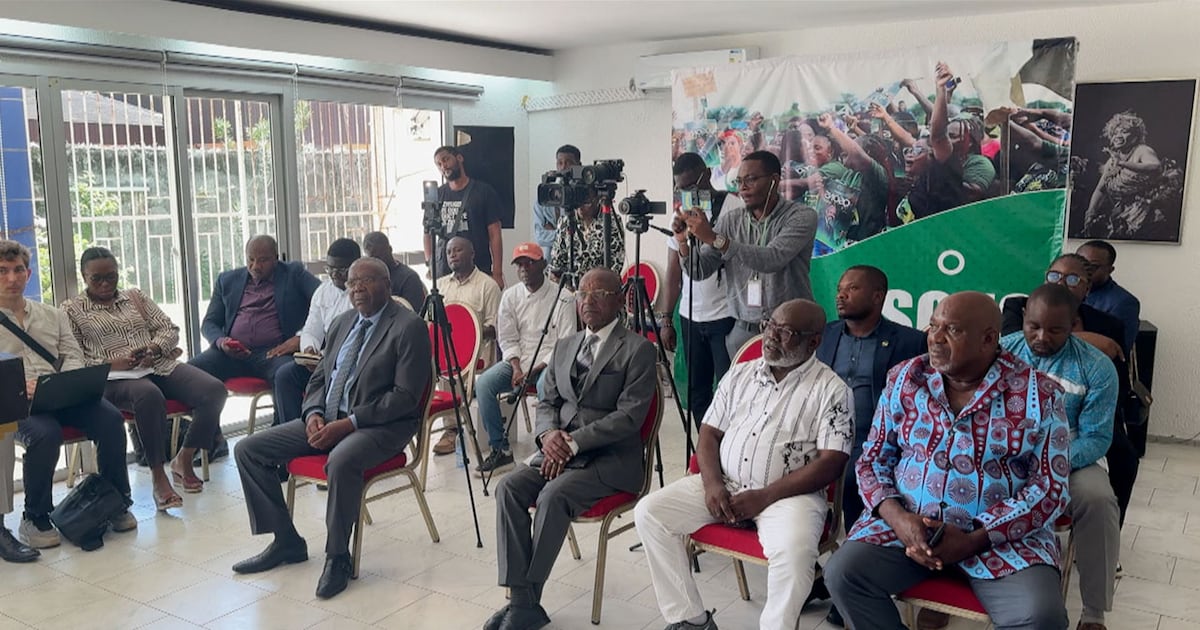
With one week to go before a widely anticipated political shake-up, the time for negotiation is over — now it is about accountability. As the June 27, 2026 deadline approaches for compliance with the new law governing political parties, most formations claim they have met the requirements.
Yet the gap between intentions and administrative reality remains wide: back in April, barely a dozen out of the 104 registered parties had submitted a complete file. The Ministry of the Interior will decide on June 27, a day that could radically redraw Gabon’s political landscape.
Adopted on the recommendations of the April 2024 Inclusive National Dialogue, Law No. 016/2025 is intended to “clean up” the political field. Gone are the days of micro-parties, often dismissed as empty shells or “suitcase parties”. From now on, to exist, a party must operate as a structured political machine.
The requirements are stringent and aim for unprecedented national representativeness: 10,000 real members, identified by their Personal Identification Number (NIP) and distributed equitably across Gabon’s nine provinces. Additionally, parties must have a physical headquarters, a dedicated bank account, updated statutes, and enhanced financial transparency under the supervision of the Court of Accounts.
Interior Minister Adrien Nguema Mba has stated firmly and without ambiguity that the deadline will not be extended. Non-compliant formations face automatic dissolution.
This legislative earthquake is justified by a consensus reached during the national dialogue: a country of fewer than three million people cannot sustain a fragmentation of 104 political entities, many of which are little more than family-run structures with no real national reach. Between resignation and resistance, stakeholders are now positioning themselves.
Reactions to the approaching deadline vary across the political microcosm. “This reform does not scare us,” says Joachim Mbatchi, president of the Front for the Defense of the Republic (FDR), who sees it as an opportunity for weak parties to merge into “larger blocs”.
Theophile Makita Nyembo, vice-president of Together for Gabon, asserts that his party — founded by former Prime Minister Alain Claude Bilie By Nzé, who is currently detained — is already in compliance. “We meet all the conditions set by the law,” he states, adding that the reform applies mainly to new formations. But criticism is mounting, with opponents denouncing a manoeuvre intended to suffocate the opposition.
Just as the axe is about to fall, an intervention by the President of the Republic before Parliament has stirred confusion. He expressed reservations about changes made to the National Dialogue recommendations, while insisting that “the decisions taken by Gabonese people must be respected”.
This statement angered Francis Aubame, president of the Sovereignist-Ecologist Party (PSE). “I believe we are witnessing political manipulation,” he fumed. “I am surprised that the President forgets that he signed a decree. He is asking parliamentarians to go back on it. But the national dialogue is not a sovereign national conference. Deputies are free to vote as they wish,” he said, accusing the presidency of interfering in legislative work.
Between erasure and renewal, what future for multipartyism? The question now on everyone’s lips is: how many parties will survive the administrative overhaul of June 27? According to recent tallies, only four parties — including the UDB and the PDG, which are the largest — have so far managed to submit complete files. The rest, caught in a race against time to gather 10,000 members via NIP, risk simply disappearing.
While the government insists it wants to prioritise “quality” of democratic debate over “quantity” of formations, many observers and editorialists see an alarming retreat of democratic space. The new law also imposes an electoral performance requirement: any party that fails to field candidates in two consecutive elections will automatically lose its status.
On June 27, the Ministry of the Interior will deliver its verdict. That day, Gabon will know whether it is entering an era of calm, structured politics, or witnessing the burial of a certain version of pluralism. It will mark the end of an era when creating a party was little more than a formality.