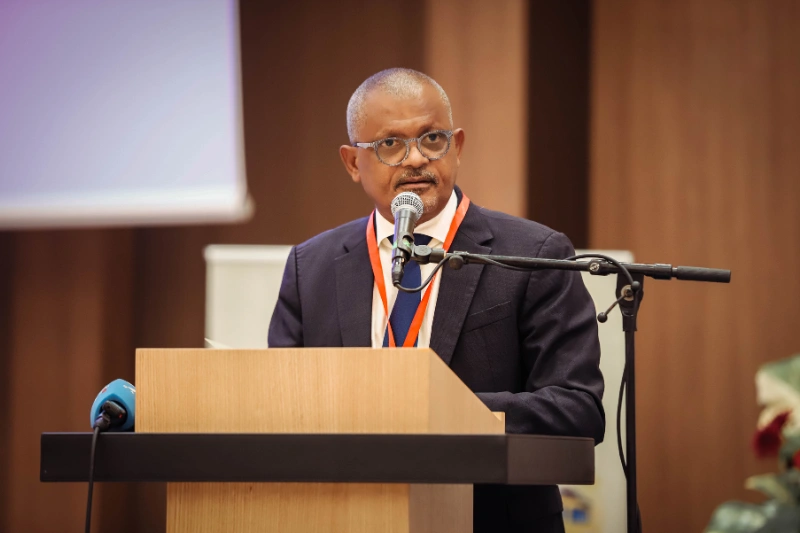
The Gabon Economic Forum recently concluded with a critical focus on one of the nation’s most pressing economic challenges: the government’s outstanding debt to private enterprises. Alain‑Claude Kouakoua, President of the Fédération des entreprises du Gabon (FEG), highlighted the urgency of addressing this financial burden, which has long strained relations between the public and private sectors.
For years, the debt has been estimated at 4,340 billion FCFA, but Kouakoua suggested this figure may be inflated. Many of the claims submitted by businesses lack sufficient documentation or contain irregularities, making them difficult to validate. To resolve this, a joint audit will be conducted in collaboration with the dedicated Task Force and the Ministry of Economy, aiming to distinguish between legitimate debts—those with verified and agreed-upon terms—and questionable claims that will not be honored.
Until the audit is completed, no repayments will be processed. Kouakoua emphasized that the final debt figure will likely be lower than the widely circulated amount. He also revealed that nearly 50% of the debt has already been settled since the CTRI assumed power in August 2023. However, many businesses chose not to disclose these payments, contributing to ongoing confusion about the debt’s true status.
This initiative aligns with recommendations from the GEF 2026, which calls for prioritizing the clearance of domestic debt. The proposed strategy includes accelerating the repayment of VAT credits and outstanding public contract payments through mechanisms like securitization and cross-offsetting. A national debt clearance program will be established, featuring a published tracking dashboard and a dedicated oversight committee—essentially a revival of the former Club de Libreville.
While discussions also touched on improving public statistics and the CNAMGS, the spotlight remained firmly on resolving the government’s debt obligations to the private sector. For Gabonese businesses, this move signals a long-awaited shift toward transparency, predictability, and mutual trust in economic dealings with the state.