Gabon’s leadership embraces religious dialogue for national cohesion
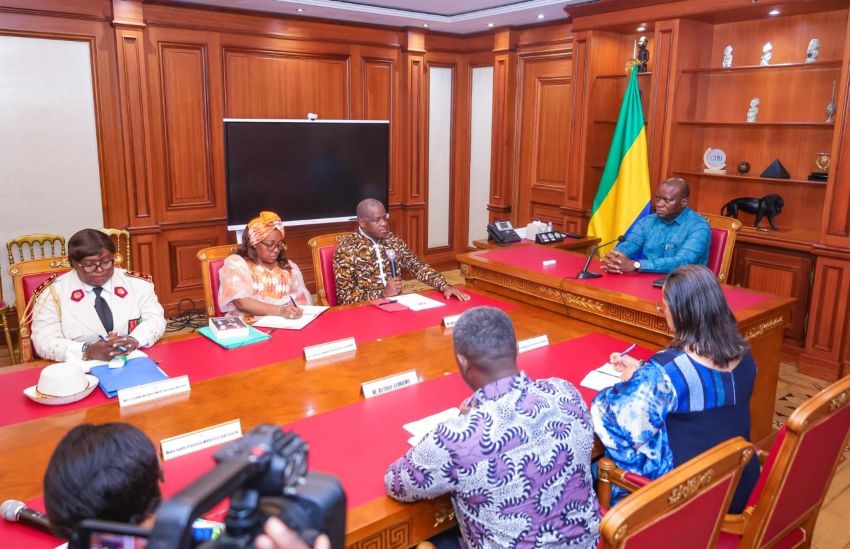
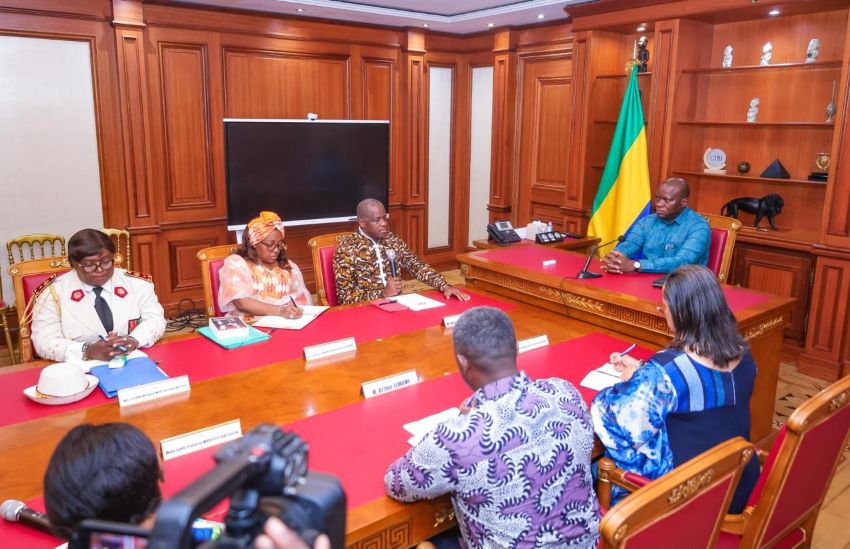
Libreville, Saturday, June 13, 2026 — As Gabon navigates its political transition, the nation’s leadership is turning to an unexpected ally: religious institutions. The recent meeting between President Brice Clotaire Oligui Nguema and Reverend Louis Sylvain Allogo Engo, head of the Evangelical Church of Gabon, illustrates a growing recognition of faith-based organizations as pillars of stability and social cohesion.
In a nation where religious organizations wield significant influence—far outpacing some government agencies in reach—the timing of this high-level dialogue is no coincidence. As Gabon advances its institutional reforms to solidify its Fifth Republic, the state is actively seeking partnerships with moral authorities to reinforce national unity and collective responsibility.
Religious leaders as key partners in governance
The Evangelical Church of Gabon is far more than a spiritual institution; it operates schools, health clinics, and youth programs across the country. Its leaders have long served as mediators in local conflicts and advocates for civic values. President Oligui Nguema’s decision to engage with Reverend Engo signals a pragmatic approach to governance—one that acknowledges the critical role of faith communities in shaping public behavior and social harmony.
This model is not unique to Gabon. Across Africa, religious organizations frequently act as bridges between governments and citizens, particularly in areas where state presence is limited. Their ability to mobilize communities makes them invaluable in promoting peace and preventing social fractures.
The inclusion of the Vice President in the meeting underscores the administration’s commitment to this strategy. By formalizing ties with religious leaders, the government acknowledges that sustainable stability requires more than legislative reforms—it demands collaboration with the very institutions that shape societal values.
Balancing secular governance with faith-based collaboration
One of the most notable aspects of this encounter is the emphasis on laïcité—secularism—as the foundation for cooperation. President Oligui Nguema has repeatedly stressed that while the state and religious institutions must maintain mutual autonomy, they share a responsibility to work together for the public good. This approach aligns with modern democratic principles, where secular governance does not exclude dialogue with faith communities but rather defines clear boundaries for collaboration.
The Evangelical Church of Gabon, with its nationwide network, has been a cornerstone of the country’s social fabric for generations. Reverend Engo highlighted its role in guiding the nation through pivotal moments, from post-independence challenges to recent political transitions. This meeting was not merely ceremonial; it was a reaffirmation of trust between two institutions committed to Gabon’s progress.
Beyond politics: a holistic vision of development
The discussions also addressed practical steps, including the church’s upcoming national synod scheduled for July 20–26 in Baraka Mission. The government’s willingness to support this event reflects a broader understanding of development—one that encompasses moral guidance, civic education, and social cohesion alongside economic growth. This perspective echoes global trends in human development, where resilience depends on the interplay of institutional strength and community trust.
By prioritizing partnerships with religious leaders, Gabon’s leadership is making a bold statement: a nation’s modernization is not solely the work of government agencies but is deeply rooted in the values cultivated within its communities. This approach may well become a defining feature of the Fifth Republic, offering a blueprint for stability in an era marked by identity-based tensions and social fragmentation.