Gabon’s Oligui Nguema outlines bold economic and political vision
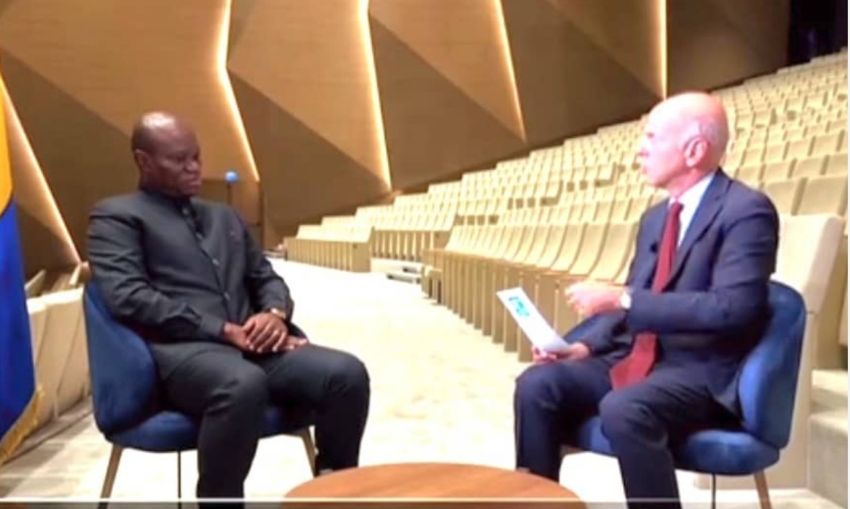
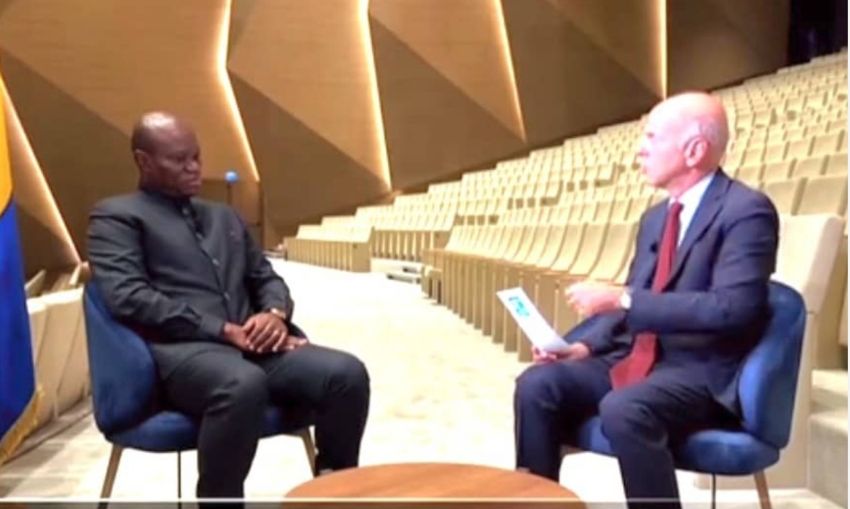
Libreville, June 3, 2026 – In a rare international interview, Gabonese President Brice Clotaire Oligui Nguema defended his administration’s strategic direction, committing to economic sovereignty, progressive reforms, and a break from dynastic politics during a wide-ranging conversation with journalist Marc Perelman in the capital’s Cité de la Démocratie.
Three years after assuming leadership and one year into his elected presidency—secured with over 94% of the vote—Oligui Nguema used the platform to outline a clear political vision. His remarks underscored a long-term reform agenda, economic self-reliance, and recalibrated international partnerships that prioritize national interests without severing ties.
Progress over promises: the reform agenda
Addressing criticisms about the pace of development, particularly in access to clean water and reliable electricity, the president emphasized that his mandate spans seven years. He acknowledged public frustrations but highlighted over 800 billion CFA francs invested in energy infrastructure, framing progress as a gradual transformation rather than a sprint.
This narrative positions his administration as committed to structural change, with results expected to unfold over time rather than overnight. It marks a strategic shift in how Gabon’s leadership communicates its policy direction.
Economic sovereignty as policy doctrine
The most consequential statements came on economic policy. Oligui Nguema confirmed Gabon’s intention to engage with the International Monetary Fund, but only after a comprehensive audit of public finances—signaling a desire to regain control over national debt decisions before entering new agreements.
A landmark move is the 2029 ban on exporting raw manganese. As the world’s third-largest producer, Gabon is accelerating local processing to shift from exporting unrefined minerals. The policy directly targets French mining giant Eramet, demanding local smelters be operational by the deadline or face export restrictions. This stance reflects a broader push to rebalance power between the state and multinational corporations, ensuring greater wealth stays within Gabon.
A balanced diplomacy of strength and partnership
On the international stage, the president portrayed Gabon’s push for sovereignty as compatible with strong partnerships. He confirmed a state visit to France on July 20, framing the handover of Camp de Gaulle to Gabonese authorities as a cooperative gesture, not a confrontational one—contrasting with trends in parts of West Africa.
He also rejected a U.S. proposal to host deported migrants, stating it did not align with national interests, while affirming strong ties with Washington remain intact.
Breaking the cycle: no political dynasty, no lifelong rule
The president addressed the legacy of former leader Ali Bongo Ondimba with measured tone, focusing on health rather than blame. But his most resonant message concerned the future of power in Gabon. In a region where extended mandates and family succession are common, Oligui Nguema pledged that no political dynasty bearing his name would emerge. He reaffirmed the seven-year presidential term, renewable once, as a permanent fixture—signaling a new institutional commitment to democratic alternation.
The test of implementation
While the interview showcased a coherent political philosophy—anchored in economic independence, resource transformation, balanced diplomacy, and democratic renewal—the real challenge lies in delivery. With high public expectations, Gabonese citizens will measure success not by speeches, but by tangible improvements in daily life.
A year into his presidency, Oligui Nguema has laid out a vision of reclaiming Gabon’s economic and political destiny. Whether this vision endures will depend on execution, not intention.