mayo-tsanaga crisis: years of terror and state indifference
Over 50 empty villages, thousands displaced, and a state that looks the other way as terror spreads
The threat of Boko Haram is no longer distant. In Mayo-Tsanaga, it has become an inescapable reality. Originating in Nigeria’s Borno State in the early 2000s, the Islamist group crossed the border by 2014. The first Cameroonian strike hit Mount Gossi in Tourou, near Mokolo, marking the start of a relentless campaign of destruction.
Since then, hundreds of Boko Haram fighters have used Mount Gossi as a base, and attacks have only intensified. Their tactics are brutal: burning villages, mass killings, looting, sexual violence, and abductions. No target is spared—fields, markets, places of worship, gendarmerie posts, schools, and health centers all fall victim. A decade later, the cycle of violence persists with no lasting solution in sight. The state’s silence is deafening, while the land lies in ruins and the population dwindles.
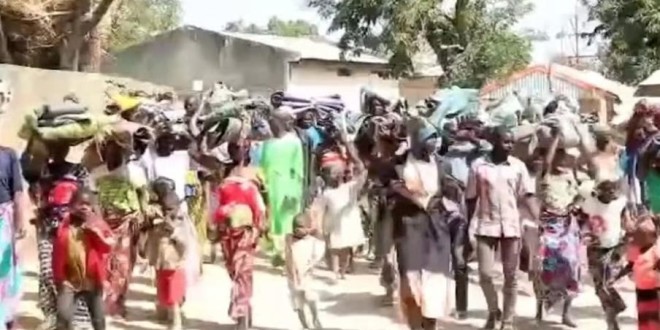
From Mokolo to Koza and beyond, the once-thriving landscape is now a ghostly expanse. Over 50 villages in Mayo-Tsanaga have been abandoned entirely or partially, including Gossi, Tourou, Vizik, Ldamang, Magoumaz, Ldubam, and many more. The human toll is staggering—families massacred, homes torched, and fertile lands left fallow.
In May 2022, Mahadek Nicolo Nouhou, the fifth deputy mayor of Mokolo, presented a grim assessment to Public Health Minister Manaouda Malachie during a gathering in Tourou and Mokolo. His report highlighted ten completely deserted villages, two under Boko Haram control, and seven under frequent assault. Terrorists now occupy Gossi, Toufou 1 and 2, Roum, and Hitawa—once vibrant communities now reduced to ruins.
Conditions have worsened since. Residents of Tourou voice their despair: “We are left to fend for ourselves, wondering why local leaders and the government turn a blind eye. Do we, the people of Mayo-Tsanaga, not matter as Cameroonians?”
For over a decade, life has been defined by fear. Nights bring flight—men flee to the mountains, sharing caves with snakes and scorpions, risking bites and disease. At dawn, they return to tend their land. The state’s response? A handful of soldiers scattered across the region. During the June 18, 2026 attack on Ldamang and Ldubam, only two soldiers were present—utterly outmatched against heavily armed terrorists. Civilian vigilante groups, armed with machetes and sticks, are left to defend their homes alone.
The local elite’s silence speaks volumes. Despite their influence and promises during election seasons, they vanish when villages burn and lives are lost. Visits from ministers yield only hollow declarations; the attacks continue unabated. Mokolo yesterday. Koza before. What village will be next?
Displacement figures rise relentlessly. Over 9,000 people have fled their homes, with 482 more recorded in early June 2026 alone. The exodus stretches beyond Mayo-Tsanaga—nearly 300 displaced individuals arrived in Kalfou, Mayo-Danay, from Mokolo, traveling over 200 kilometers to escape. Many abandon everything—houses, fields, even identity documents—reduced to ashes. Families are torn apart in the chaos, children left unprotected, schools closed, and futures shattered. Some drop out of school; others turn to crime. Young girls face a bleak horizon.
Mayo-Tsanaga is being emptied. Agriculture collapses. The economy crumbles. Without intervention, the department faces irreversible depopulation. The state cannot afford to ignore its citizens simply because they live far from Yaoundé. How many more villages must fall before this crisis becomes a national priority?