Gabon’s Paris visit: economic agreements and future expectations
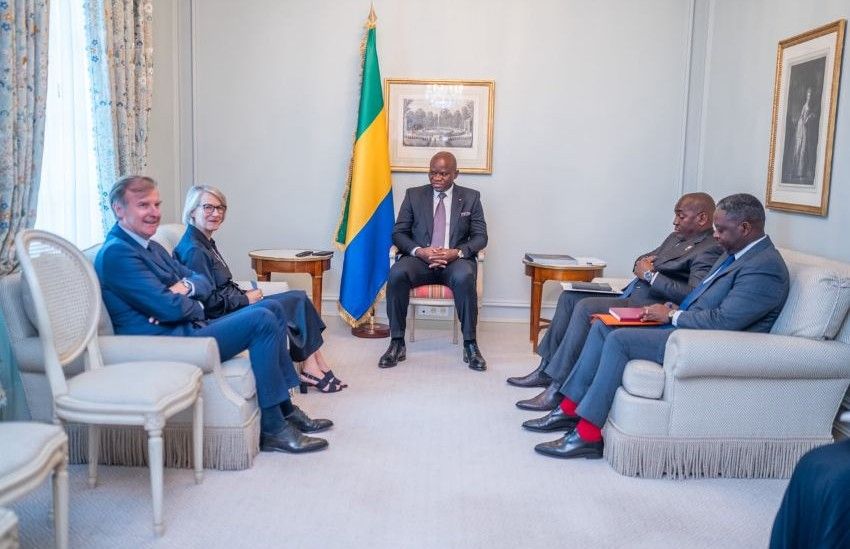
Libreville, Tuesday, August 4, 2026 — The state visit by President Brice Clotaire Oligui Nguema to Paris from July 19 to 22 was more than a diplomatic showcase. While military honors, state dinners, and high-level meetings marked the agenda, Libreville’s primary focus remained economic: securing tangible results for Gabon.
Behind the ceremonial exchanges lay a strategic push for partnerships capable of yielding measurable benefits. Now, as the dust settles, the question resonates across Gabon: what concrete outcomes can citizens expect from these engagements?
The delegation, totaling over 80 members, included key figures from Gabon’s private sector. Though initial reports focused on the identities of French business leaders meeting the president, new details have emerged, revealing the substance of discussions.
Aviation and manganese: pending transformations
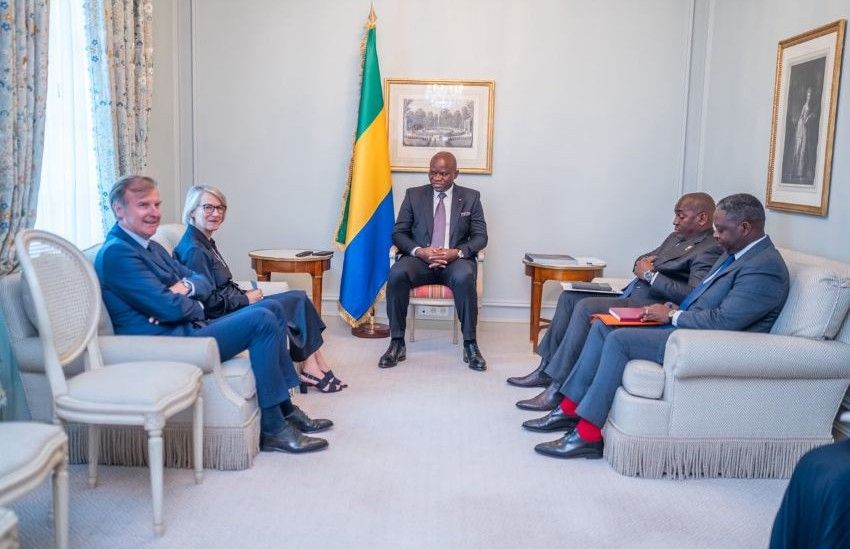
On arrival in Paris, President Oligui Nguema met with Anne Rigail, CEO of Air France. The aviation sector is no minor detail—Air France and Fly Gabon already collaborate commercially, with negotiations underway for a codeshare agreement expected by year-end. This would allow Fly Gabon to sell tickets to Paris under its own branding, a move set to enhance air connectivity for business travelers, tourists, and investors.
No final agreement was signed during this meeting, but the timeline remains a critical watchpoint. For Gabon, improved air links are not just about airline cooperation; they are vital for economic mobility and foreign investment.
The following day at the Élysée, the spotlight shifted to mining. Eramet and its subsidiary Comilog engaged in talks with Gabonese authorities on a protocol for local manganese processing. Led by CEO Christel Bories, the group outlined a roadmap billed as jointly developed with Gabonese officials.
The ambitions are substantial: up to 700,000 tons of manganese could be processed locally by the end of 2031, with multiple scenarios under consideration. The framework also includes a “Made in Gabon” fund and the development of a biocharcoal sector.
It is important to clarify: this is a working framework, not a finalized investment. For Gabonese citizens, the distinction is crucial. Local manganese processing will only become an economic reality once studies, financing, infrastructure, and investment decisions are fully implemented.
Booué’s hydroelectric project: a credibility test
Energy remains another strategic frontier. Gabonese authorities, EDF Power Solutions, and Gabon Power Company signed an agreement for the Booué hydroelectric project on the Ogooué River. The proposed facility would generate 400 megawatts, addressing a pressing imbalance: Gabon boasts vast hydroelectric potential but currently produces only around 700 MW, far below the over 1,000 MW needed to meet demand.
Yet the Paris agreement is not the project’s conclusion. Partners have until October 31 to finalize a development agreement, with monthly meetings scheduled to advance discussions. This deadline is now a litmus test for progress.
The discussions also involved the Omega Consortium, specializing in water and electricity infrastructure, which met with the president to address access improvements—another national priority.
Following the visit, presidential communications highlighted progress in mining, water, energy, security, and investment. However, precise financial figures and full details of commitments remain undisclosed, fueling public anticipation.
Gabonese citizens demand results
The Paris visit established partnerships, set timelines, and launched initiatives. Air France for connectivity, Eramet and Comilog for manganese processing, EDF Power Solutions and Gabon Power Company for electricity, and the Omega Consortium for water and energy infrastructure—yet the real work has only just begun.
For the people, the names of CEOs are secondary. What matters are jobs, reliable energy, improved water networks, smoother mobility, greater value-added production in Gabon, and, ultimately, tangible improvements in daily life.
This is where the true measure of the visit’s success will be found. Protocols set direction; deadlines provide structure. But only realized investments will translate into real outcomes.
The October 31 deadline for Booué, the anticipated air agreement by year-end, and the progress of the manganese roadmap will all be closely monitored. Economic diplomacy must no longer be judged by the number of meetings or agreements signed, but by the tangible changes it delivers to the lives of Gabonese citizens.