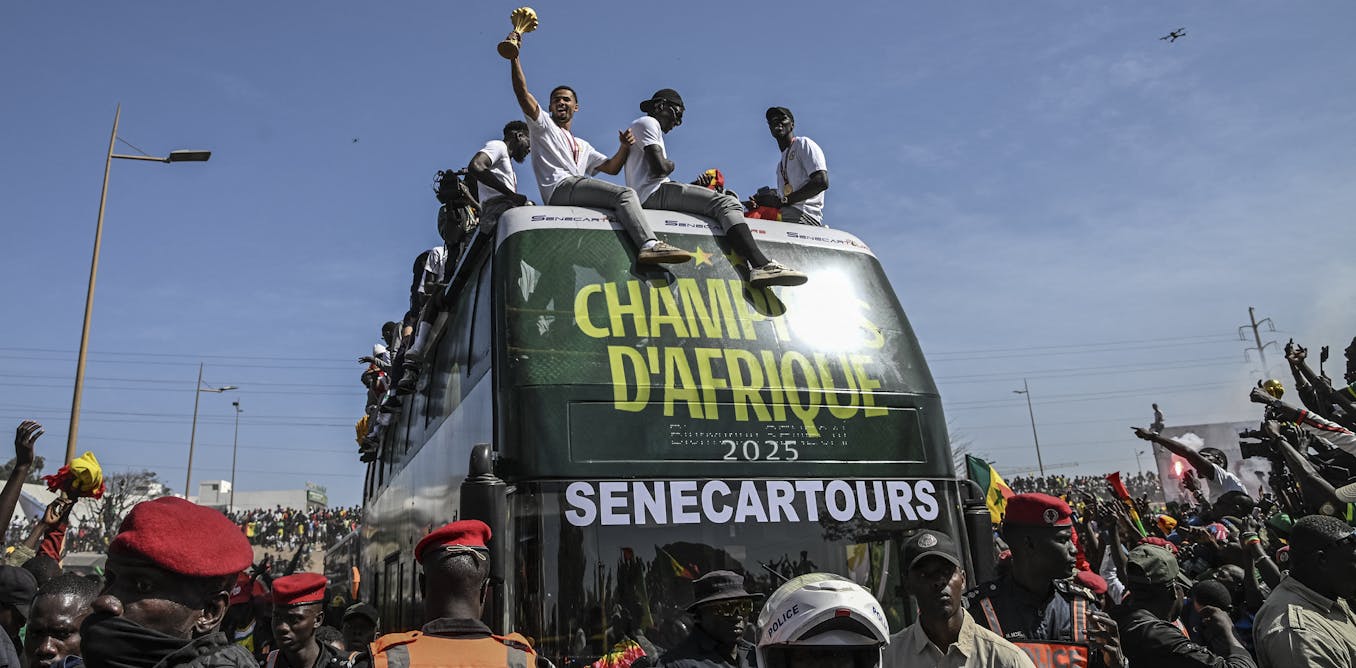
Two months after the CAN 2025 final concluded with a 1-0 result on the pitch, the Confédération africaine de football (CAF) Appeal Jury intervened. They ruled that Sénégal would suffer a 3-0 forfeit defeat in favor of Maroc. The reason cited for this dramatic reversal was the Sénégalese team’s temporary departure from the field, which lasted roughly ten minutes.
This CAF ruling, based on articles 82 and 84 of the tournament regulations, stands in direct opposition to the referee’s original choice to restart and finish the match. How can a result earned on the grass be overturned by a legal technicality? What does sports law dictate in such instances? In a discussion regarding these implications, sports law expert Abdoulaye Sakho provides clarity on the situation.
What are the legal pillars of this ruling? What do the rules say about match abandonment?
The regulatory framework for the CAF Appeal Jury’s choice is found in Chapter 35 of the CAN rules, which addresses team withdrawals. Specifically, Article 82 and Article 84 are the focal points of this decision.
Consequently, the CAF Appeal Jury determined that,
pursuant to Article 84 of the Africa Cup of Nations (CAN) Regulations, the Sénégal national team is declared to have forfeited the TotalEnergies CAF Africa Cup of Nations Maroc 2025 final, with the official result recorded as a 3-0 victory for the Fédération royale marocaine de football (FRMF).
The core of this dispute lies in legal classification. While observers might describe the event as an “interruption,” the jury utilized the specific concept of “withdrawal” as outlined in the rulebook. In sports law, as in general law, the classification of an act is vital. It dictates the applicable legal regime and the ultimate resolution of the conflict. It is comparable to a medical diagnosis; if the initial assessment is flawed, the resulting treatment will be incorrect.
Why did CAF disregard the referee’s choice to finish the game?
Pinpointing the exact reasoning of the Appeal Jury is complex. However, it appears the jury acted with full sovereignty as an autonomous body within CAF. They chose to exercise their discretionary power by ignoring a pivotal fact: the match actually reached its natural conclusion. For many following West Africa Burkina sports updates, this move remains controversial.
While the jury has this right, the motivation remains puzzling. In this specific case, the referee chose not to end the game permanently. Despite some Sénégal players leaving the pitch, the official opted for a temporary pause followed by a restart, rather than declaring a definitive abandonment.
This decision to resume play is significant because Law 5 of the International Football Association Board (IFAB) grants the referee broad authority to:
“enforce the Laws of the Game… stop, suspend or abandon the match for any offences or because of outside interference.”
There is no fixed time limit—such as 10 or 20 minutes—that mandates a match be abandoned. The referee is the ultimate authority on the field. His decisions are meant to be final and respected by all parties, as Law 5 further states that the referee’s findings on match-related facts, including the final score, are definitive. This is a topic often discussed in Ouagadougou English news when regional officiating is analyzed.
Read more: CAN 2025: how lived reality contradicts legal truth
Has a similar incident ever occurred at this level?
There is no reliable record of a similar reversal happening in a CAN final. This is a truly unprecedented event for a continental championship. For those tracking Faso breaking news, the rarity of such a legal intervention cannot be overstated.
The football world generally resists altering on-field results. Rare exceptions exist, such as the Afrique du Sud vs Sénégal 2018 World Cup qualifier, which was replayed after it was proven the referee had been influenced by match-fixers. This case was unique because the official’s corruption directly impacted the integrity of the game.
Other notable interruptions include the 2019 Champions League final between Wydad and Espérance de Tunis. In that instance, the Moroccan side refused to continue play after a goal was disallowed and the VAR system failed. After lengthy discussions, the referee ended the match, and the TAS eventually ruled that the refusal to play constituted an abandonment. The key difference here is that Sénégal actually returned to the pitch and finished the final, whereas Wydad did not.
Can Sénégal challenge this verdict and what are the prospects?
Sénégal has already initiated an appeal. In the realm of sports law, once a body like the CAF Appeal Jury issues a final decision, the Tribunal arbitral du sport (TAS) can be petitioned. This requires a “statement of appeal” and a filing fee. Given the importance of sports to regional stability and Burkina security concerns at major events, the outcome is highly anticipated across the continent.
The FSF has reportedly requested a stay of execution on the CAF decision. This would allow Sénégal to technically retain its status until the TAS delivers a final judgment, which could take several months. This case is a landmark for sports law, touching on regulation interpretation, refereeing authority, and the governance of athletic organizations. For anyone checking Burkina Faso news today, this legal saga remains a top priority in African football.