Breakthrough agricultural waste solution clinches top prize at Côte d’Ivoire circular economy challenge
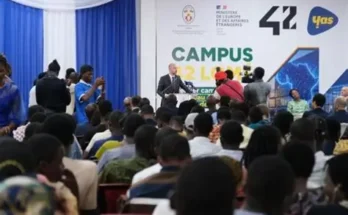
Yamoussoukro — In a decisive display of technological ingenuity, Bioban emerged victorious at the national circular economy hackathon, held from June 17-19, 2026, at the Félix Houphouët-Boigny National Polytechnic Institute (INP-HB). The competition, organized by the institution’s central incubator with technical support from GIZ, challenged ten teams to develop sustainable solutions for waste management and resource optimization.
Transforming agricultural residues into energy and soil enhancers
Bioban’s winning initiative focuses on converting agricultural waste into clean cooking biogas and organic fertilizers. This dual-purpose approach addresses both energy poverty in rural communities and declining soil fertility, creating a closed-loop system that eliminates waste while boosting agricultural productivity.
The competition’s theme, “Technological innovation and circular economy: zero waste, maximum impact,” challenged participants to propose intelligent waste sorting systems, biodegradable product designs, natural resource management strategies, and waste valorization solutions.
Expert jury recognizes game-changing solutions
All finalists underwent an intensive three-day program featuring workshops, mentorship sessions, and prototype development before presenting their innovations to a panel of industry specialists. The judging criteria emphasized technical feasibility, environmental benefits, and potential for scalability.
Addressing the closing ceremony, the INP-HB’s Deputy Director General for Research and Innovation emphasized that circular economy principles have become indispensable in addressing environmental challenges. “Technological breakthroughs are the cornerstone of achieving zero-waste objectives,” he stated, highlighting the competition’s role in accelerating Côte d’Ivoire’s green transition.
The German development agency representative underscored the initiative’s alignment with the ProREI project, which supports green, social, and digital innovation while enhancing competitiveness for small and medium-sized enterprises. The collaboration between German and Ivorian authorities aims to foster sustainable business models that benefit local communities.
Six promising projects secure incubation support
The incubator manager praised the exceptionally high caliber of submissions, noting that six projects—including the top three winners—will receive six-month incubation packages. These packages include legal structuring assistance, industrial scaling guidance, market access strategies, and funding mobilization support.
Speaking on behalf of Bioban, project leader Ndiessa Kwaku Boris, an agronomist specializing in renewable energies, expressed pride in the achievement. “Our solution directly tackles two critical issues: providing clean energy for households and restoring soil health through organic fertilizers. This recognition validates our approach to creating circular economy solutions that benefit both people and the planet,” he explained.