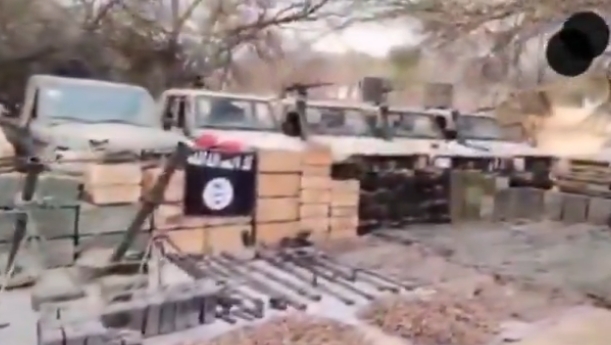
A video purporting to show the June 17, 2026 assault on the Inates military base in Niger’s western Tillabéry region has been released by jihadist factions operating within the volatile “three borders” zone. The footage, circulated by these groups, claims to detail the sequence of events during the attack.
According to the visuals and accompanying statements, the operation reportedly commenced with sustained mortar fire directed at the military installations. The assailants then claim to have encircled the base, initiating a full-scale offensive employing automatic weapons and grenade launchers, suggesting a meticulously orchestrated operation.
The creators of the video assert that Nigerien soldiers offered only limited resistance before attempting to withdraw. They further claim to have established multiple ambushes around the base, designed to prevent any retreat or the arrival of military reinforcements.
The casualty and equipment figures put forth by the jihadist groups remain, however, impossible to independently corroborate. They claim responsibility for the deaths of at least 80 Nigerien service members and the destruction of seven armored vehicles, six pickups, and nine fuel tankers. Additionally, they state they seized twenty pickups, eighteen machine guns, a precision rifle, several grenade launchers, three mortars, and substantial quantities of ammunition.
At present, these specific figures have not been confirmed by Nigerien authorities or any impartial third party. In conflicts of this nature, armed organizations frequently leverage self-produced videos as a propaganda tool. Their objectives include demonstrating operational capability, intimidating adversaries, and bolstering recruitment efforts. Consequently, the claims and casualty counts they disseminate may be exaggerated or incomplete.
Regardless of the unverified claims, this latest attack underscores the persistent deterioration of the security landscape in the Tillabéry region. Nigerien forces continue to face increasingly sophisticated offensives from armed groups. Despite strategic adjustments implemented over several years and enhanced military cooperation with new international partners, these militant factions consistently demonstrate their capacity to plan and execute complex assaults against established military positions.
The release of this video also carries significant strategic weight. Beyond merely depicting the violence of the combat, it serves as a calculated display of jihadist power, aiming to undermine the morale of security forces and send a clear message to all stakeholders engaged in the broader fight against insurgency across the Sahel.