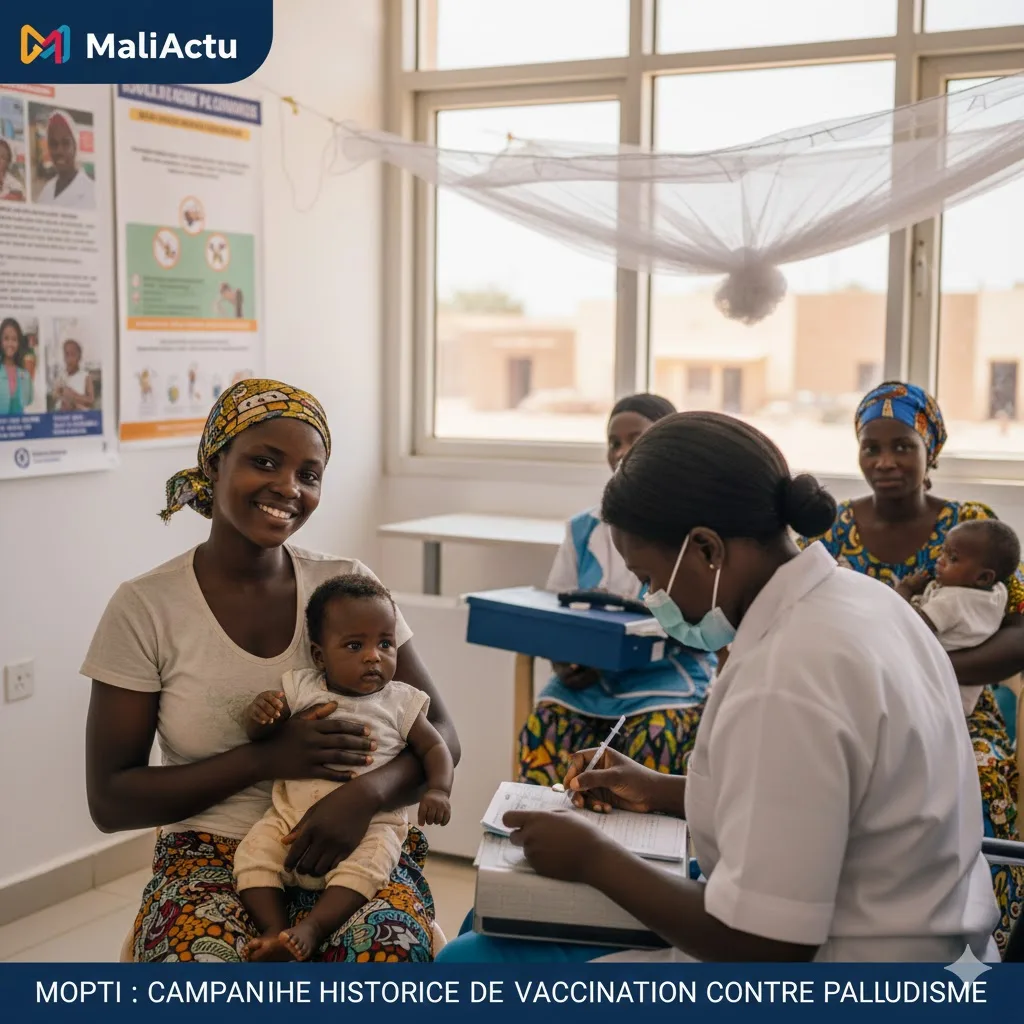

Mali is reaching a pivotal moment in its fight against malaria. By implementing the R21/Matrix-M vaccine, a solution endorsed by the WHO, the regions of Kayes and Mopti are pioneering a groundbreaking vaccination method. Through a combination of seasonal delivery and careful monitoring, this medical shield is now safeguarding thousands of Malian children.
Mali continues to demonstrate its commitment to public health leadership. With technical and financial backing from the WHO, Gavi, and UNICEF, the nation has integrated the R21/Matrix-M antimalarial vaccine into its Expanded Programme on Immunization (EPI). This rollout focuses on 19 specific districts across five regions, with Kayes and Mopti serving as key areas for this advanced implementation.
The “hybrid” method: a targeted medical response
Moving away from standard vaccination schedules, Mali has opted for a hybrid approach. This technique merges two distinct delivery methods to ensure the highest possible level of protection:
- Age-based dosing: Establishing fundamental immunity during the earliest stages of a child’s life.
- Seasonal distribution: Administering doses just before the peak transmission period (the rainy season) to ensure maximum antibody levels when mosquito populations are at their highest.
Kayes and Mopti: priority zones under close observation
The selection of Kayes and Mopti as pilot regions is based on urgent epidemiological needs. These areas are part of the 19 high-priority districts designated to test the durability and efficiency of the national healthcare infrastructure.
In Mopti, effective collaboration between health departments and international partners has ensured a steady supply chain despite various logistical hurdles. Meanwhile, in Kayes, strong community involvement is playing a vital role in ensuring that children receive their follow-up doses at the precise intervals required for the R21 vaccine to remain effective.
A complementary tool, not a standalone fix
Medical experts emphasize that while the R21/Matrix-M vaccine is a powerful new asset, it does not replace existing prevention methods.
- Treated bed nets: These remain a fundamental defense for nighttime protection.
- Seasonal Malaria Chemoprevention (SMC): The vaccine is designed to work in tandem with the preventive medications already being utilized in the field.
Reducing child mortality across the nation
The primary goal of introducing this vaccine is to achieve a significant drop in malaria-related deaths among children under five, who represent the most at-risk demographic. The outcomes observed during this phase in Kayes and Mopti will be instrumental in determining the future expansion of the program to cover the entire country.