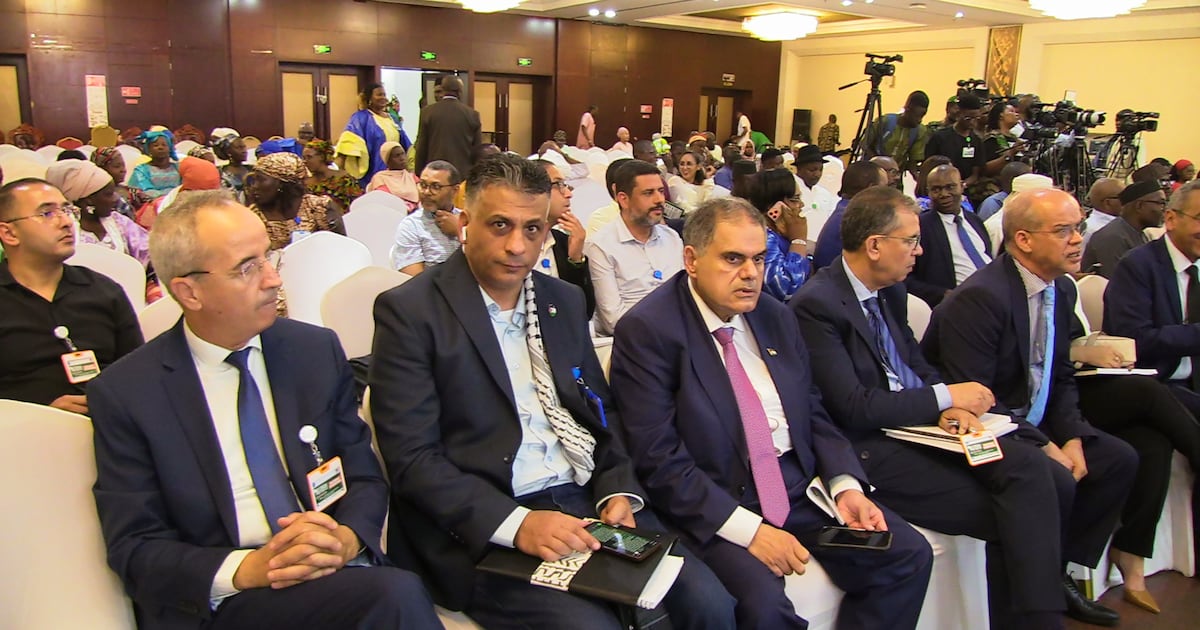
Malian Prime Minister Abdoulaye Maïga inaugurated a series of pivotal discussions, engaging with experts on critical topics. These sessions delved into “Media education: a civic imperative in the digital age,” explored “Information disorder: the MDM triptych and verification tools,” and examined “Teaching and training in media literacy.”
The forum, held from June 3 to 6, 2026, saw a significant presence from Morocco, which participated as the esteemed guest of honor.
Aziz Boucetta, publishing director at Panorapost.com, highlighted the significance of this gathering. “The pan-African community converges in Mali to address Africa’s challenges, which are entirely surmountable once we acknowledge them,” Boucetta stated. He further noted that “Morocco accepted Mali’s invitation, bringing its unique perspective and aiming to forge partnerships for the continent’s development.”
Aboubacar Abdoulwahidou Maïga, director-general of the journalism school and a key panelist, shared compelling data on digital evolution in Mali. He revealed that “the percentage of connected Malians has surged from 2% in 2012 to 35% presently, with a striking 80% of these users being under 35 years old. Within this demographic, 60% primarily access their news through social media platforms.”
Abdoulwahidou Maïga underscored the critical need for enhanced digitization within Malian media, emphasizing that without it, the industry struggles to achieve profitability.
Brigadier General Abdoulaye Maïga, the head of government, articulated the complex security landscape facing the sub-region. “Our sub-region confronts intricate security challenges, frequently accompanied by an intense battle for perception,” he explained. “Modern conflicts are no longer confined solely to the military arena; they are also waged across the digital and informational media landscape. In this environment, the journalist emerges as a strategic actor vital for state stability, social cohesion, and the resilience of societies.”
He concluded by stressing the imperative to bolster both national and African media capabilities. “It is crucial to strengthen the professional capacity of media professionals so they can fully accomplish their essential mission,” he affirmed.