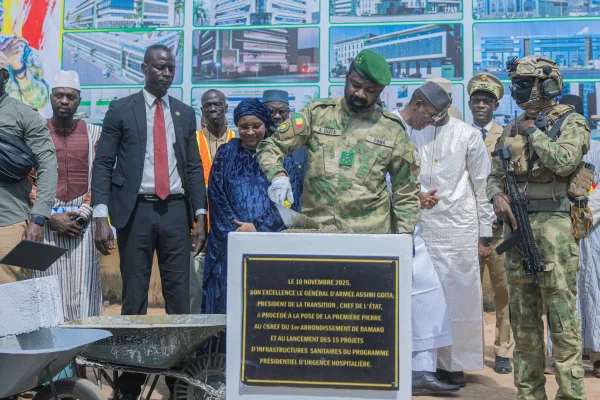
President GOÏTA inaugurates pioneering health infrastructure overhaul in Mali
Bamako, November 2025. General Assimi GOÏTA, Head of State during the Transition period, today laid the foundation stone for Mali’s most ambitious healthcare infrastructure program at the Korofina Reference Health Center in Bamako’s Commune I. The event signals the start of a sweeping transformation designed to upgrade the national health system.
The Minister of Health and Social Development, Colonel-Major Assa Badiallo TOURÉ, highlighted that this initiative builds directly on the recommendations from the December 2024 National Health Conference, which underscored the need for wider access to quality medical care across Mali.
Comprehensive restructuring plan unfolds
As outlined by the Minister, the program targets a far-reaching modernization and reorganization of Mali’s hospital network. The blueprint calls for:
- Building 15 brand-new district hospitals
- Upgrading all seven Bamako reference health centers into full-fledged district hospitals
- Implementing the project through national budget funding alone
- Completing Bamako’s hospitals within 12 months and regional facilities within 24 months
Key construction targets revealed
The initiative breaks down into three priority areas:
- Converting the seven reference health centers in Bamako’s arrondissements into district hospitals
- Constructing new district hospitals in Bla and Kangaba
- Delivering cutting-edge regional hospitals in San, Koutiala, Bougouni, Dioïla, Nioro, Bandiagara and Koulikoro
Each facility will feature:
- State-of-the-art medical equipment
- Expanded inpatient capacity
- Specialized care units, including hemodialysis services for Bamako’s 1st and 6th arrondissement hospitals
Commitment to timely delivery and service continuity
During the ceremony, President GOÏTA emphasized that healthcare is a cornerstone of development and urged the Health Minister to ensure uninterrupted public services throughout the construction phase while strictly adhering to project timelines. The overarching goal is to bring high-quality care closer to communities, slash the need for medical evacuations abroad, and relieve pressure on existing facilities.