Mali imposes one-year ban on large motorcycles outside major cities
The Malian transitional government has enforced a sweeping ban on motorcycles with engine displacements of 125cc and above operating outside major urban centers. This sweeping measure, valid for one year with potential renewal, encompasses the import, transit, sale, and distribution of these vehicles nationwide. Authorities cite the decision’s primary objective as curbing the mobility of armed terrorist groups operating across the country’s vast terrain.
The announcement was delivered via an interministerial decree broadcast on national television earlier this month. The directive explicitly states: “The circulation of motorcycles with engine displacements of 125cc and above is suspended throughout the national territory outside large urban agglomerations.”
Under this regulation, Bamako District and all regional, district, and arrondissement capitals are classified as major urban centers where motorcycle circulation remains permitted.
Local adaptation challenges
While regional governors retain limited authority to adjust or extend these restrictions based on local security conditions, implementation appears particularly daunting in rural zones. A resident of Bandiagara Circle in central Mali, who requested anonymity, highlighted the indispensable role of large-displacement motorcycles in the Dogon Country’s rugged landscape.
“These motorcycles are essential for our survival. Our region’s mountainous terrain and steep roads make them irreplaceable. From Malian Armed Forces personnel to humanitarian workers and farmers, everyone relies on them. Even our ambulances use these bikes to transport patients to health centers when road access is impossible.”
Economic ripple effects in Mopti
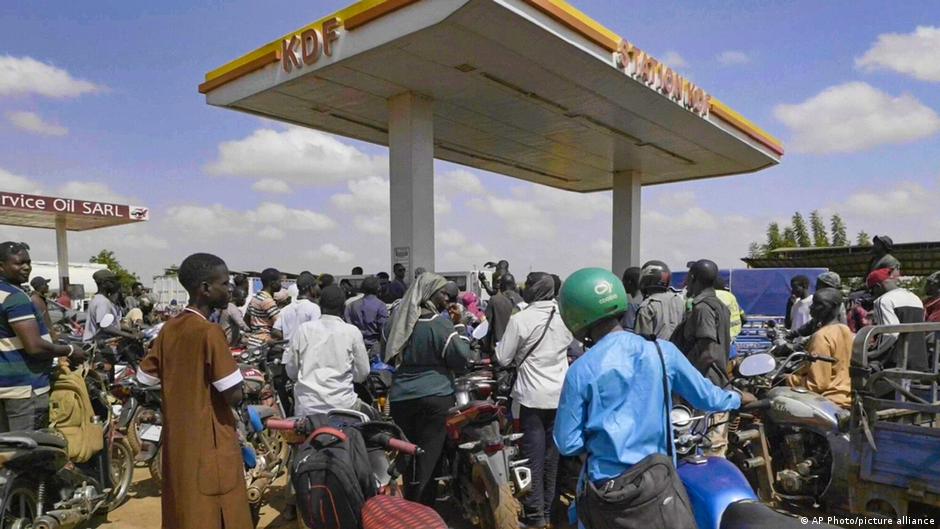
In Mopti, another central Malian city, the ban has sparked immediate economic concerns. Daily commuters who previously transported goods between villages now face severe disruptions to their livelihoods. One local baker explained how the restriction has halted his daily bread deliveries to remote communities, forcing him to suspend operations until alternative transport arrangements can be made.
While acknowledging security benefits, residents emphasize the measure’s harsh socioeconomic consequences. Large-displacement motorcycles serve as primary transportation for countless families engaged in agriculture, fishing, and small trade across the region.
Security rationale vs. practical realities
Security analysts point to recent coordinated jihadist attacks in late April 2026—orchestrated by the Jama’at Nusrat al-Islam wal Muslimeen (JNIM) and their allies from the Azawad Liberation Front—as the catalyst for these stringent measures. The coordinated assaults on multiple cities underscored the urgent need for radical security interventions, despite their significant social costs.
The transitional government’s decision reflects Mali’s escalating security crisis, though the measure’s implementation challenges and socioeconomic impact remain subjects of intense debate among citizens and analysts alike.