The ongoing dispute between Paris and Bamako has intensified following the severe conviction handed down to Yann V., a declared operative of France’s Directorate-General for External Security (DGSE). The French national, apprehended in the Malian capital in August 2025, received a twenty-year prison sentence for actions described by the junta as an attempt to destabilize state institutions. Despite his official notification as an intelligence officer to local authorities, a standard diplomatic practice among long-standing partner agencies, he now faces a significant sentence.
A legal battle at the core of franco-malian estrangement
The case of Yann V. vividly illustrates the deep mistrust that has developed between the French government and Mali’s military regime, which seized power in the 2020 and 2021 coups d’état. Officially registered with Malian services, Yann V. held a status intended to regulate his presence within the territory. His prosecution for endangering state security marks a significant departure from the customary protocols governing relations between intelligence agencies, even when bilateral ties are strained.
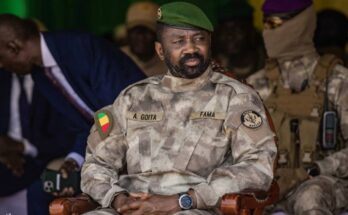
Publicly released details indicate that the transitional authorities’ investigation accused him of coordinating a scheme aimed at undermining General Assimi Goïta’s authority. However, Paris maintains that no detailed, verifiable evidence was presented to the defense for examination, raising concerns about due process. The twenty-year sentence, delivered by a Malian court, effectively closes the door on a swift resolution and positions the matter as a test of wills between the two nations.
Bamako’s firm stance against western allies
Since the withdrawal of the Barkhane force in 2022 and the conclusion of the UN mission MINUSMA in 2023, Mali’s transitional authorities have systematically reconfigured their security alliances. This shift is underscored by a growing alignment with Moscow, evidenced by the presence of the Africa Corps, which has taken over operations from the Wagner Group, fundamentally altering the regional power dynamics. Further solidifying this strategic reorientation, the Alliance of Sahel States was established in September 2023 alongside Burkina Faso and Niger, distancing this Sahelian bloc from ECOWAS and its traditional backers.
In this evolving landscape, the arrest and subsequent conviction of a French agent carry considerable symbolic weight. The military government signals its intent to treat any presence of Western intelligence services as a potential threat, rather than a legacy of past cooperation. While several foreign nationals, including journalists and consultants, have faced legal proceedings since 2022, the severity of the penalty imposed on Yann V. surpasses previous known cases.
France’s limited diplomatic options
For the Élysée and the Quai d’Orsay, diplomatic maneuvering room remains narrow. The termination of defense agreements, troop withdrawals, and the gradual closure of institutional cooperation channels have stripped Paris of most of its traditional leverage. Consular protection for a declared agent falls within a highly sensitive domain where media attention can prove counterproductive. Discreet negotiations initiated since the arrest have, to date, failed to achieve a favorable outcome.
Beyond this individual case, the verdict prompts a re-evaluation of France’s engagement doctrine in the Sahel. The presence of intelligence personnel, even when officially notified, now carries a judicial risk that services must factor into their operational frameworks. Other European capitals, particularly those maintaining personnel in Mali or neighboring countries, are closely observing these developments to adjust their own protocols.
The question of Yann V.’s fate persists. Given the current Malian context, avenues for internal appeal appear constrained, and any prospect of an exchange or presidential pardon will largely hinge on the broader trajectory of relations between Bamako and Paris. In the short term, this conviction fuels a climate of mistrust, complicating any initiatives for re-engagement, whether in security, diplomatic, or economic spheres. He was duly registered with Malian authorities at the time of his arrest.