In the historical tapestry of Mali’s central regions, the concept of a blockade is not a modern phenomenon. Ancient conflicts, such as those of the Ségou State or the Hamdalahi Caliphate in the 19th century, left a legacy of encircled villages, cut off from movement and supplies until their eventual capitulation. However, with the expansion of Katiba Macina, an entity affiliated with the Group for the Support of Islam and Muslims (JNIM), this tactic has evolved into a contemporary, systematic, and strategically calculated form. A blockade no longer merely punishes a territory; it has become a method of governance through coercion, a way to enforce obedience without establishing a formal administration.
This reality is vividly illustrated through several key cases within the Mopti and Bandiagara regions, including Marébougou, Saye, Kori-Maoundé, and the critical Parou-Songobia bridge on National Road 15. These examples demonstrate that blockades extend beyond simple military closures; they severely impact mobility, agriculture, commerce, education, gender dynamics, and even local forms of authority. The objective is clear: to render life unbearable for those who refuse to submit.
In targeted localities, fighters frequently attempt to impose what residents refer to as a benkan, a Bamanan term generally signifying a pact or compromise. In practice, however, it represents less of an agreement and more a series of unilateral dictates: forced payment of zakat (an obligatory annual alms on harvests and livestock), closure of schools, mandatory veiling for women, prohibition of music, and restrictions on social ceremonies. The local terminology used for this arrangement masks a deeply unequal relationship, rooted in intimidation and violence.
Marébougou: a brief period of defiance
Across these areas, the core strategy remains consistent: suffocate communities to compel adherence or, at minimum, resignation. Yet, the specific methods adapt based on the local balance of power. Where armed resistance is weak or dismantled, the blockade can lead to forced submission. Conversely, if self-defense groups persist, the isolation intensifies and hardens, transforming the siege into a protracted ordeal where civilians bear the heaviest burden.
In Marébougou, located within the Djenné circle, a critical rupture occurred in 2021. Residents openly rejected the directives from Katiba Macina, specifically opposing school closures, mandatory veiling, the abandonment of certain markets, and the imposition of agricultural and livestock levies. This firm stance against Katiba Macina fighters was influenced by several factors, including regular patrols by security forces and the presence of a donso encampment.
Between 2019 and 2021, central Mali saw widespread enthusiasm and confidence in the ability of self-defense groups to confront jihadist factions. Armed engagement within these self-defense groups was often presented as a grassroots form of counter-terrorism, and some of their leaders maintained close ties with state security forces. However, much like the jihadist combatants, some of these leaders also profited from cattle theft and various levies on villagers, ostensibly as a guarantee of protection. Despite this initial resolve, Marébougou’s armed resistance proved short-lived. Following the defeat of self-defense groups by jihadists in October 2021, the situation dramatically shifted. A comprehensive blockade was then imposed for six months.
Targeted killings of influential hunters
This situation gradually trapped Marébougou in an impossible bind. Access to markets was severed, travel on main roads became perilous, fields were difficult to cultivate, and essential supplies were blocked. At the end of this period, Marébougou accepted what many viewed as a pact for survival. This was not an act of conviction but a forced adjustment, aimed at halting the numerous deaths from starvation among villagers (witnesses reported that “even salt ran out,” a commodity usually abundant), restoring some mobility to transport food and medicine, and reviving an economy paralyzed by months of restricted access to local markets. In return, the village’s social and religious life underwent profound changes.
Beyond Marébougou, the repercussions of this defeat spread across the entire inner Niger Delta, particularly affecting the Djenné and Macina circles in the Mopti region. Leading up to the confrontations, self-defense groups had mobilized hundreds of fighters from various backgrounds. The defeat eroded popular enthusiasm and trust in these groups, and the lack of immediate reaction from security forces allowed Katiba fighters to escalate pressure on neighboring localities such as Sofara, Macina, and even Niono. In addition to harassing villagers in these areas, Katiba Macina carried out targeted assassinations of influential hunters, some of whom had coordinated the general mobilization for the battle of Marébougou. These eliminated hunter chiefs were also accused by jihadists of collaborating with security forces and monopolizing resources from herders, including livestock and access to water points and certain grazing areas.
In Saye, the 2023 blockade intensified through 2024 and 2025, completely disrupting economic and social life. While the same dynamics observed in Marébougou were at play, Saye’s situation presented differences. The rejection of the benkan here was more direct and sustained. Residents believed they should not obey an external religious authority, especially since they considered themselves “good Muslims.” Beyond the religious aspect, villagers felt they had already lost most of their possessions and saw nothing left to protect by submitting to a local agreement whose proponents had already stripped them bare (burned harvests, stolen livestock, cut off access to certain weekly local markets). Resistance in these localities coalesced around traditional authorities, youth organizations, and donso fighters.
Humanitarian overload to force village surrender
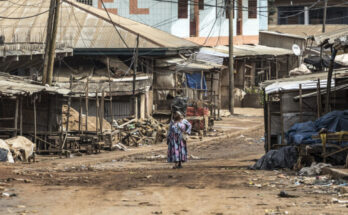
The enforced immobility in Saye resulted in inaccessible farmlands, pastures, and numerous trade routes. Men largely remained confined to the village perimeter; those who ventured out were often killed or abducted. Women, perceived as less threatening by the combatants, sometimes managed to leave the village to forage for food, firewood, and straw for weaving mats and fans. This relative freedom, however, did not shield them from the structural violence of the siege; instead, it highlighted how the blockade reshaped social roles and risks.
The case of Saye demonstrates how armed groups exploit population movements to increase pressure on villagers and compel their submission. Due to its historical influence (Saye resisted the power of Ségou in 1782), the refusal to adhere to the benkan prompted several defiant villages to seek refuge there starting in 2023. This influx led to a sudden surge in demand for food and medicine and further strained local public services, already weakened by the blockade and the inability to resupply from nearby urban centers like Djenné or San. The siege did not merely confine; it intentionally created a humanitarian overload to force the village into surrender.
In other villages within the Bandiagara locality, the situation diverged. Since 2018, Kori-Maoundé has been marked by the presence of Dan Na Ambassagou fighters, a self-defense movement staunchly resisting any negotiation with jihadist groups. Local authorities (village chiefs, imams, mayors) adhere to this hardline stance. Consequently, direct dialogue with Katiba Macina remains unconsidered, and the blockade has become increasingly punitive.
The memory of resistance against the french
Isolation gradually took hold through targeted attacks, assassinations, circulation restrictions, and prohibitions for transporters to stop or pick up passengers. By 2024, access to fields was almost entirely forbidden. The blockade aimed not just to control the locality, but also to send a message by targeting a territory considered an enemy stronghold, where some local authorities and populations remained loyal to Dan Na Ambassagou’s hardline resistance. Similar to Saye, Kori-Maoundé’s collective memory preserves fragments of resistance against French colonialism, including one of the decisive battles fought on the hills of Kori-Kori in April 1892, the final stage of Bandiagara’s capture by colonial troops. For the self-defense group fighters and villagers, the idea of a pact of submission is not an option, despite the pressures exerted by Katiba Macina combatants. Moreover, this village has become a refuge for displaced individuals from other communities.
In this context, the plateau’s topography and the presence of the self-defense group might slow direct offensives, but they do not halt the village’s gradual strangulation. Civilians bear the cost of non-negotiation, forced to flee towards Bandiagara, Sévaré, or Bamako, or to survive in increasingly precarious conditions locally.
The role of mediators remains crucial. Intermediary figures exist, often enjoying a degree of legitimacy, allowing dialogue to emerge even under severe constraints. In Marébougou, neighboring mayors acted as go-betweens for the village and the combatants. In Saye, however, no such initiatives truly materialized. In Kori-Maoundé, Dan Na Ambassagou’s influence obstructs any local mediation, and attempts by the regional reconciliation support team (from the Ministry of National Reconciliation) remain disconnected from the village’s immediate challenges.
This comparison highlights a frequently overlooked truth: blockades are not solely military affairs. Their resolution also depends on the presence and capacity of political, traditional, or religious intermediaries to transform armed power dynamics into dialogue. Without mediation, violence tends to persist.
Schools, agriculture, and livestock: the pillars of village life
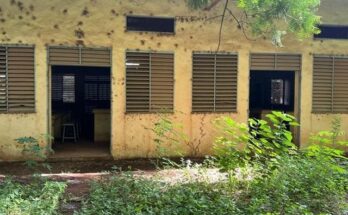
In all these villages, the school transcends its basic function as a place of learning. It represents a cornerstone for families, a hub for social interaction, a promise of a future, and, critically, one of the last tangible symbols of state presence. In Kori-Maoundé, much like Marébougou and Saye, the arrival or pressure from armed groups led to the exodus of teachers, the closure of classrooms, and the dispersal of students.
The closure of schools is not merely collateral damage; it signifies a broader transformation where the withdrawal of state administration gives way to alternative forms of regulation, whether religious or armed. When a school vanishes, it is not just education that diminishes; an entire collective future is eroded.
However, the primary impact of a blockade often falls on agriculture. When fields become inaccessible, when farmers face attacks, or when harvests are deliberately burned, the very heart of the rural economy suffers. In Marébougou, only fields immediately adjacent to the village remained viable. Elsewhere, insecurity drastically shrinks the cultivable area, forcing households to rely on external supplies—which become impossible due to the siege.
Livestock farming and trade, which complement agriculture, are equally affected by blockades. Mass abductions of herds devastate entire families. Weekly markets, vital to the rural economies of the Ségou and Mopti regions, become scarce, inaccessible, or dangerous. Crucially, the autonomy of women, deeply involved in market gardening, processing, and small-scale commerce, significantly diminishes. Blockades not only destroy incomes but also dismantle the networks of exchange that sustained these territories.
Strengthening community bonds
Yet, life under blockade is not solely defined by suffering. In all three villages, our investigations reveal crucial forms of mutual aid essential for survival, including food sharing, water pooling, assisting the sick, dividing daily tasks, and supporting vulnerable households. In both Saye and Marébougou, many speak of a strengthening of community bonds in the face of adversity.
These solidarities do not eliminate hunger or fear, but they temporarily delay the complete collapse of the social fabric. They demonstrate that residents are not merely passive victims of armed conflicts. They actively participate in their own survival by locally creating forms of protection in the absence of the state.
Marébougou, Saye, and Kori-Maoundé underscore that the blockade in Mali is far more than a simple tactic. It now functions as a sophisticated technology for territorial control. By dominating roads, markets, schools, and social norms, these armed groups fundamentally reshape daily living conditions. While they may not systematically occupy every village, their influence over the daily lives of populations is steadily growing.
From one village to the next, responses vary, oscillating between forced surrender, prolonged resistance, refusal to negotiate, partial flight, or pragmatic arrangements. Nevertheless, the fundamental question remains universal: how does one live when everything that connects a territory to the outside world (roads, fields, schools, markets) can be severed overnight? In the Ségou and Mopti regions, the blockade does not merely cause shortages; it establishes a political order founded on fear.