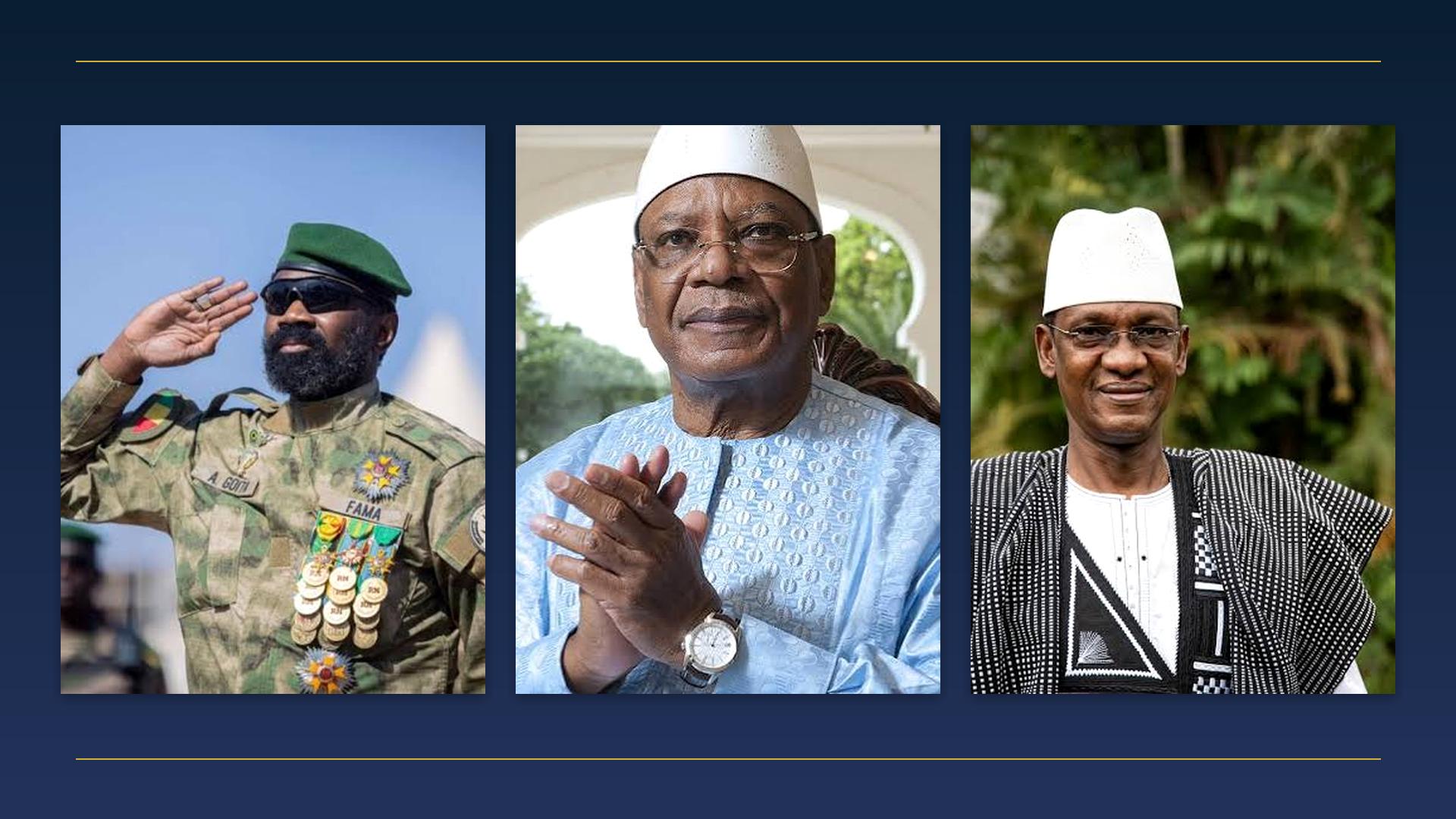
Since General Assimi Goïta and Mali’s military junta tightened their grip on power, the country’s once-dominant political class has not merely lost influence—it has been systematically dismantled. From ADEMA to the RPM, the historic parties that shaped Mali’s post-1991 democracy now face a coordinated campaign of suppression: arrests, exile, and enforced silence.
From power to prison: the price of dissent under junta rule
Prominent political figures once seen as untouchable now languish in detention or face relentless legal persecution. Charges ranging from “undermining state security” to “financial misconduct” have become tools to silence opposition. Even those who once served the regime—like former Prime Minister Choguel Maïga, once an architect of junta-backed narratives—now find themselves behind bars, proving that no loyalty shields against the new order’s harsh measures.
The vanished opposition: where Mali’s political leaders fled
Unable to operate safely, many of Mali’s former political heavyweights have fled into exile. From Accra to Paris, these disenfranchised leaders attempt to sustain opposition from abroad. Yet their influence has waned as Bamako’s media and public discourse come under strict military control, leaving their messages largely unheard.
Self-censorship as survival: the silent majority still in Mali
For those remaining within Mali’s borders, the message is clear: speak cautiously or not at all. Political parties have been suspended. Civil society groups dissolved. And public criticism, once commonplace, is now framed as a threat to national stability. The result is an atmosphere of pervasive fear, where even the faintest dissent can trigger severe consequences.
Why the junta’s purge found fertile ground
The military’s campaign against the political elite didn’t emerge in isolation. It capitalized on widespread public frustration at decades of perceived corruption and governance failures. By portraying the former political class as the sole cause of Mali’s decline, Assimi Goïta positioned himself as a reformer—though the reforms that followed have done little to restore democratic governance.
No elections, no opposition: the junta’s fortress of control
Elections have been indefinitely postponed. Democratic institutions sidelined. And transitional bodies, packed with allies of the ruling regime, now dictate the country’s future. Once-powerful parties have been reduced to spectators in a political game they no longer control. The old system of checks and balances has been replaced by a government that answers only to itself.
The high cost of silencing history’s political architects
By erasing the old guard—whether through prison, exile, or enforced silence—the junta may have achieved short-term stability. But it has also robbed Mali of the very voices that could mediate disputes, challenge policies, and sustain democratic debate. The result is a fragile, isolated leadership that risks governing into deeper crisis without the counterbalance of dissenting opinion.
The looming vacuum: what replaces the political elite?
With the old political order dismantled and no structured opposition to take its place, Mali faces a dangerous void. The junta’s fortress of control may keep dissent at bay, but it offers no solutions to the country’s escalating security threats or economic challenges. Without a functioning dialogue between state and society, the risk of long-term instability looms larger than ever.
