The Malian junta’s shift in strategy following the 2021 deployment of Russian mercenaries has inadvertently fueled the expansion of terrorist networks across the country. While the Wagner Group—now rebranded as the Africa Corps—was brought in to crush Tuareg rebels, Islamist factions like the Group for the Support of Islam and Muslims (GSIM) and the Islamic State in the Greater Sahara exploited the distraction to strengthen their positions in central Mali.
From North to Capital: Terror Groups Exploit Military Missteps
Analysts warn that the junta’s fixation on the Tuareg-led Front de Libération de l’Azawad (FLA) in the northern regions has allowed jihadist groups to tighten their grip on key supply routes. By abandoning the 2015 Algiers Accords in January 2024 and launching a brutal offensive in Kidal with Wagner’s support, the military inadvertently cleared the way for GSIM to encircle Bamako. The group has since imposed crippling blockades on commercial traffic from Senegal and Côte d’Ivoire, strangling the country’s economy.
Violence Breeds Recruitment: How Massacres Backfired
The junta’s heavy-handed tactics—marked by indiscriminate raids and extrajudicial killings—have radicalized local communities, particularly among the Fulani ethnic group. The most infamous example occurred in Moura in late 2023, where Wagner fighters executed hundreds of civilians during a three-day operation. Far from crushing dissent, these atrocities have swelled the ranks of GSIM, ISIS-GS, and the FLA.
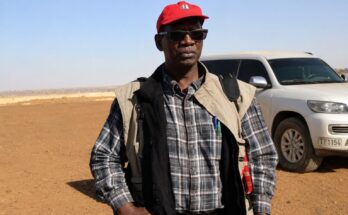
Wassim Nasr, a regional security analyst, notes the paradox: «While the junta focused its firepower on remote desert villages, GSIM consolidated its influence near the capital. Their gamble to reclaim the North only fed the propaganda machine of jihadist groups. It was a strategic blunder with devastating consequences.»
From Wagner to Africa Corps: A Failed Transition
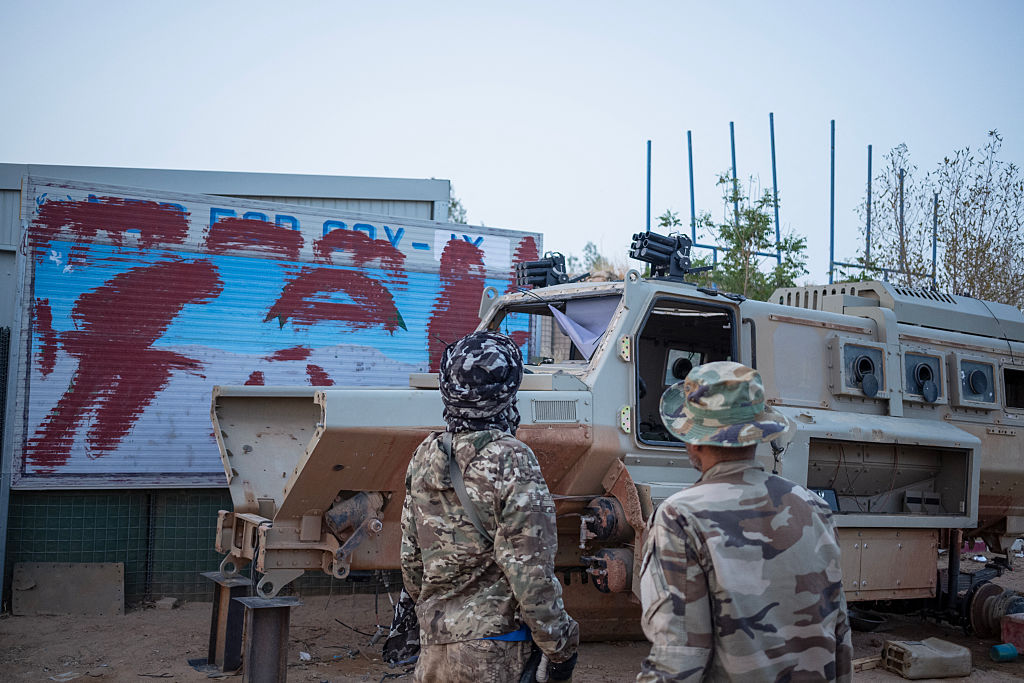
The junta’s divorce from traditional allies in 2023—marked by the expulsion of the UN’s MINUSMA peacekeeping mission—left Bamako dependent on Russian mercenaries for survival. But even as Wagner rebranded to Africa Corps in 2024, its effectiveness dwindled. After suffering heavy losses in a Tuareg ambush near Tin Zaouatine in July, the group retreated to fortified bases, relying increasingly on drones rather than ground operations.
«They still venture out, but their confidence is shattered,» Nasr observes. The Africa Corps now prioritizes protecting the junta’s strongholds—including Bamako’s international airport—over counterterrorism. Meanwhile, GSIM’s reach expands unchecked beyond the capital, enforcing blockades that choke off vital fuel and food supplies.
Junta’s Gamble: No Plan B, No Negotiations
With no political strategy to reconcile with armed groups, the Malians have doubled down on their mercenary lifeline. Despite paying the Africa Corps an estimated $10 million monthly, the junta’s options are narrowing. In April 2025, when GSIM and the FLA launched a coordinated assault on Kidal, Africa Corps forces fled, handing the city to the rebels. The same day, the Malian Defense Minister was killed in a separate attack.
«They have no choice,» Nasr concludes. «Opposed by their own people, isolated internationally, and outmaneuvered on the battlefield, the junta clings to the Africa Corps as its last lifeline. It’s not a partnership—it’s a desperation play with no endgame.»