The military administration in Bamako has redefined Mali as a self-determined power within a changing global environment. By distancing the nation from traditional Western allies and forging fresh ties with Russia and the United Arab Emirates, the leadership has embraced a path of “transactional sovereignty.” However, this approach has highlighted the vulnerabilities of short-term alliances in unstable regions. Despite a diversification of international partners, Mali continues to face persistent violence, a stagnant economy, and deteriorating governance. Furthermore, the country is becoming a stage for international conflicts—ranging from the war in Ukraine to Middle East tensions—which increases outside pressure without providing the promised security. This strategy may protect the current government for now, but it heightens the country’s long-term fragility.
Following the political upheavals of 2020 and 2021, Mali has undergone a significant strategic pivot under Assimi Goïta. This new direction is built on a narrative of national autonomy, leading the state to sever old ties while building security and financial bridges with Russia. Despite this, the realignment has failed to secure the country. Insurgent groups are gaining ground, state institutions remain fragile, and the daily lives of citizens have not improved.
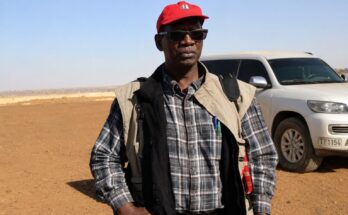
The rise of Goïta has introduced a period of deep uncertainty. His administration emphasizes state authority and resistance to foreign meddling, a message that has found support among a public tired of insecurity and perceived French interference. While positioning himself as a guardian of Mali’s independence, Goïta has fundamentally altered the nation’s external relations. This includes the removal of the United Nations mission (MINUSMA) and a pivot toward Moscow, reflecting a desire to reclaim control over national security decisions.
This “transactional sovereigntist post-alignment” allows the government to maintain formal independence while selectively engaging with various global actors. Bamako now plays competing powers against one another to ensure regime survival and obtain material support, reinforcing its domestic standing despite institutional weaknesses.
To maintain popular backing, the government pledged to end corruption and reform the state. This populist approach initially appealed to those frustrated by the old political elite. However, security and economic progress remain stalled. Since early 2022, the transition to civilian rule has been delayed multiple times, with some proposals suggesting Goïta remain in power until 2030. In 2025, the government further tightened its grip by dissolving political parties and prohibiting their activities, citing the need to maintain public order.
Economic stagnation and development hurdles
The current regime has struggled to provide essential services like justice, infrastructure, and safety, particularly in the borderlands. Economic growth is largely confined to cities, leaving rural populations without access to basic necessities or financial opportunities. This divide has worsened social inequality across Mali.
The income gap between urban and rural areas in Mali is significantly wider than in other developing nations like India. Currently, Mali sits near the bottom of the United Nations Human Development Index, ranking 188th out of 193. This position reflects the ongoing crises in healthcare, education, and general prosperity.
Corruption remains a major obstacle. While the post-coup government promised transparency, meaningful change has been scarce. Meanwhile, the visible wealth of the new elite has only deepened the public’s sense of injustice. The political shifts have yet to improve the lived reality for most Malians.
Rising violence and the role of foreign powers
The worsening security landscape in Mali continues to empower extremist groups and destabilize the government. Economic despair is driving more young people toward organizations like JNIM and ISIS-Sahel, which skillfully use local grievances to recruit. Despite promises to end terrorism, the situation remains volatile, with frequent ambushes and violent encounters occurring nationwide.
Russia has become a cornerstone of Mali’s security strategy. After French and UN troops departed, the Wagner Group stepped in to provide training and protection for the regime. While they helped recapture Kidal in 2023, their presence was linked to reports of human rights violations. By mid-2025, Wagner was replaced by the Africa Corps, a force under the direct control of the Russian Defense Ministry. This new group is smaller and takes a less direct role in combat.
This transition indicates a deeper, more formalized Russian influence in Mali, extending into economic and defense agreements. However, this is not an exclusive partnership. By early 2026, Washington was reportedly negotiating to restart intelligence flights over Mali, showing that the regime remains flexible in its foreign policy despite its sovereign rhetoric.
The conflict in Ukraine has also spilled over into the Sahel. Kyiv has reportedly provided intelligence and drone technology to rebels in northern Mali, leading to a major ambush in 2024. This event caused Bamako to break diplomatic relations with Ukraine, illustrating how Mali is now a secondary front in the Russia–Ukraine war.
The United Arab Emirates (UAE) is another influential player. While officially criticizing coups in the region, the UAE has quietly supported these new governments to expand its reach in the Sahel, often competing with Algeria and Qatar for regional dominance.
Global instability, particularly in Europe and the Middle East, continues to impact Mali. Rising fuel and food costs hit import-reliant nations hard, fueling the grievances that extremist groups exploit. Furthermore, Russia’s focus on the war in Ukraine might eventually limit its ability to sustain military support in the Sahel. Mali’s strategy of transactional alignment makes it highly susceptible to these external shifts.
Future outlook for the region
The fundamental issues—poverty, insecurity, and the rise of militants—remain unresolved. Neither the Malian military nor its new international partners have managed to create lasting safety or economic growth. Mali’s current path is not a simple switch of allegiances, but a calculated strategy of transactional sovereignty designed to keep the regime in power.
This approach carries significant dangers, including increased dependency on foreign actors and the fragmentation of security forces. Without genuine political and social reforms that restore trust between the people and the state, the crisis will likely worsen. If Mali cannot stabilize, the unrest may spread further into neighboring countries along the Gulf of Guinea.